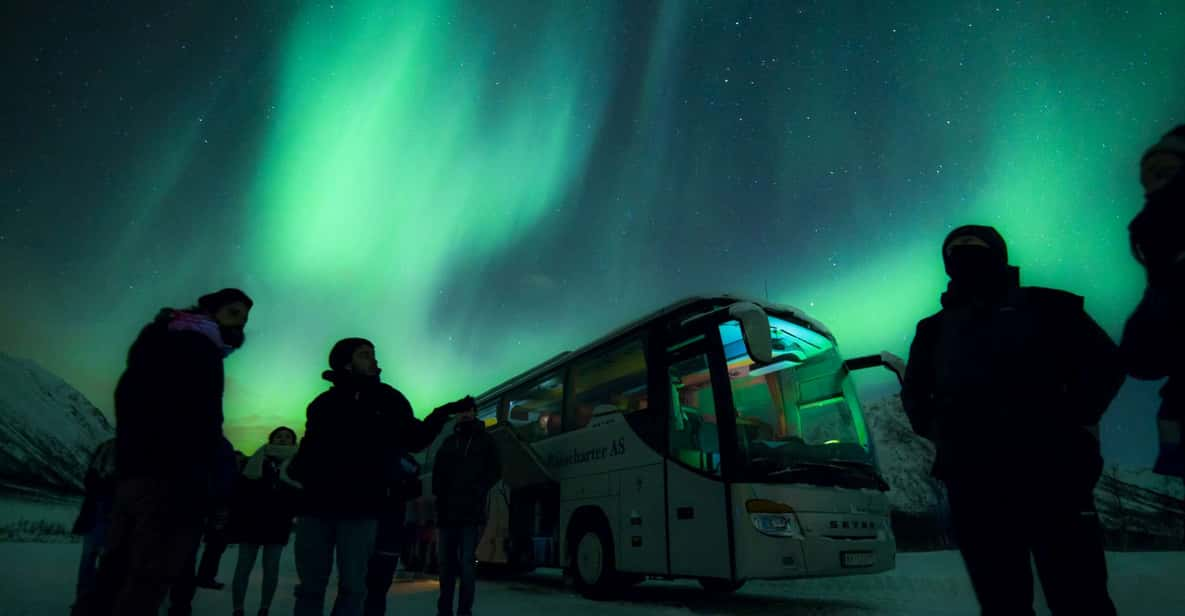
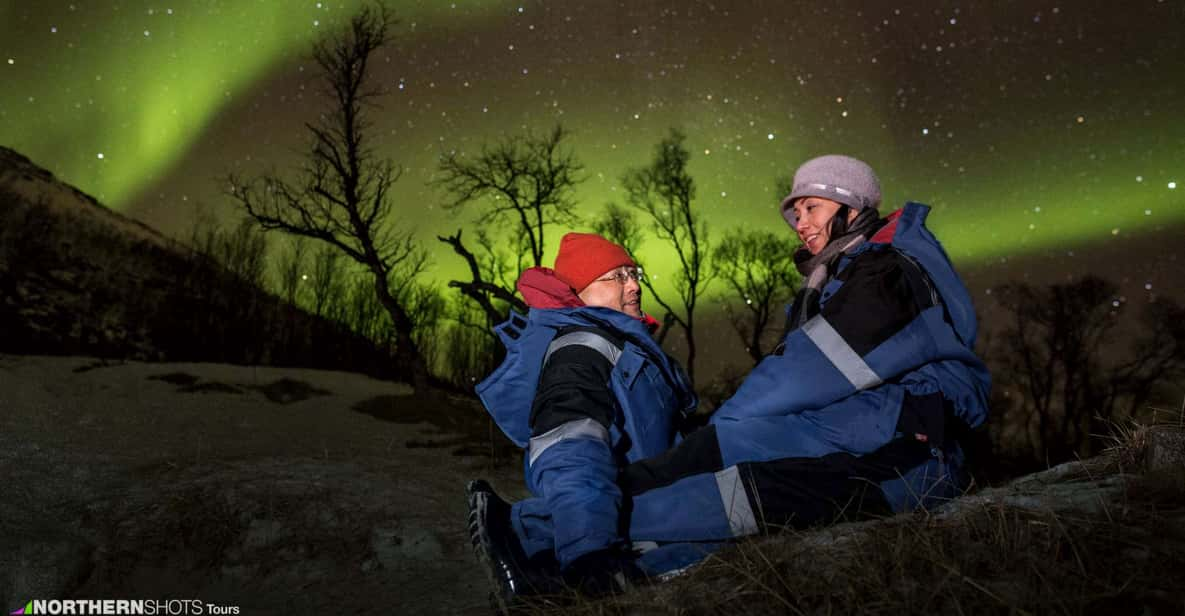
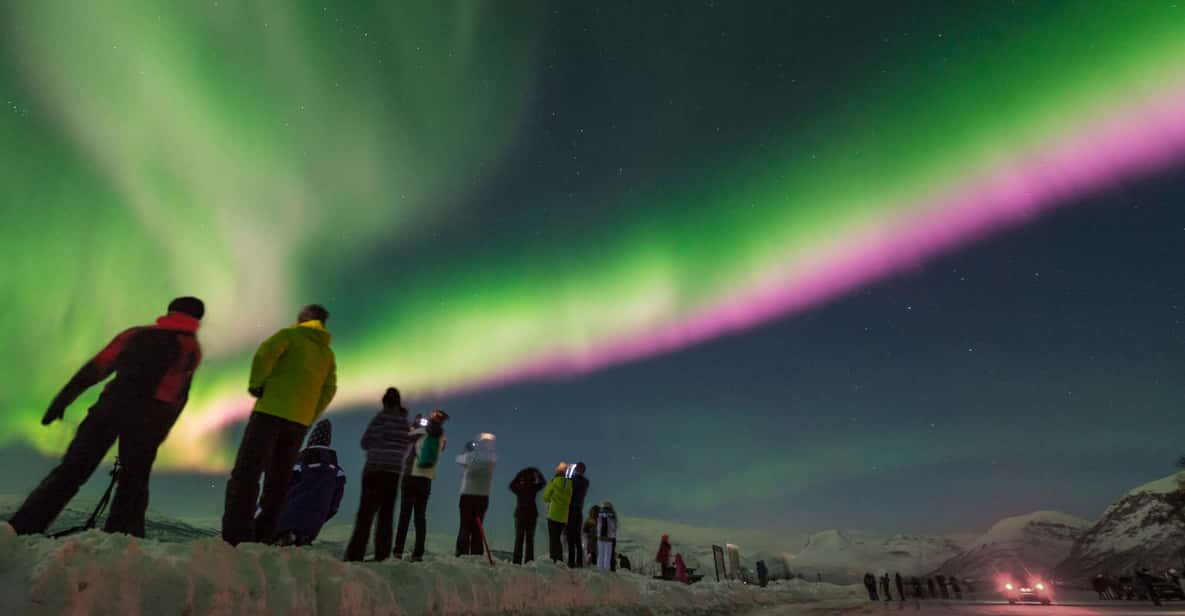
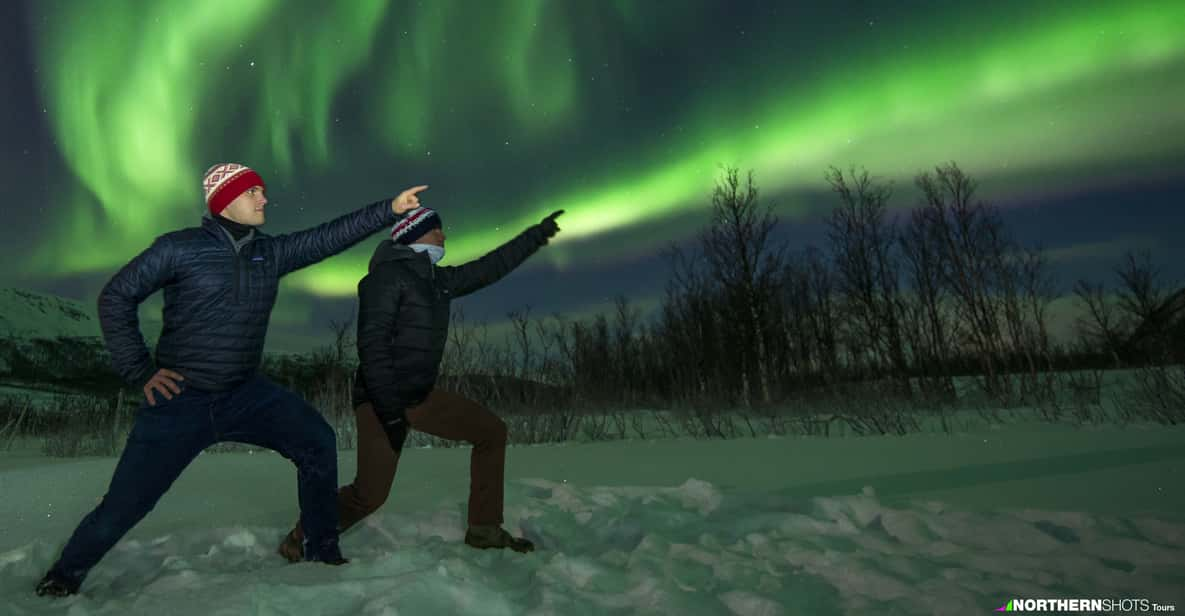
Tromsø Northern Lights Photography Tour - Local Guide and Photo Excursion
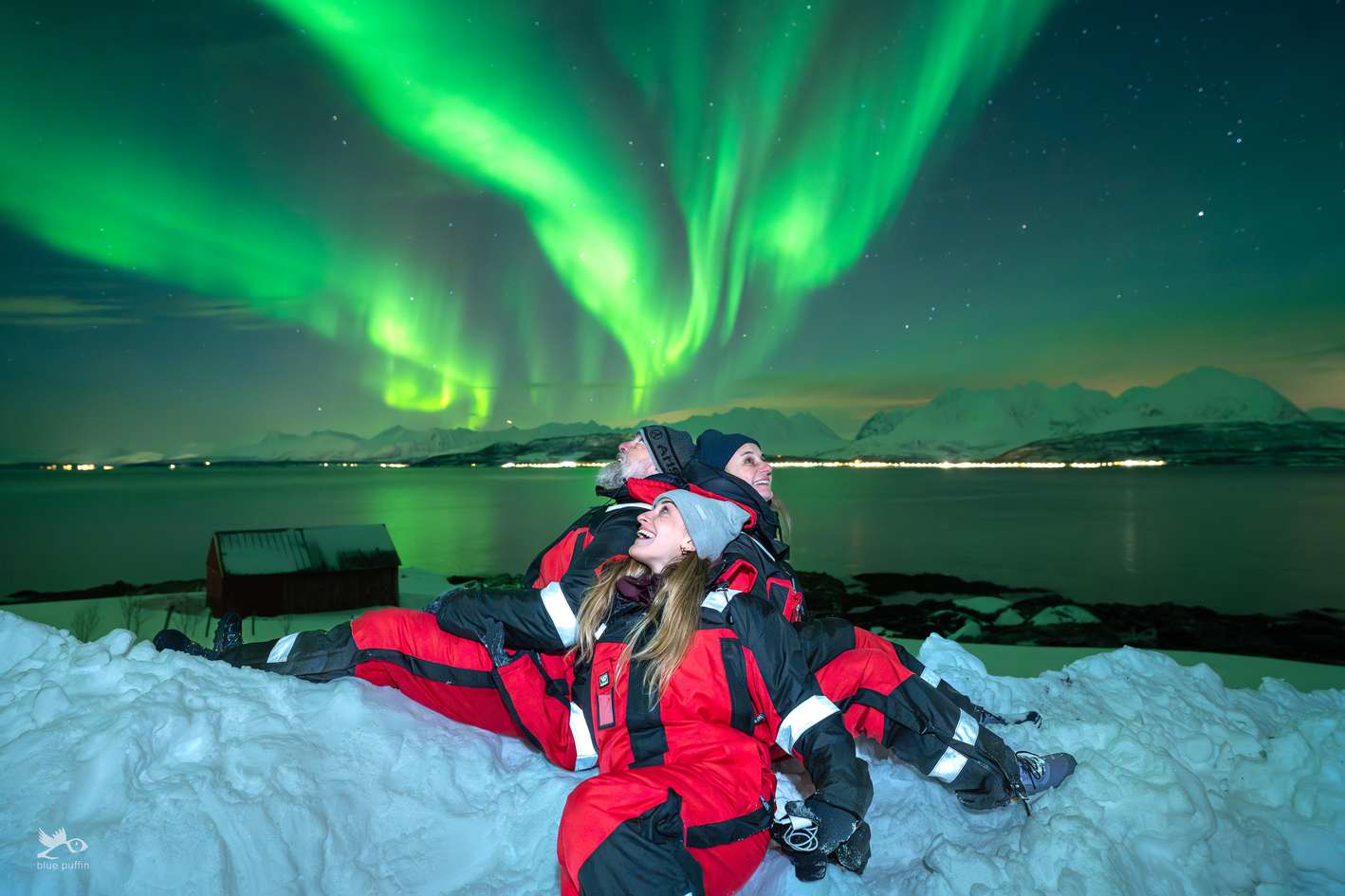
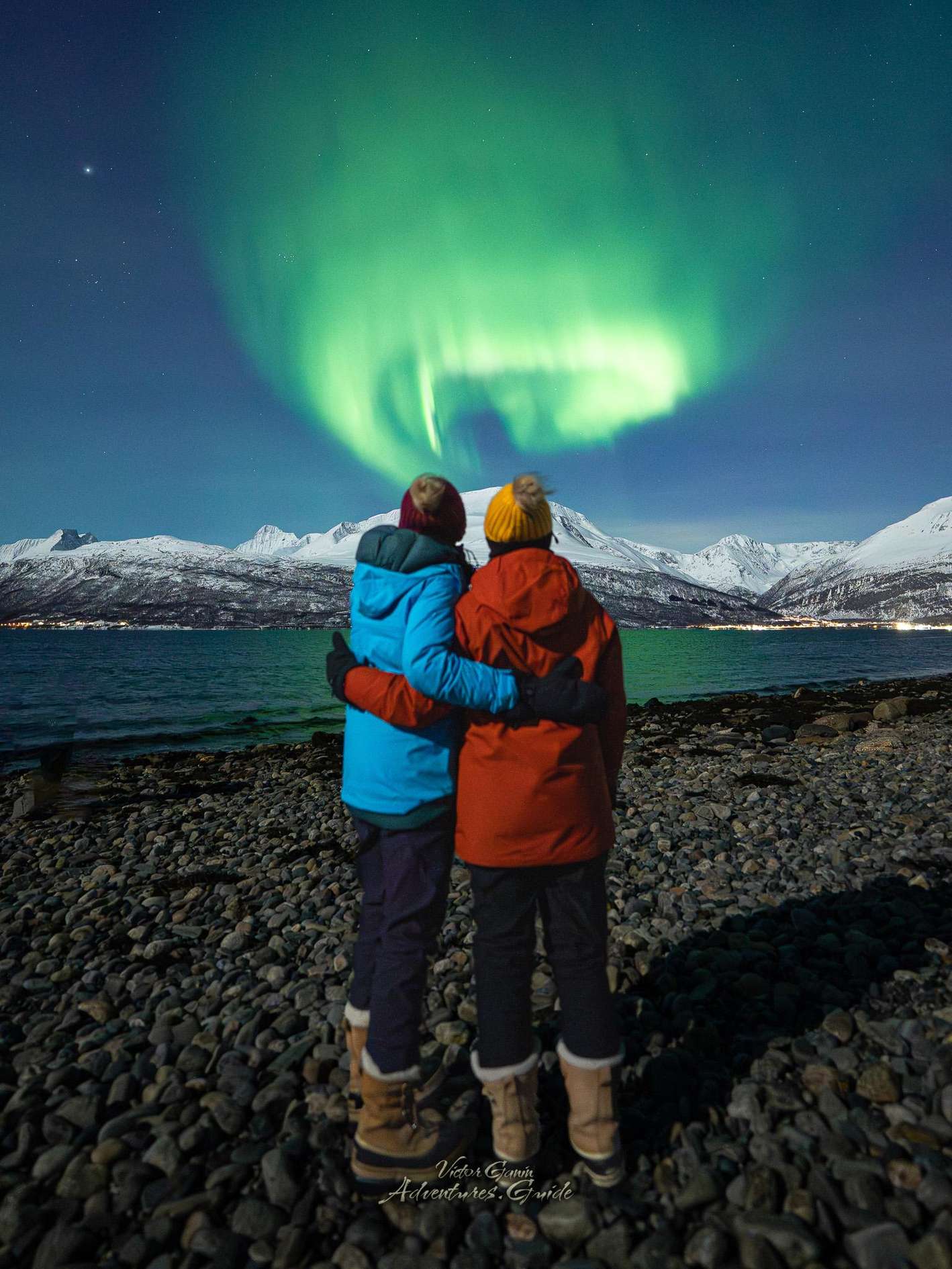
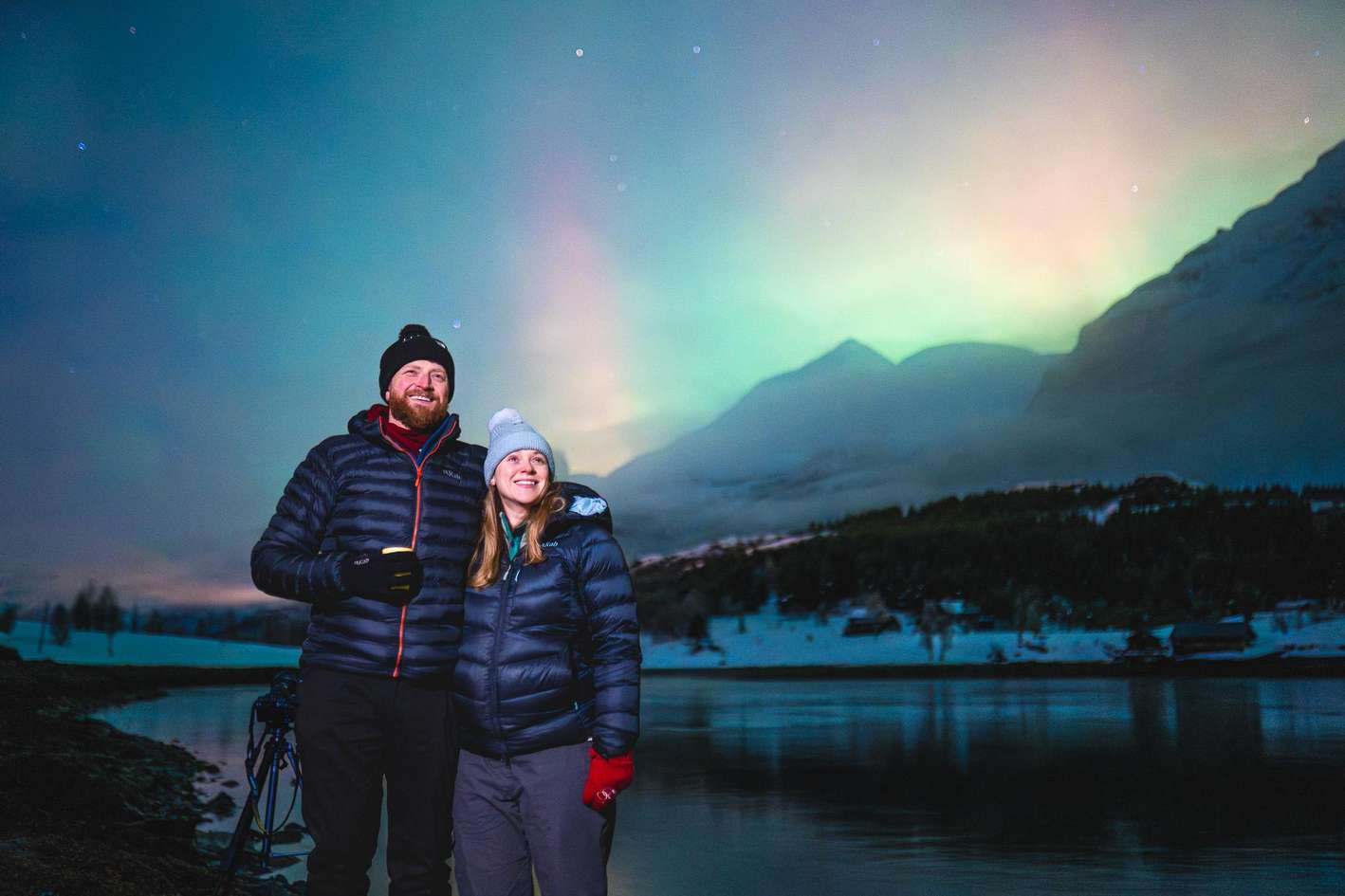
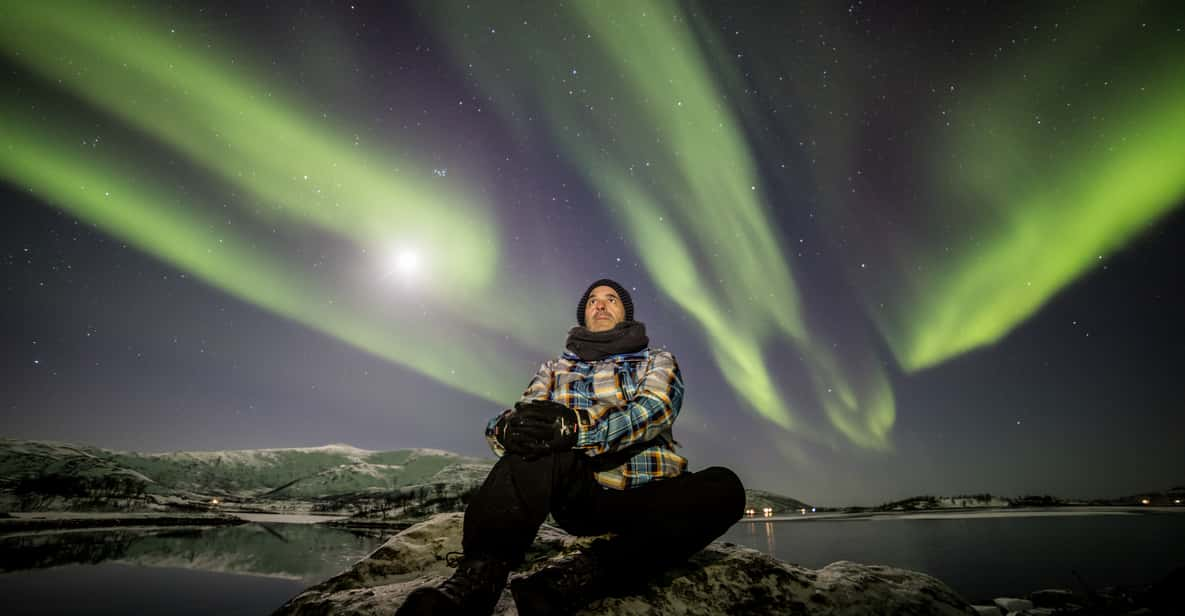
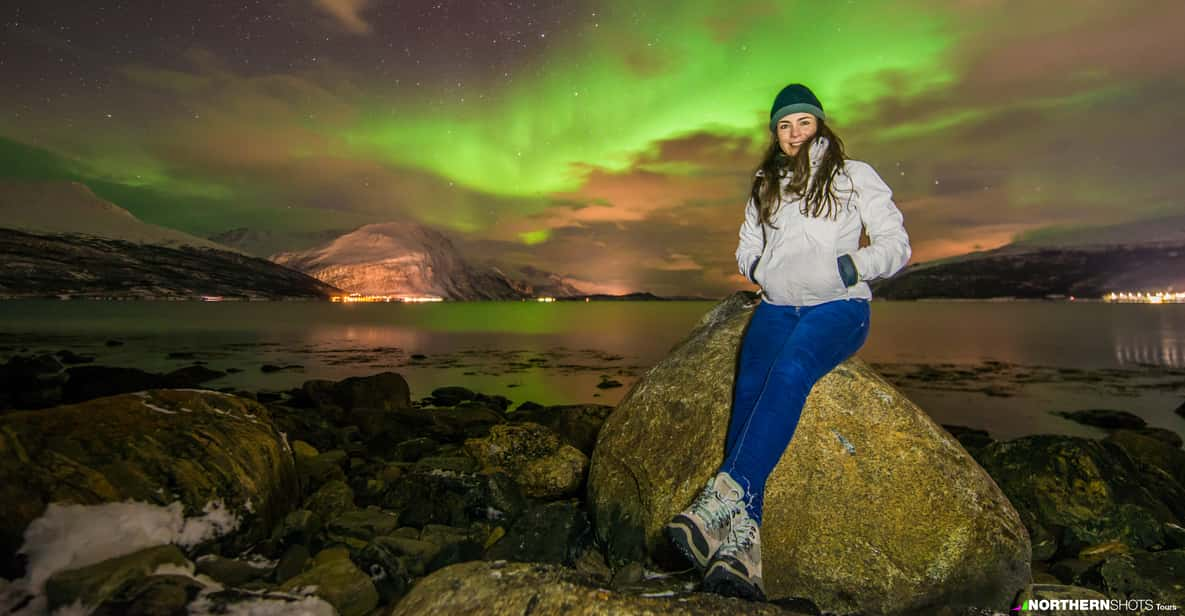
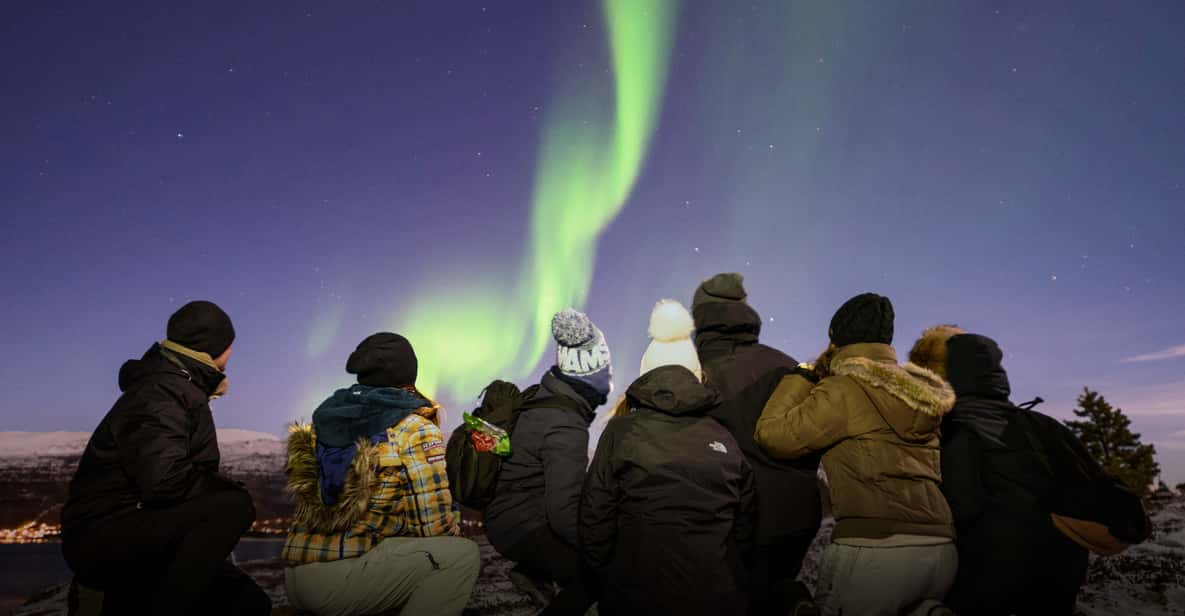
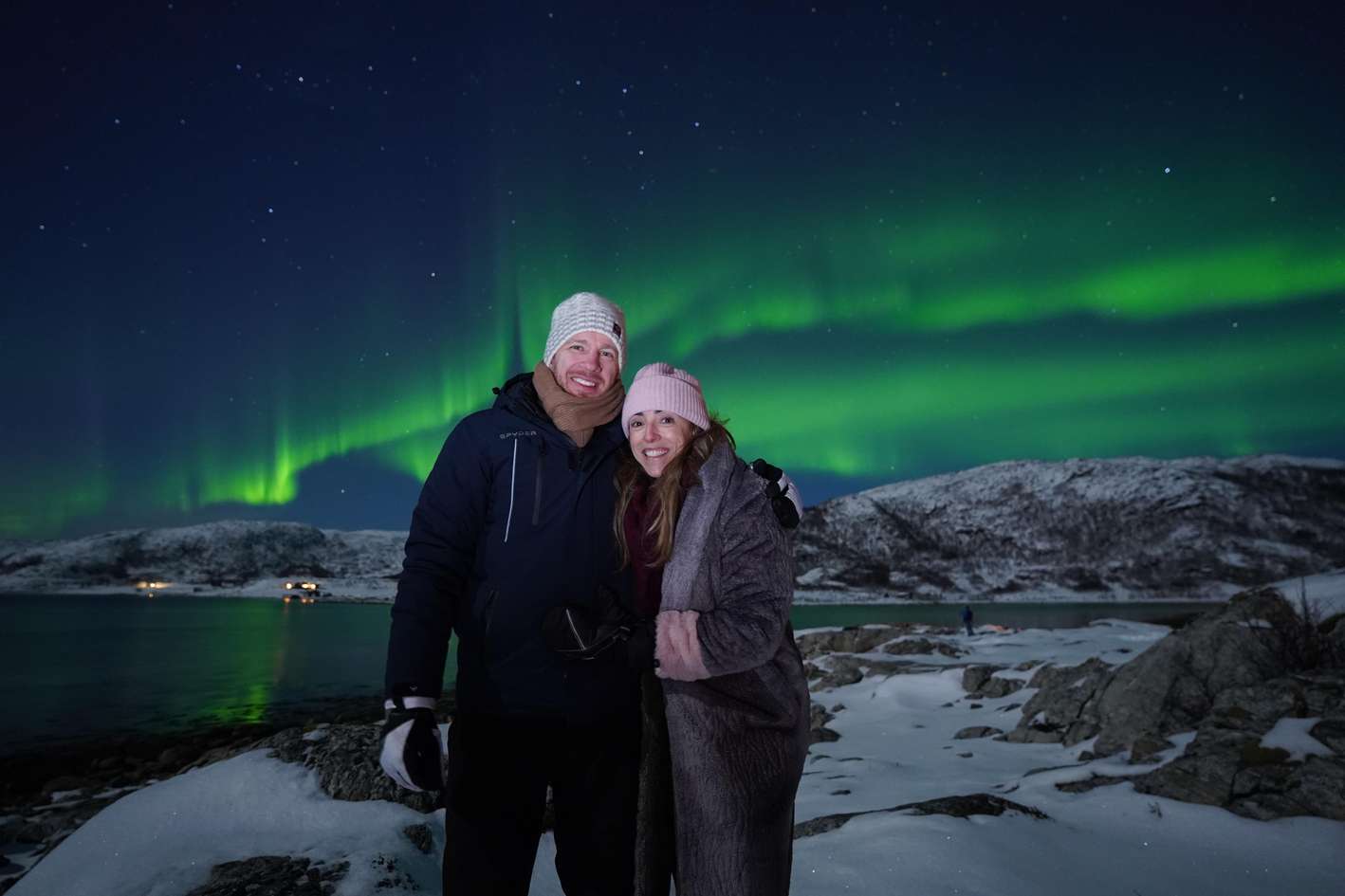
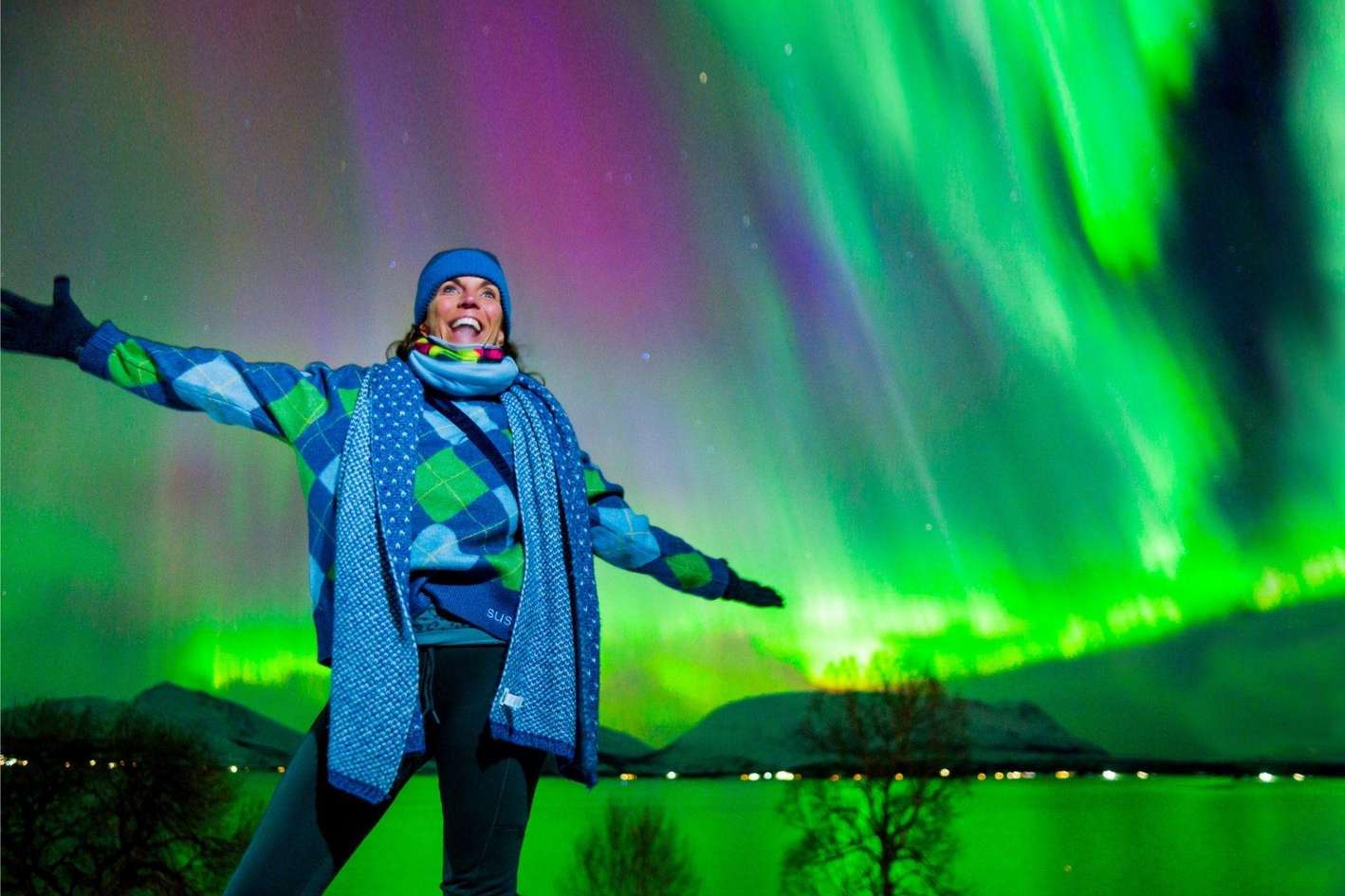
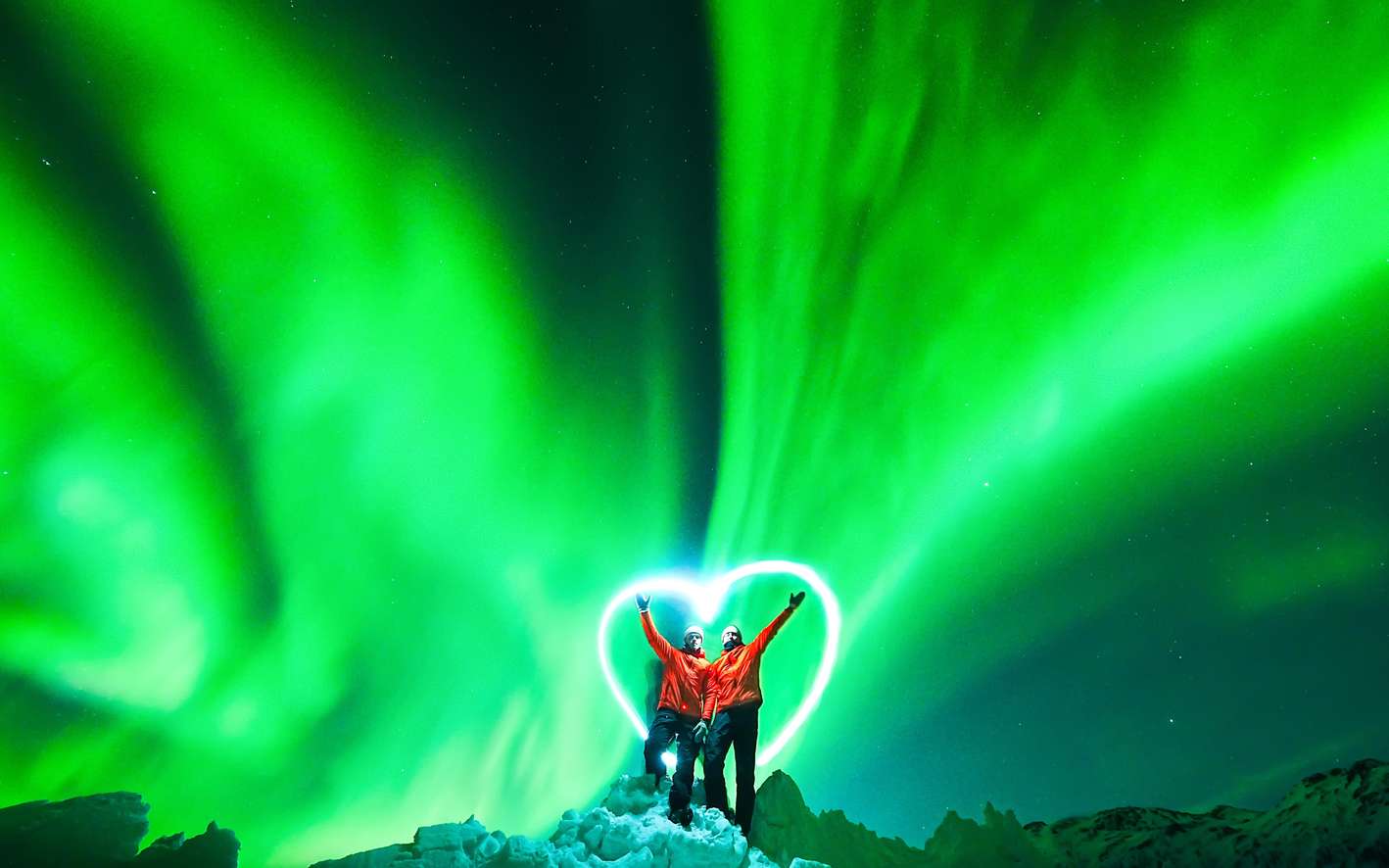
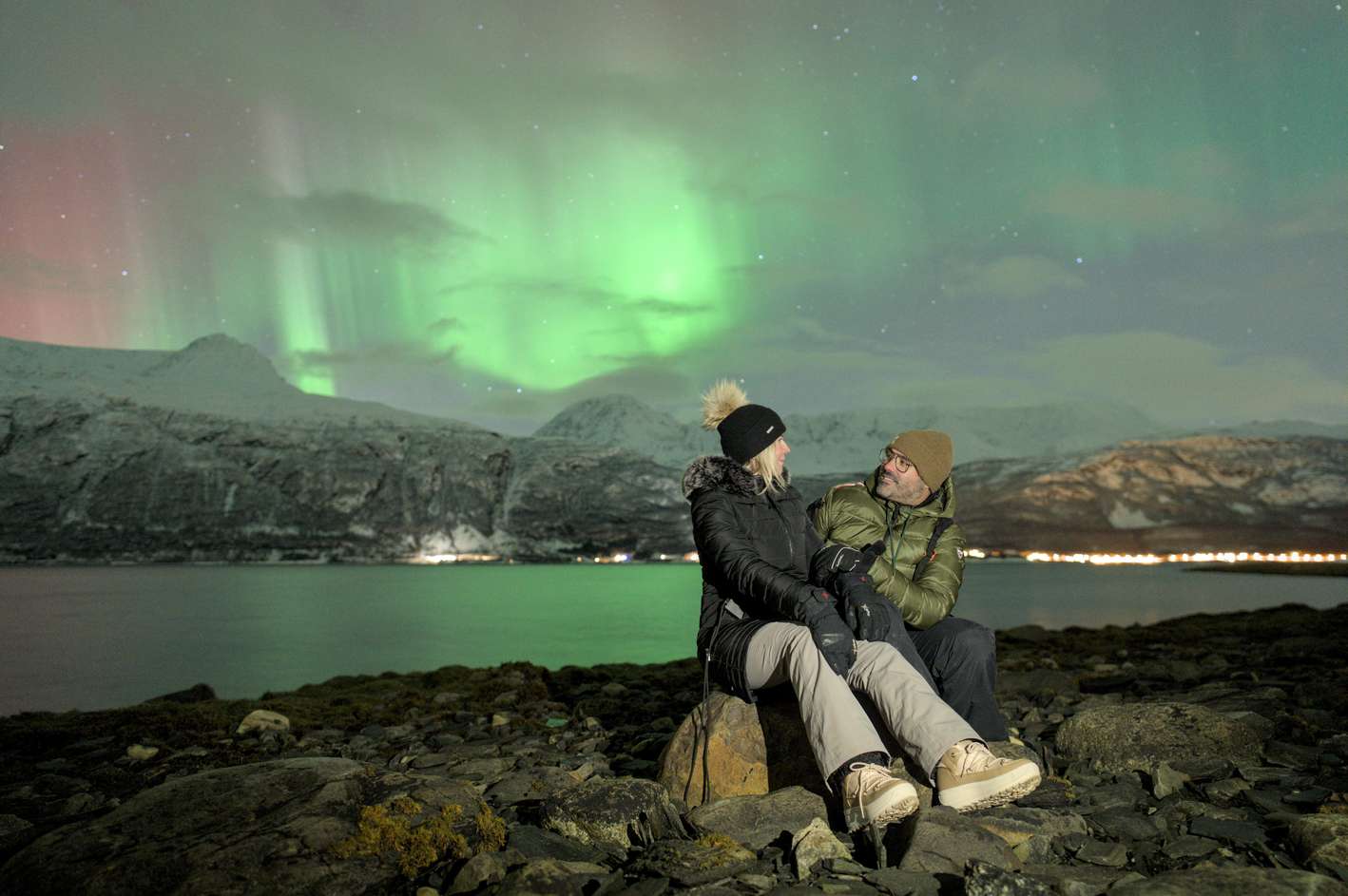
Book a Tromsø northern lights photography tour and go home with more than memories. A local guide helps you set aperture, ISO and shutter speed on your own camera, hands you a tripod, and shoots sharp portraits of you under the green lights. Small groups, campfire warmth and thermal suits included, so your only job is to compose the shot.
4.8★average rating3,407traveler reviews100%free cancellation43countries travelers came from
Choosing your northern lights photography tour
tripods on most photo tours don't fit phones
Aurora photography outings in Tromsø come in two kinds: dedicated photo tours where the guide teaches you to shoot the lights yourself, and chases where a professional photographer captures you under the aurora instead. A small van gives the guide time to set up your camera one on one.
documentSeveral photography chases may cross into Finland to find clear skies, and every adult on board needs a passport or national ID card for the border.
Carry your passport or ID card in a inner pocket every chase night, and keep a digital copy stored separately in case the original gets wet or lost.
Compare northern lights photography tours in Tromsø
tripods on the popular tour don't suit phones, bring a stand for yours
Cheapest
7 hours·English
4.3(876)
Tromso: Northern Lights Photography Tour
Lowest entry price of the four, and the guide runs a photography tutorial with hot drinks and cookies included.
What a night of northern lights photography looks like
tripods here aren't for phones
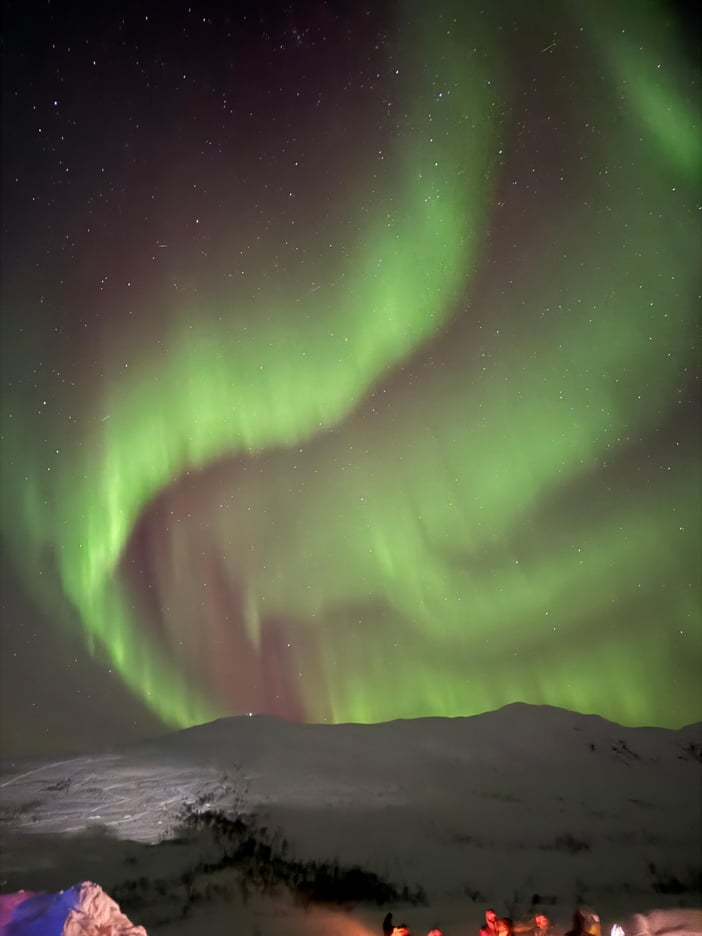
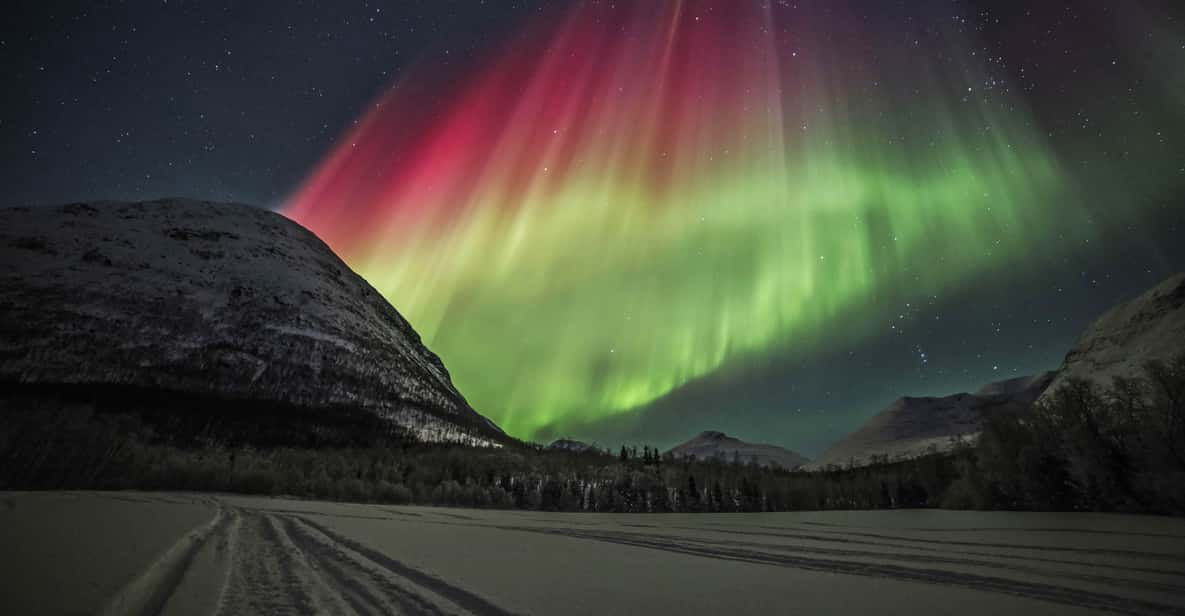
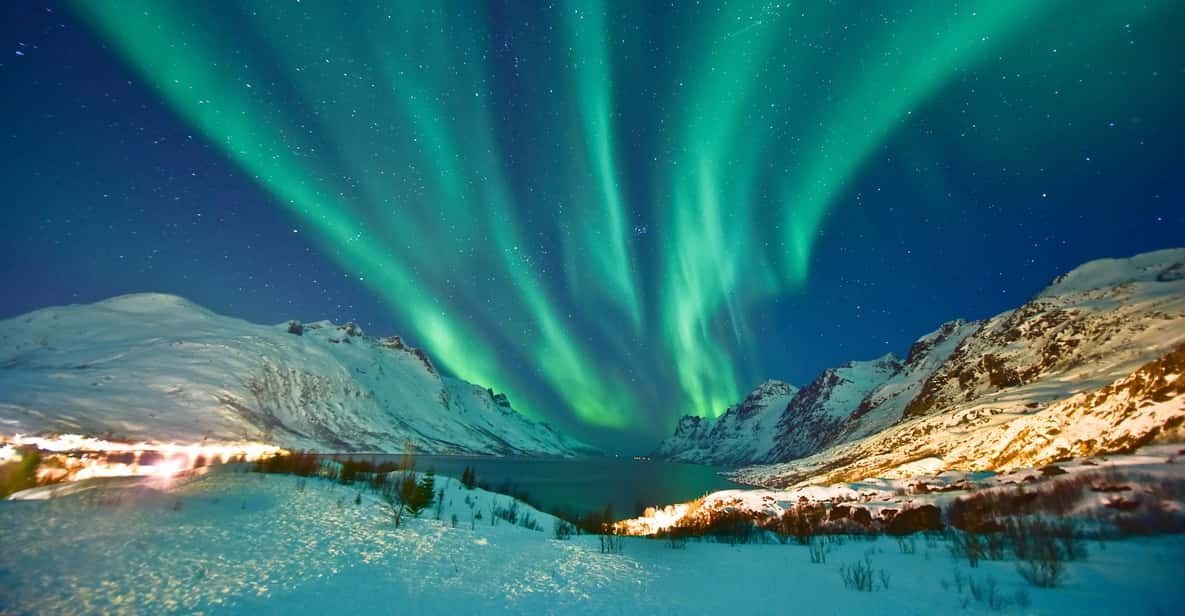
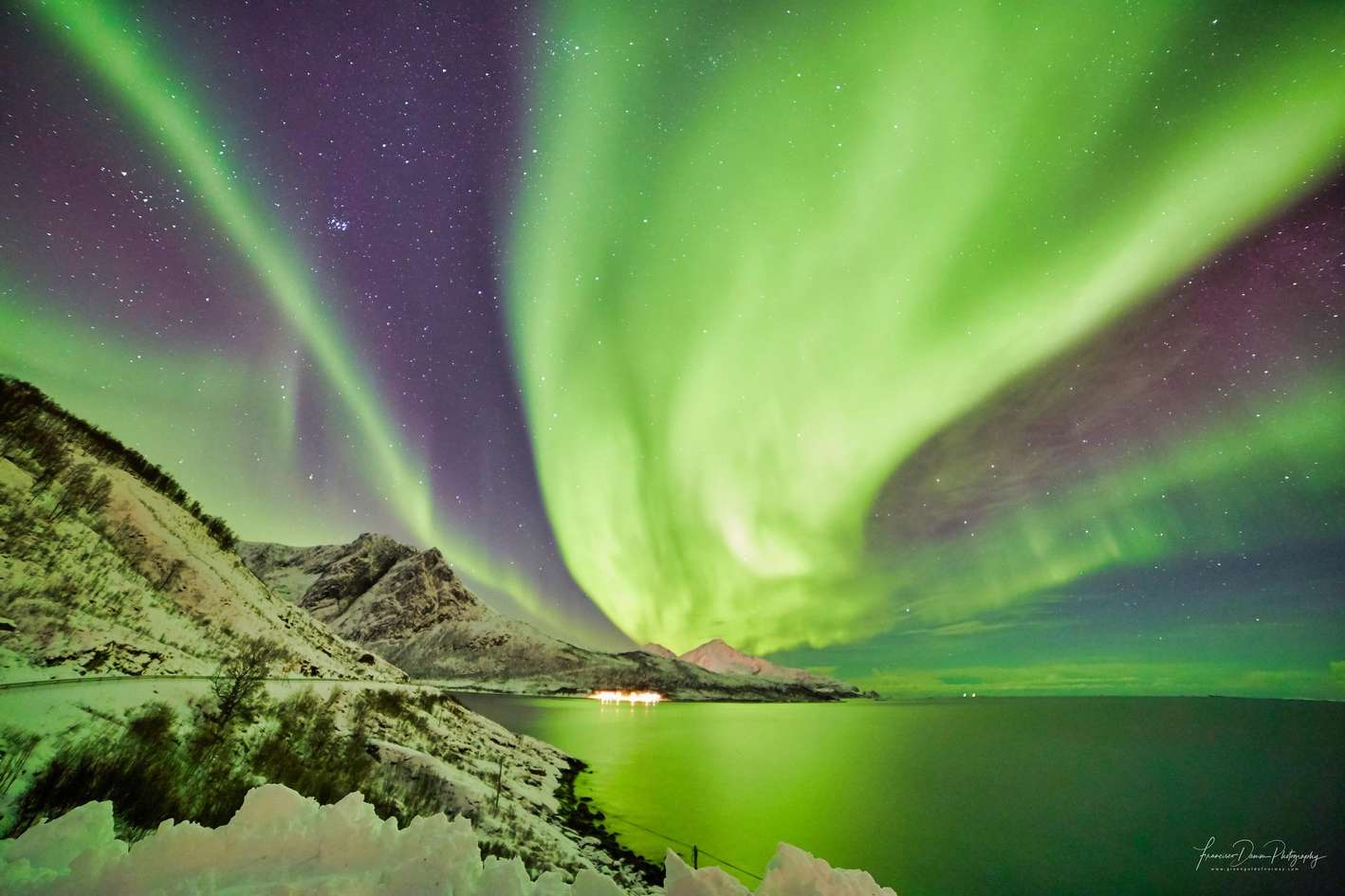
The night ends at a remote fjord or valley chosen for its sky, with steep peaks or still water in front of you and the aurora overhead. Your guide reads satellite maps and cloud forecasts through the drive, chasing clear skies past the coast and, when needed, toward inland valleys or Finland.
Once the skies look promising, camp is set: tripods come out, headlamps go on, and the guide walks you through the settings on your own camera.
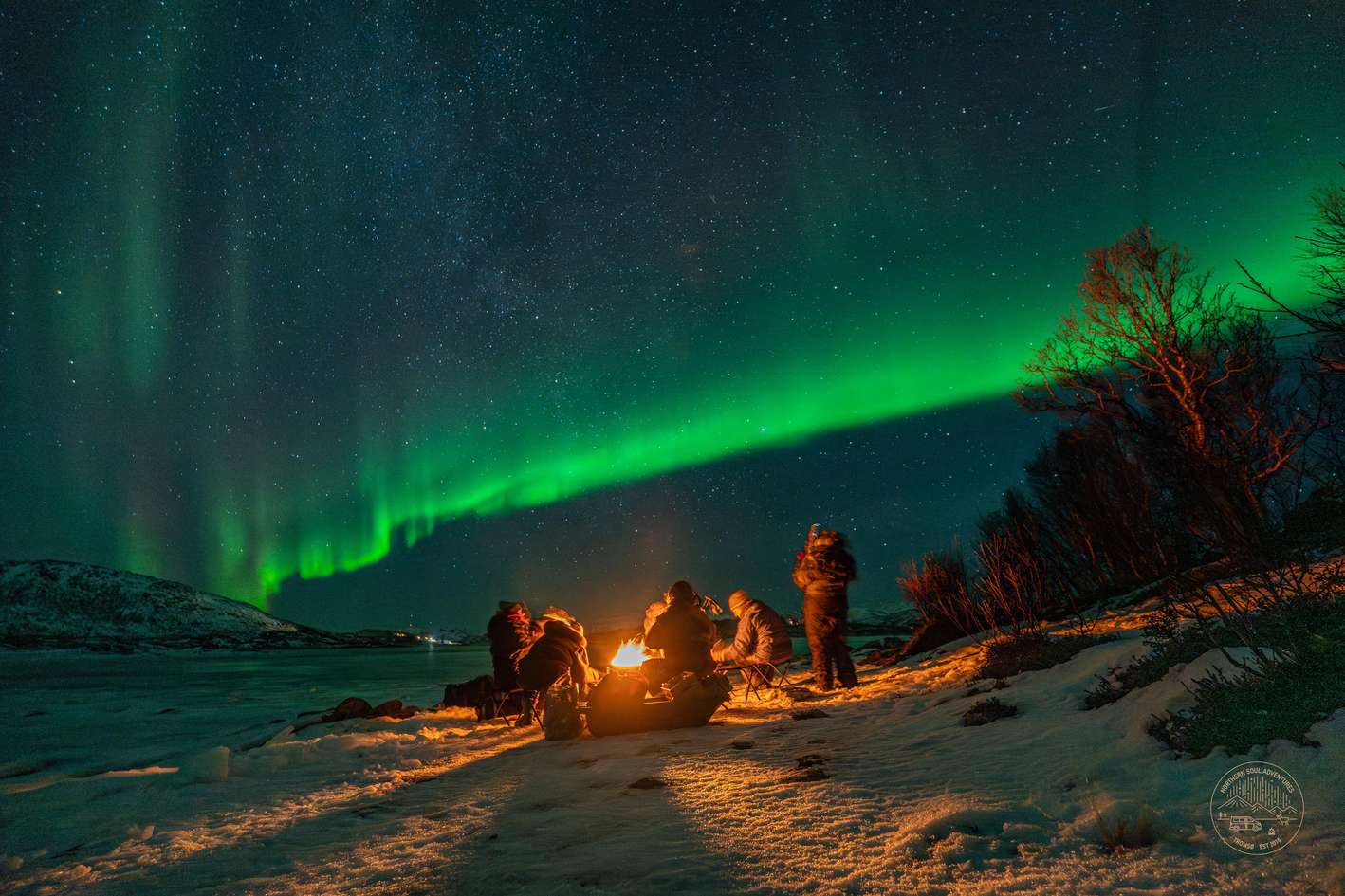
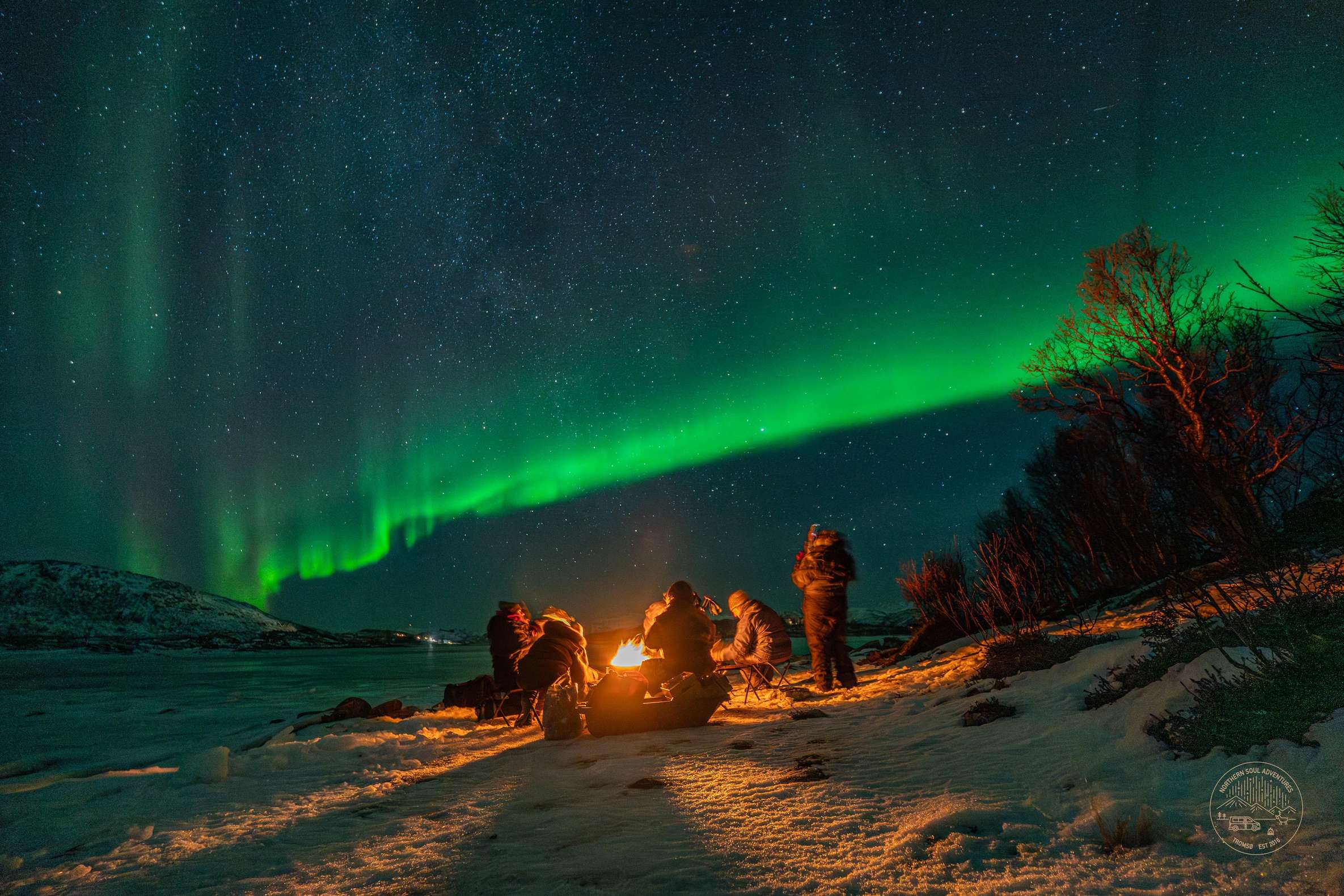
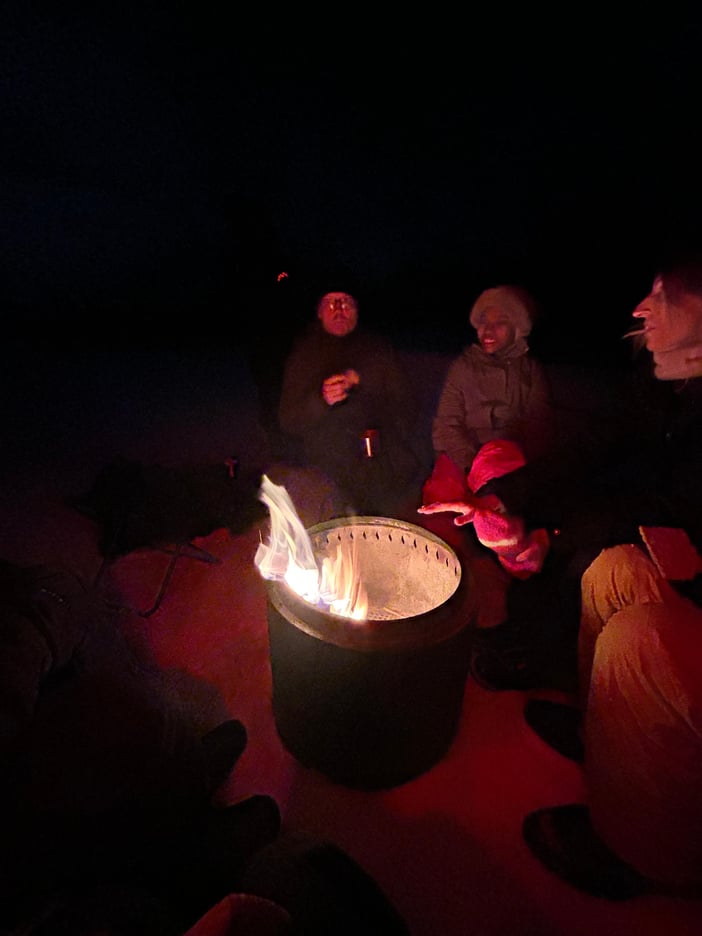
You wait by a campfire with locally made soup, cookies and hot chocolate, shoot as the lights build, and leave with free professional photos in web resolution plus a drop-off at your hotel.
Stop 1Camera setup with your guide· about 40 minThe guide helps you set aperture, ISO and focus on your own camera, and hands out tripods and headlamps before the shoot.Stop 2Driving to clear skies· about 90 minThe vehicle leaves the city lights behind, following live forecasts through Arctic microclimates to a remote spot with dark skies.Stop 3Campfire and hot food· about 70 minYou settle in by the fire with locally made soup, cookies, tea, coffee and hot chocolate while the sky is watched.Stop 4Shooting under the lights· about 140 minYour guide helps compose and expose shots, with hand warmers and heated insoles keeping your fingers and feet working.Stop 5Photos and hotel drop-off· about 20 minYou receive free professional photos from the tour in web resolution, then a ride back to your city centre accommodation.
Included
Transportation by comfortable vehicleLocally made soupCookies, tea, coffee, and hot chocolateInstructions on how to photograph the AuroraTripods (not suitable for mobile phones) and headlampsFree professional photos from the tour in web resolution
Not included
Child safety car seats (required by law for children under 120 cm)Child seat booster (minimum height 120 cm) available on request
Comparing our tours for northern lights photography, side by side
the small-group tripods don't fit phones
Green marks the lowest price. Each price says whether it is per person or per group.
Tour
Price
Duration
Pickup
Languages
Best for
Our pick
Tromsø: Northern Lights Photography Tour
4.8★ (811)
from $242per person
6 hours
no
English
hands-on learners who want tripods, coaching and a small group
Most reviewers watched their guides drive for hours, sometimes across into Finland, to reach clear skies.
Best surprise
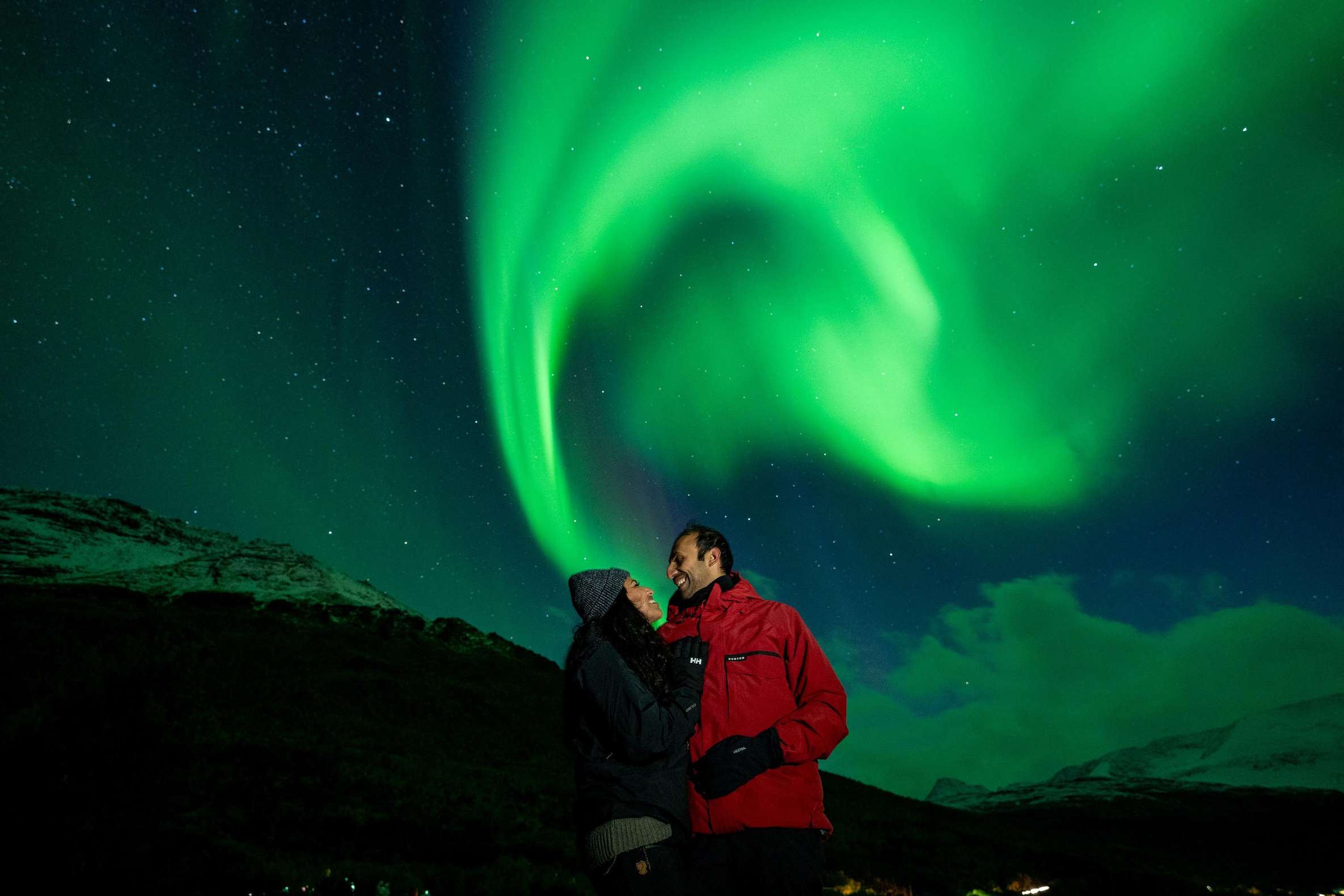
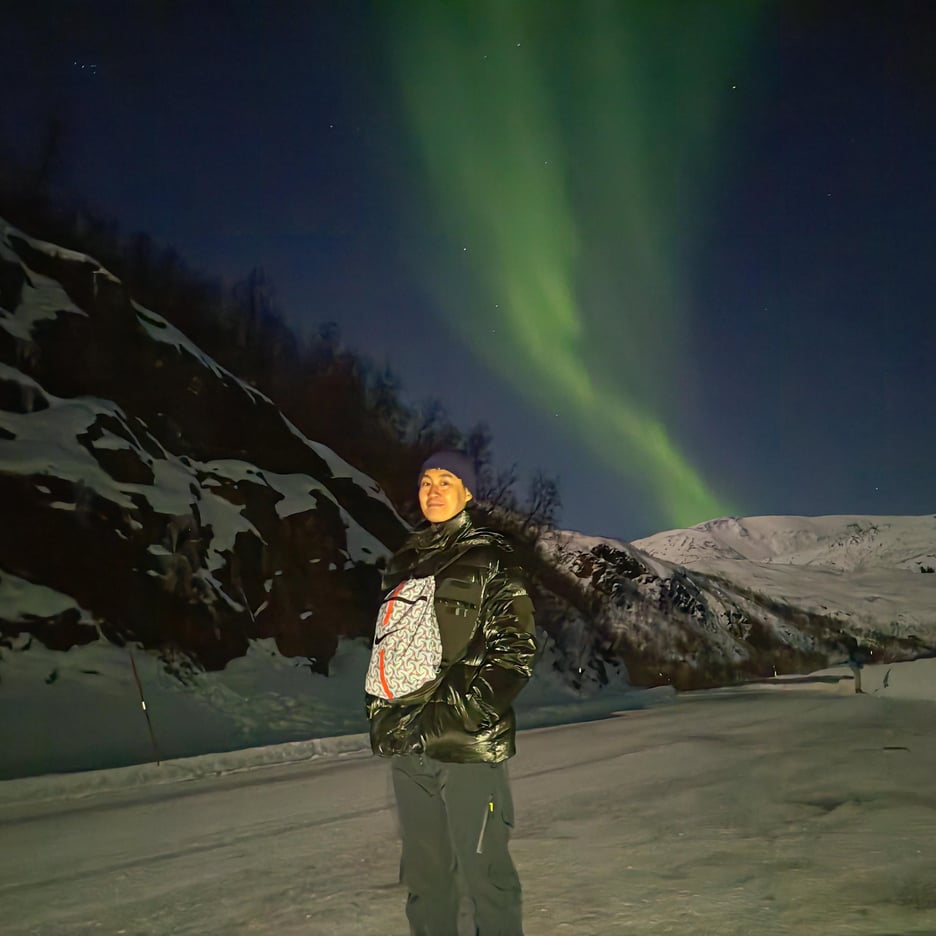
Several found the guide's portraits of them under the aurora far sharper than any photo they could take themselves.
Most common wish
Many wished they had booked a second night, since cloudy skies can swallow a single evening.
How to book your Tromsø northern lights photography tour
small groups sell out 2 to 4 weeks ahead
01
Pick your date early
Book one of your first nights in Tromsø, not the last. If the lights stay behind clouds, you can reschedule a later evening instead of flying home with no photos.
Pro tipSmall-group departures in December and January sell out 2 to 4 weeks ahead, so lock your date before you land
Common mistakeFirst-timers book their final night and leave no room for a rebooking when the sky closes in
02
Choose the right option
Compare group size and language before you pay. Some photography tours cap the group at 8, others run a minibus or coach, and dedicated outings in French, German, Italian and Chinese exist.
Pro tipA smaller van changes route faster and reaches more photogenic spots than a big coach
03
Check what the tour includes
Read the included list before booking: thermal suits, tripods and professional photos are on most photography tours, but not every tour supplies boots or suits.
Pro tipBring your own base layers and boots; the provided suit only works over warm clothing
ImportantCarry a passport or ID card on the night, because chases that cross into Finland require a valid travel document
04
Plan the meeting point
Most chases leave from central spots along the waterfront, such as the Prostneset terminal or outside Scandic Ishavshotel. Hotel pickup is not standard, and central hotels sit within a short walk.
RecommendedWear slip-on ice grips over your winter boots, since pavements near the harbour turn to polished ice
05
On the night itself
Arrive at the meeting point about 15 minutes early, eat a proper dinner first, and keep your phone and spare batteries warm in an inside pocket.
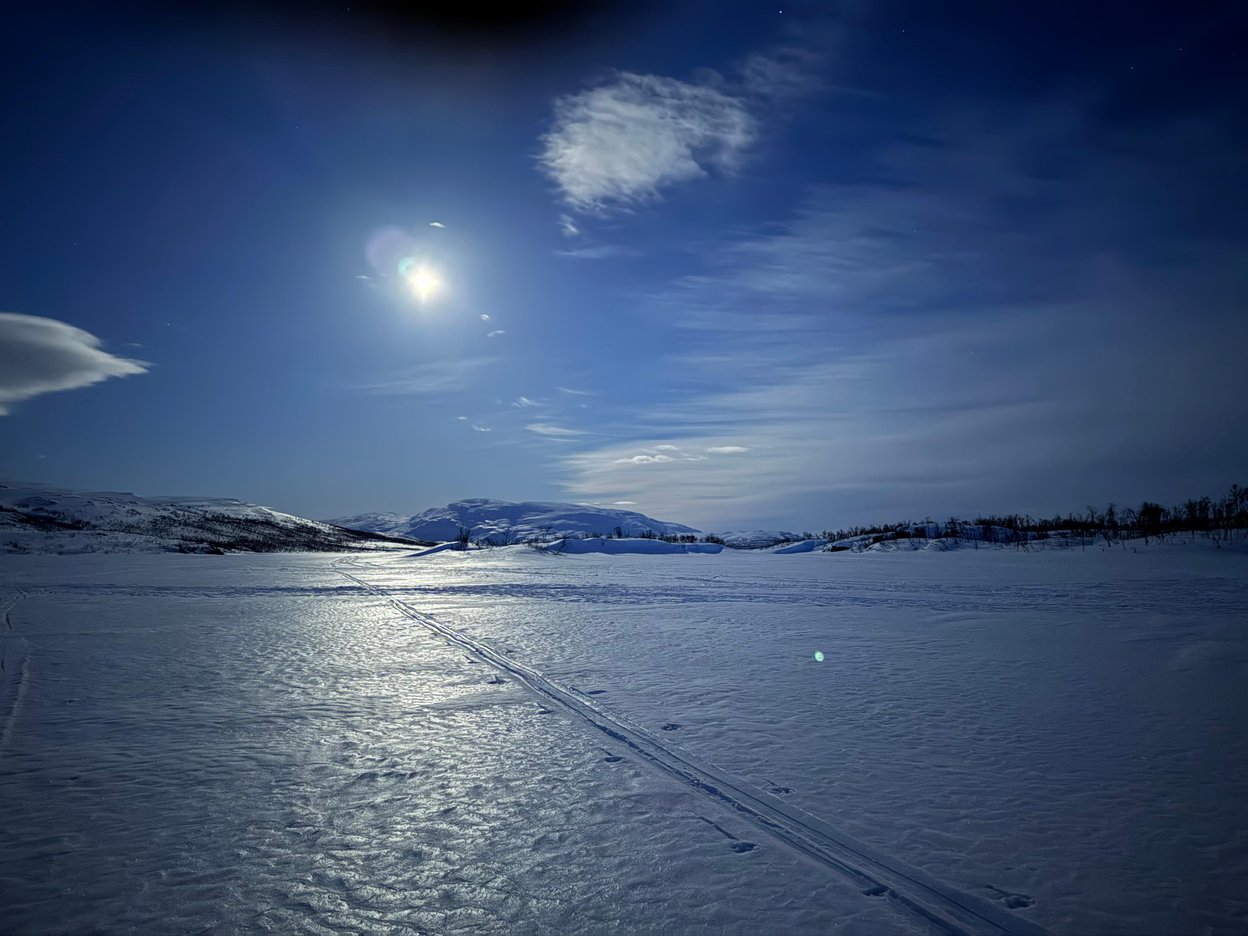
Common mistakeWorrying about a full moon; strong displays stay clearly visible, and moonlight lights up the snowy foregrounds for your shots
What to know before you book a northern lights photography tour
spare batteries live in an inside pocket
Can stop the dayGood to knowGood news
01
ChoosingWhat it is, who it suits, when to go
4
Your photos
Guides shoot portraits of you under the aurora on their own cameras, then send files by email link or online gallery. Delivery runs from within hours to a few days depending on the tour, and web-resolution photos are included on the small-group tours.
What to wear
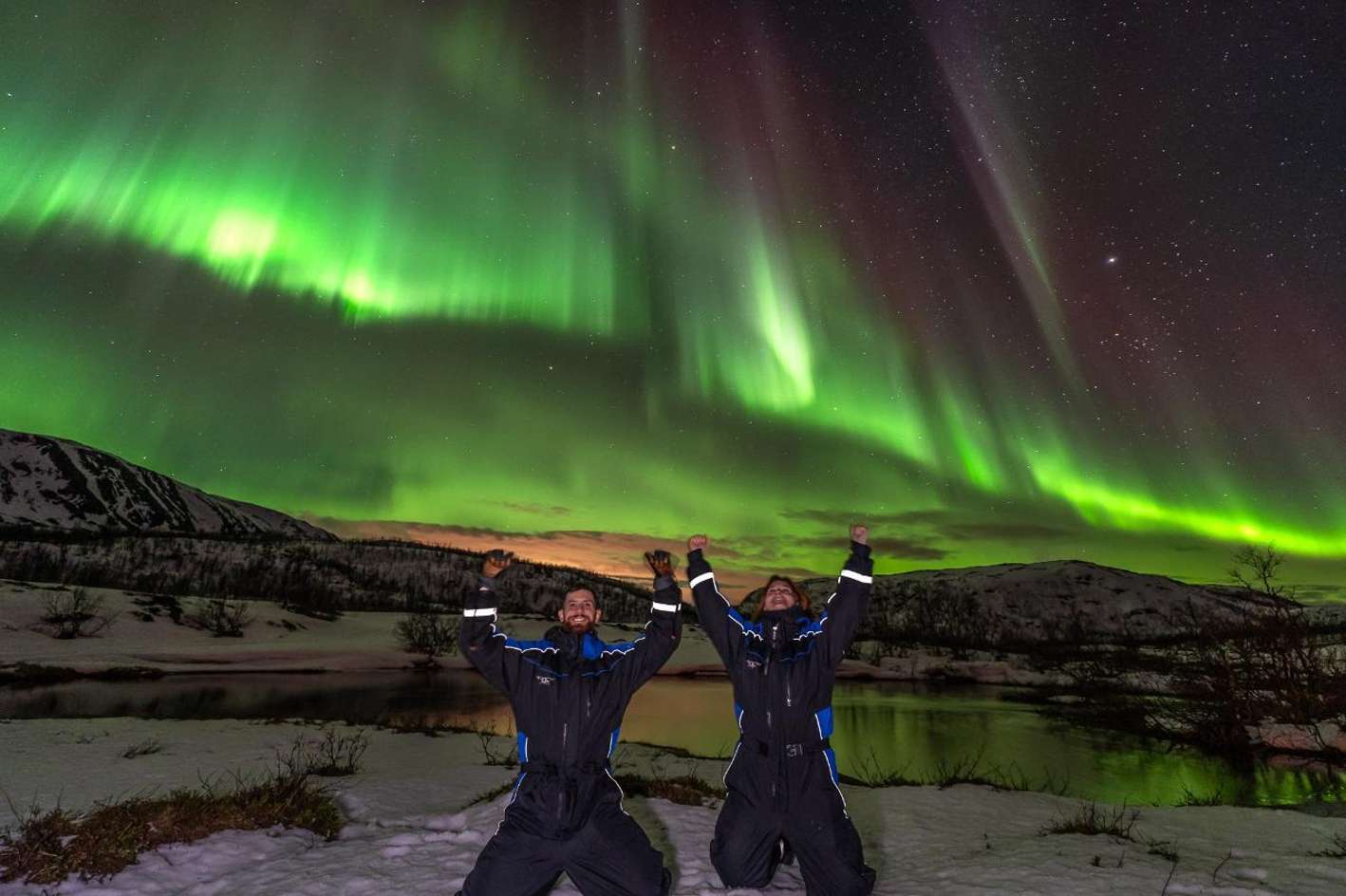
Small-group tours provide thermal suits, hand warmers and heated insoles, but you still bring your own base and mid layers, insulated waterproof boots, a hat and mittens. Large bus tours often leave outerwear to you, so read each list before booking.
Group size
Formats range from a minivan capped at 8 to a minibus capped at 15, so check the option when booking. Smaller vehicles reach photogenic fjord and beach stops more easily, and on big buses you may park beside other operators in high season.
Toilets
Remote viewing spots have no built facilities, so be prepared to use the outdoors. Some tours stop at rural gas stations along the drive, and winter closures of roadside toilets are common.
02
BookingHow far ahead, and what happens if plans change
1
Cancellation
Every tour on this page lets you cancel up to 24 hours ahead for a full refund. If weather or unsafe roads force an operator to cancel, you get a refund or a free reschedule.
03
Before you goPapers, health, what to bring
3
Batteries
Cold drains power fast: a phone battery can die in 30 to 45 minutes at -15°C, and camera batteries lose 60 to 70% of capacity. Carry spares and power banks in an inside jacket pocket, and seal gear in a plastic bag before re-entering a warm bus.
Gloves
Adjusting camera dials with bare fingers risks frostbite, so pack thin liner gloves under heavy mittens. Flip-top photography mitts let you turn dials while keeping hands covered, and tours ask you to bring gloves as standard.
DocumentsCan stop the day
Bring a passport or ID card on every one of these chases. Routes may cross into Finland to find clear skies, and Schengen rules require a valid travel document even though border checks are rare.
04
On the dayWhere to be, when, and how you get there
1
Meeting point
These photography tours meet at central spots along the downtown waterfront, mainly at the Prostneset terminal or near the Radisson Blu, and hotel pickups are not standard. Most central hotels sit within a five-minute walk, so plan to arrive on foot.
05
During the tourWhat is expected of you
3
Cameras
Automatic modes give black or blurry frames, so guides switch you to manual: a low f-stop such as f/2.8, ISO between 400 and 1600, and a multi-second shutter. No prior photography experience is needed, and guides help adjust settings on phones too.
Tripods
You do not need to pack a tripod. The small-group photography tours lend professional tripods and headlamps, though one tour notes its tripods do not suit mobile phones, so bring a small phone clamp if you shoot on a handset.
Age limitsCan stop the day
The photographer-led tours set a minimum age of 14, one small-group tour starts at 8, and guests over 70 are not accepted on the photographer-led outings. The dedicated photography tour also requires a minimum height of 135 cm.
A northern lights photography night in Tromsø, planned
photos arrive by email the next day
The lights dance overhead on nearly every clear winter night here, and the camera sees far more of them than you do. One evening, from the departure quay to the photos in your inbox, decides whether you come home with frames worth keeping.
Tromsø· 69.65° N, 18.96° E
If you only remember three things
1
Leave the city: chasing beyond the streetlights lifts sighting odds from near nothing to nine in ten on a clear night.
2
Book for February or March, and reserve small-group departures 2 to 4 weeks ahead.
3
Keep spare batteries in an inside pocket; at -15°C a phone can die within 45 minutes.
Is a northern lights photography tour in Tromsø worth it?
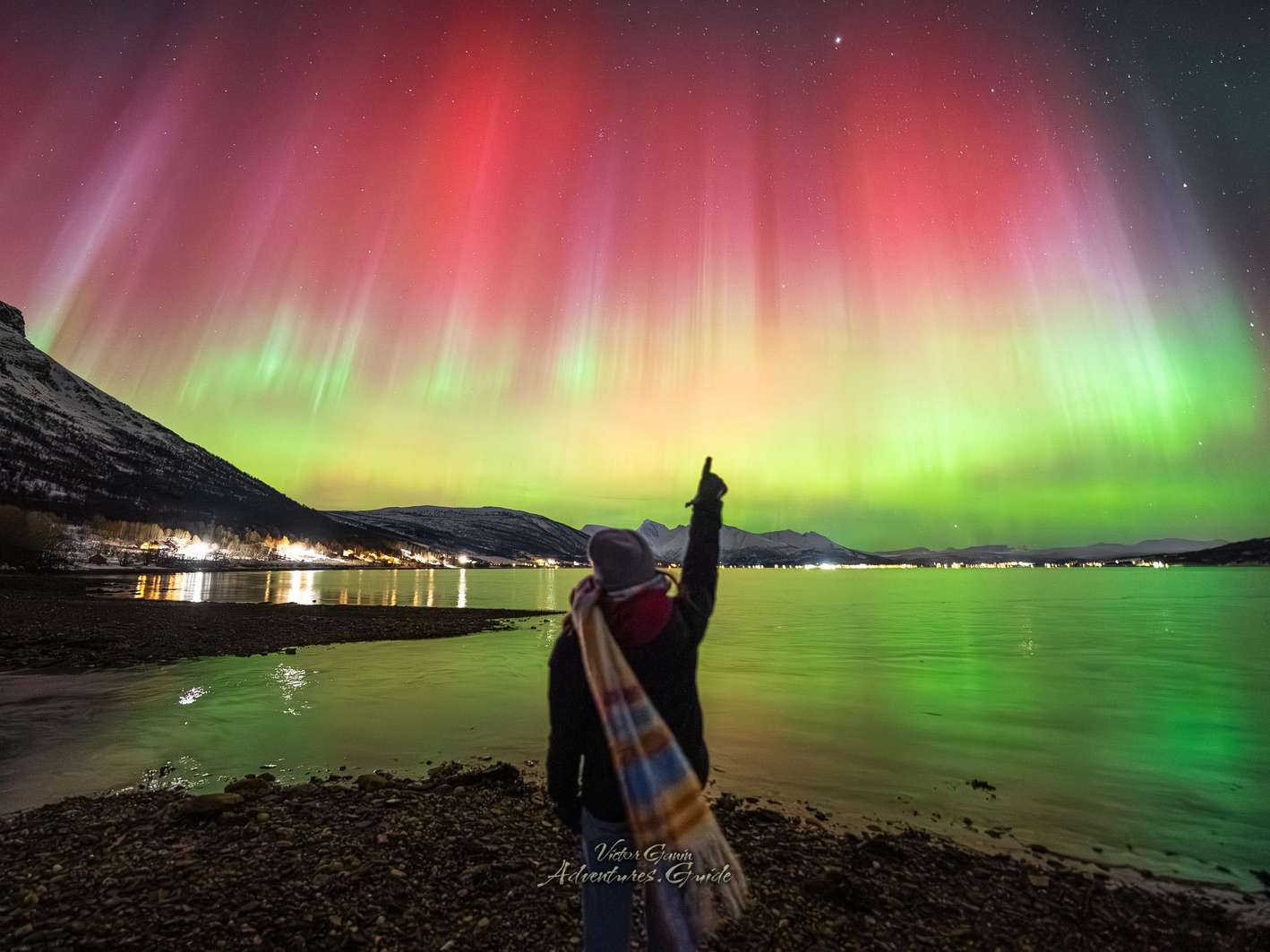
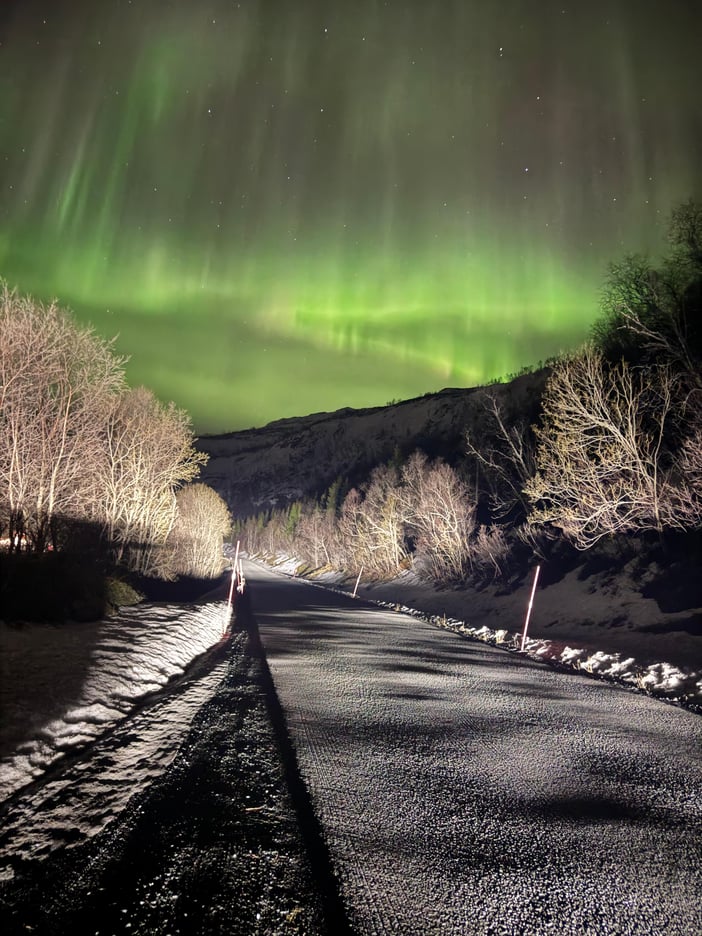
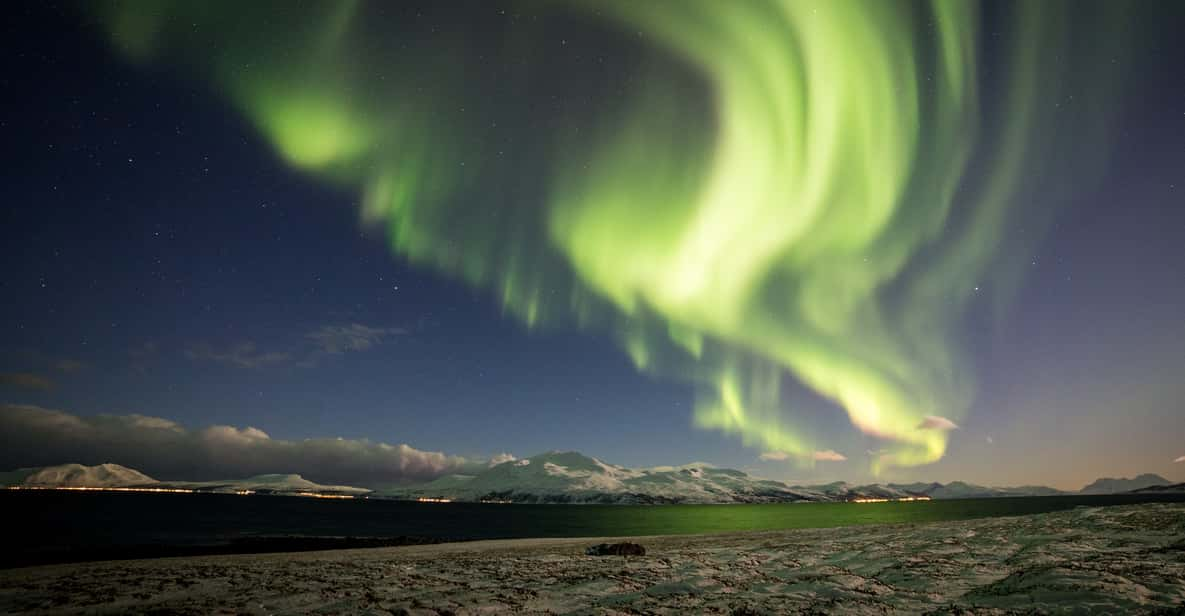
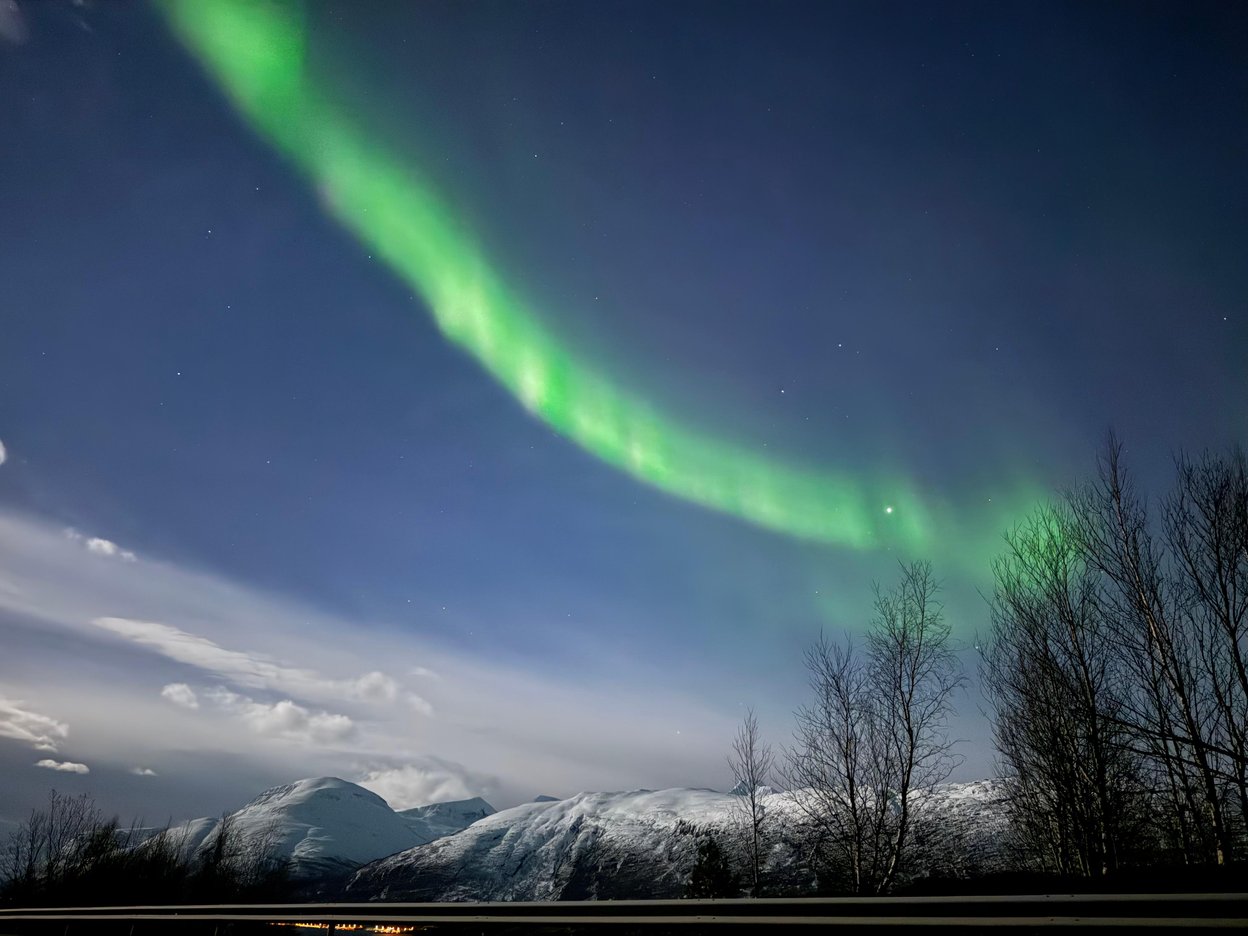
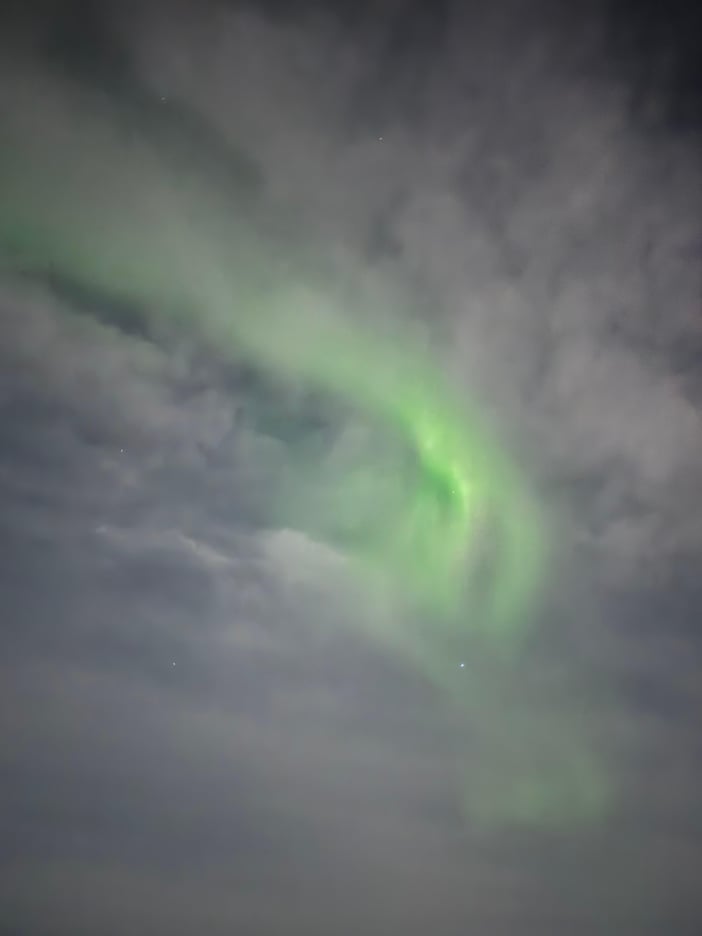
Snow squeaks underfoot on the dark streets of Tromsø, and the sky flickers pale grey over the harbour. On film that same sky is a sheet of green. The eye needs bright light to see colour, so faint aurora reads as grey clouds in town; a camera stacking seconds of exposure keeps every hue.
That gap is the first argument for a tour. Downtown light pollution washes out the faint details, and on the roughly nine evenings in ten when the coast sits under cloud, the odds of seeing anything from town collapse to about one night in twenty.
A guided chase that watches satellite cloud maps and drives inland, or across into Finland, lifts the odds to nine or ten in ten.
On a clear night, the lights can show above the city, and darker pockets like Prestvannet lake or Telegrafbukta beach help. But when Tromsø is clouded, only a moving van gets you to the gaps.
A traveler's note
Absolutely spectacular night! Strong solar activity and perfectly clear skies, seamless arrangements. Guide Thomas's passion, knowledge and photography skills made it unforgettable, we now have stunning photos of a night we'll never forget.
What happens on a northern lights photography night
The evening starts on the downtown waterfront, outside the Scandic Ishavshotel, at the Prostneset terminal or near the Radisson Blu. Most hotels sit within a five-minute walk. Vans leave in the early evening, sometimes as early as late afternoon during the polar night.
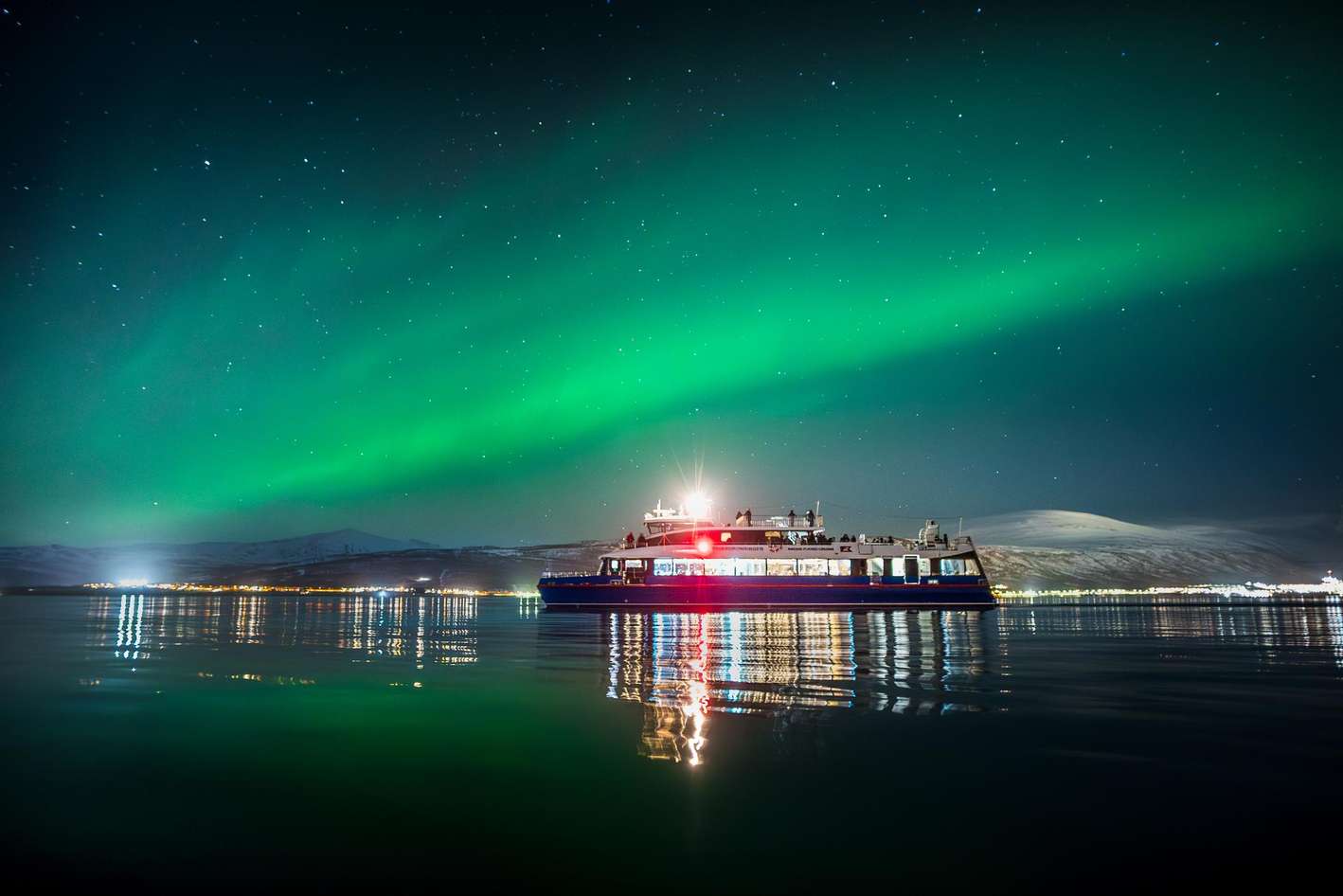
From there the night belongs to the forecast. Guides check satellite cloud images and drive toward whatever gap has opened: west to Kvaløya when the fjords catch a break, inland about two hours along the E8 to the rain shadow behind the Lyngen Alps at Skibotn, or across the border into Finland.
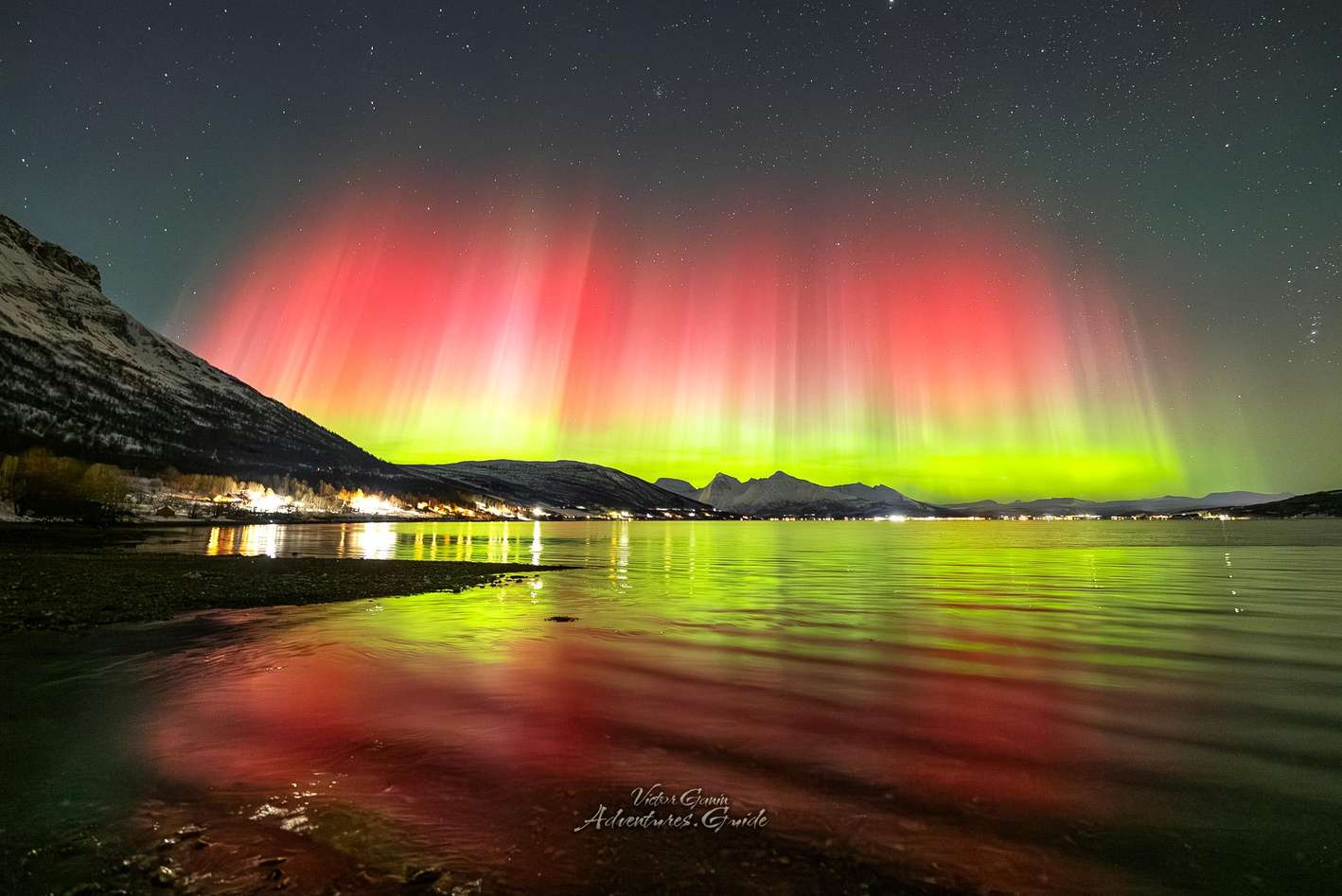
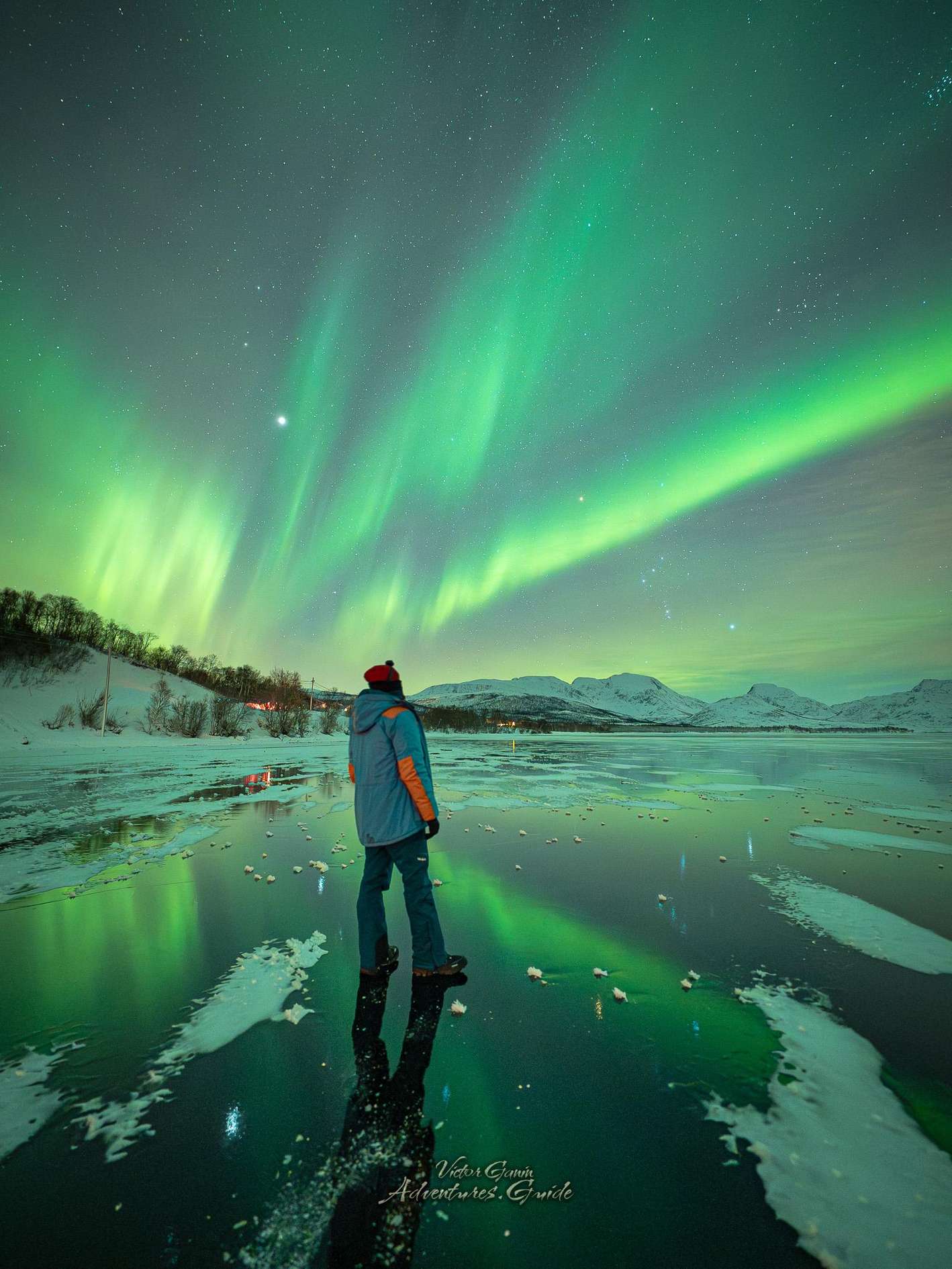
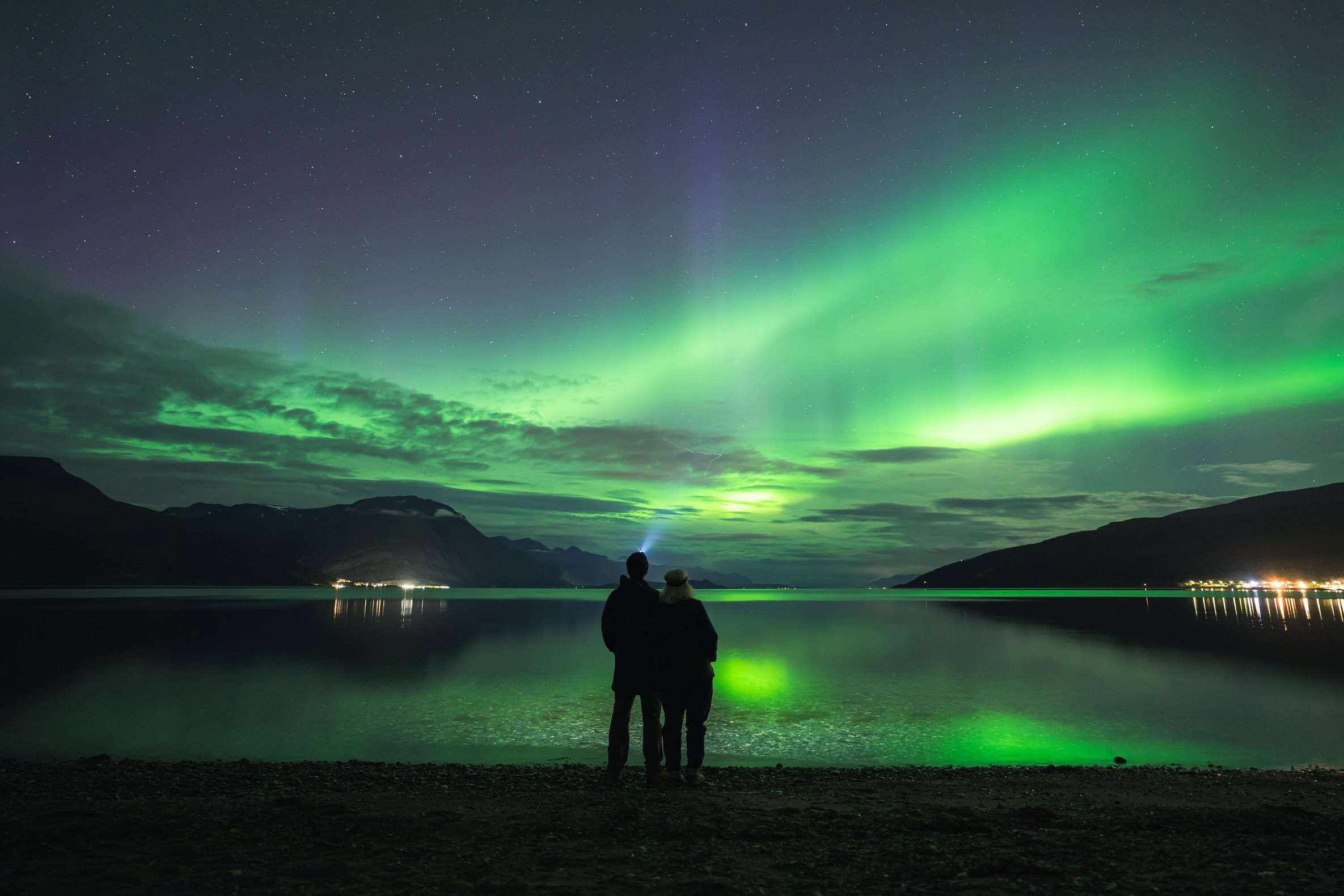
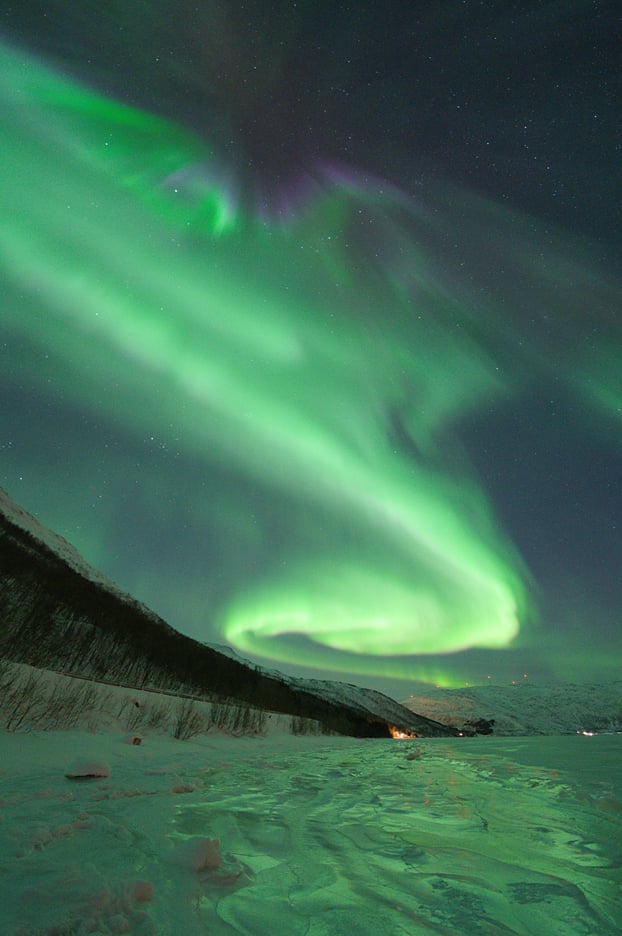
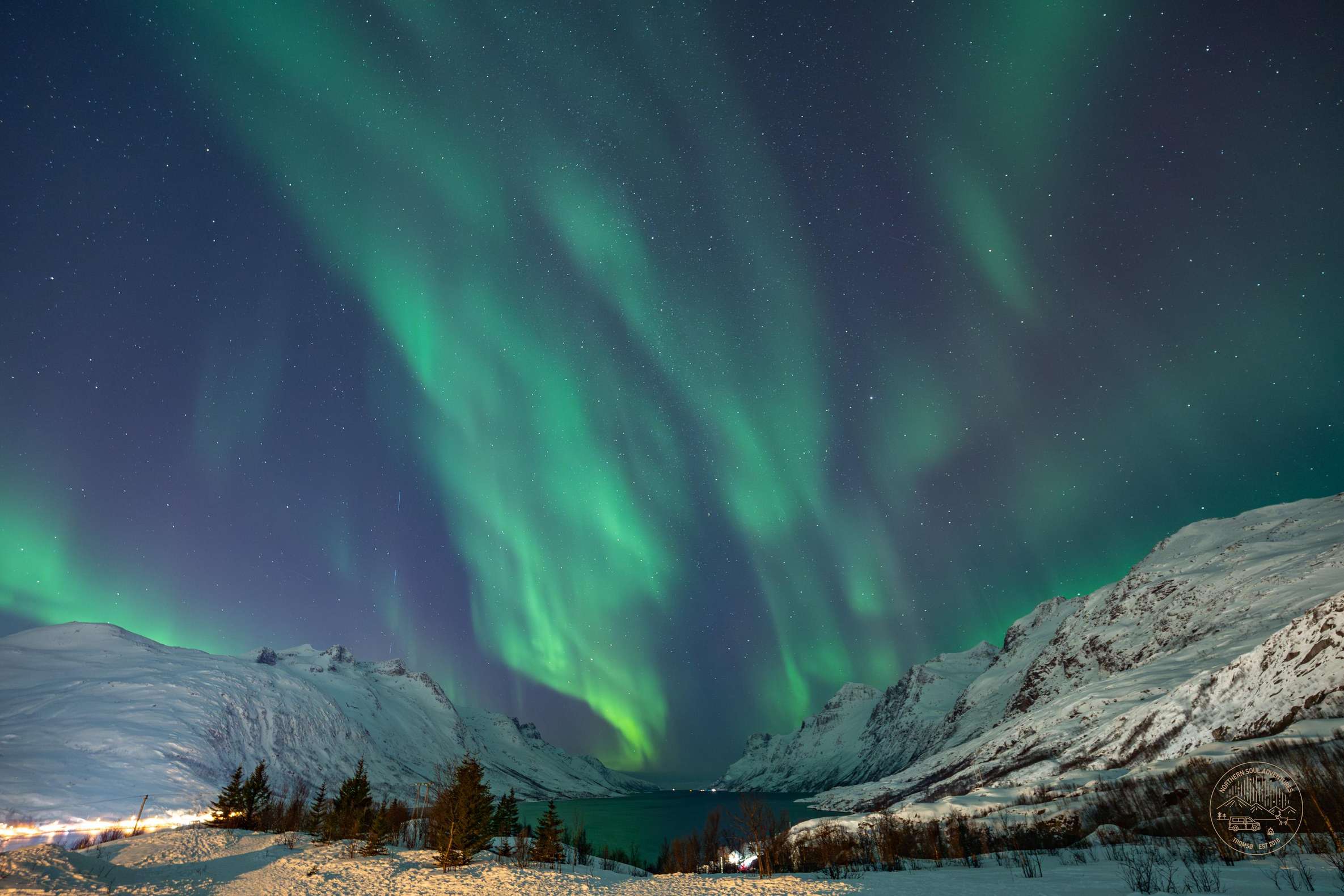
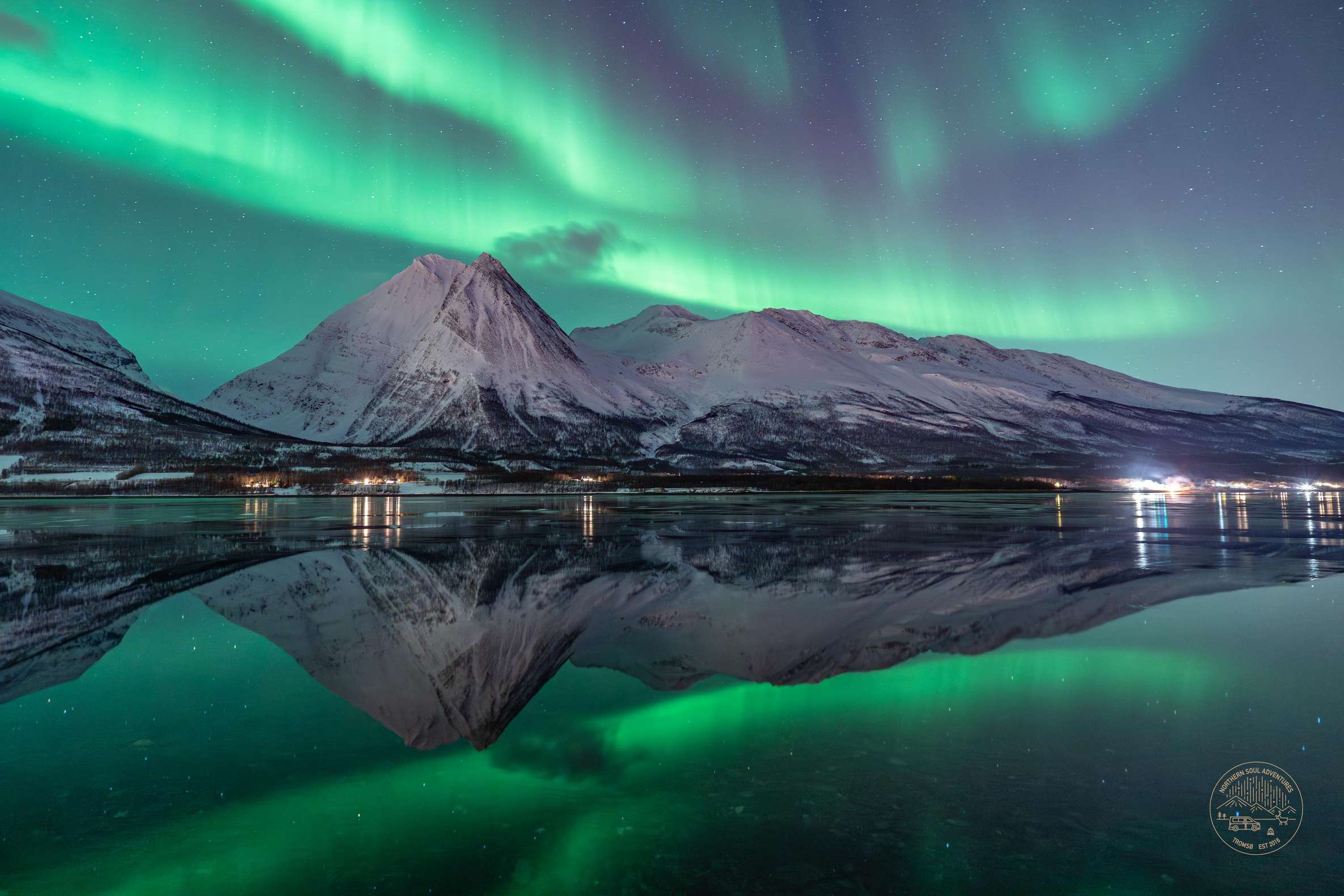
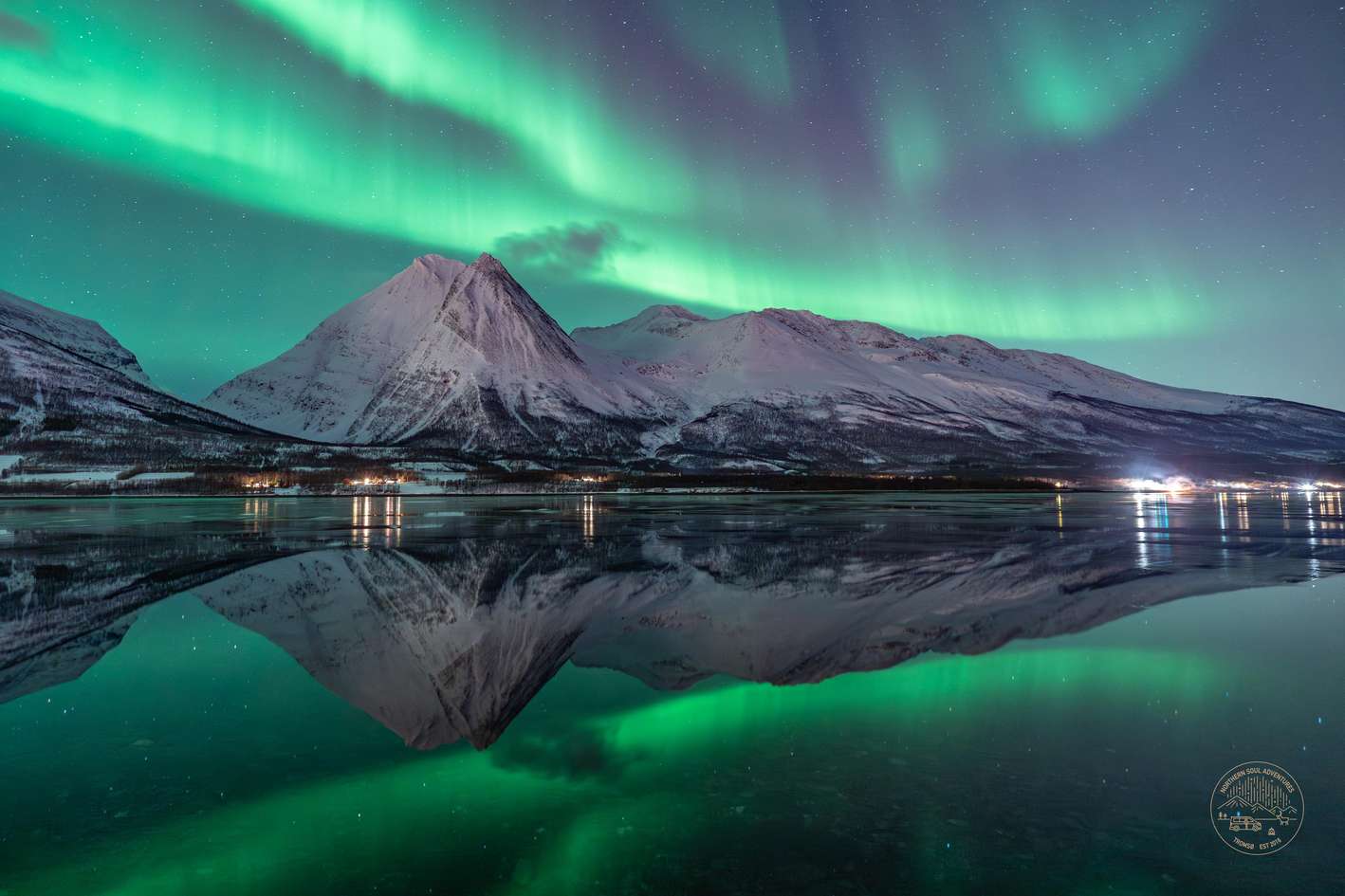
The stop is chosen for the picture, not the parking: the sheltered fjord at Ersfjordbotn holds mirror-calm water between steep peaks, and frozen lakes and beaches give you foregrounds and reflections.
At the stop, a campfire, hot drinks and soup carry you through the wait, and the coach sets your camera up beside you. The rhythm of the return matters for the rest of your trip.
Standard chases land back in town between midnight and two, though a van that drove to the Finnish border can roll in past three. Both are normal. Plan the next morning around them.
Photos arrive later, by email link, usually the next day or within a few days depending on the operator.
Tour for this
Tromsø: Northern Lights by Minibus with Free Photos and a Warm Meal!4.9★ (452) · 7 hours · Free cancellation
When to book your northern lights photography trip
The season runs from September to early April, and every month inside it plays a different hand. Late autumn gives mild air and open water that reflects the lights; the polar night from late November to mid-January hands you 14 to 16 hours of darkness, with chases starting in mid-afternoon.
February and March take the prize for most photographers. Darkness still runs eight to twelve hours, snow blankets the foregrounds, and seven to twelve hours of daylight leave room for daytime trips. Late March adds an equinox lift in geomagnetic activity, and both months hold well over a dozen clear dark nights within chase range.
Wherever you land, mind the calendar on the booking side. Small-group departures sell out 2 to 4 weeks ahead in the December and January dark season, and Christmas and New Year dates go 4 to 8 weeks out, with peak dates stretching further still.
Reserve early, then keep an eye on the weather as your date approaches.
Your real chances on a northern lights photography night
Guides here watch the cloud cover first; the Kp index everyone screenshots matters far less. Tromsø sits directly beneath the auroral oval, so a Kp of 1 is enough for a low glow in the north and a Kp of 3 puts the display overhead.
The index measures global activity and says nothing about whether you can see the sky.
Cloud is what kills the night. Thick low cloud sits below the aurora, which burns about 100 km up, and it hides even the strongest display. High cloud is thinner and often lets the lights show through.
Aurora sayings that mislead
MythYou need a high Kp index to see anything
Reality
Tromsø sits under the auroral oval, so even low activity lights up a clear sky
MythAurora apps tell you in advance if a night works
Reality
Apps recycle space weather and cloud data, and forecasts here shift by the hour
MythA full moon ruins the show
Reality
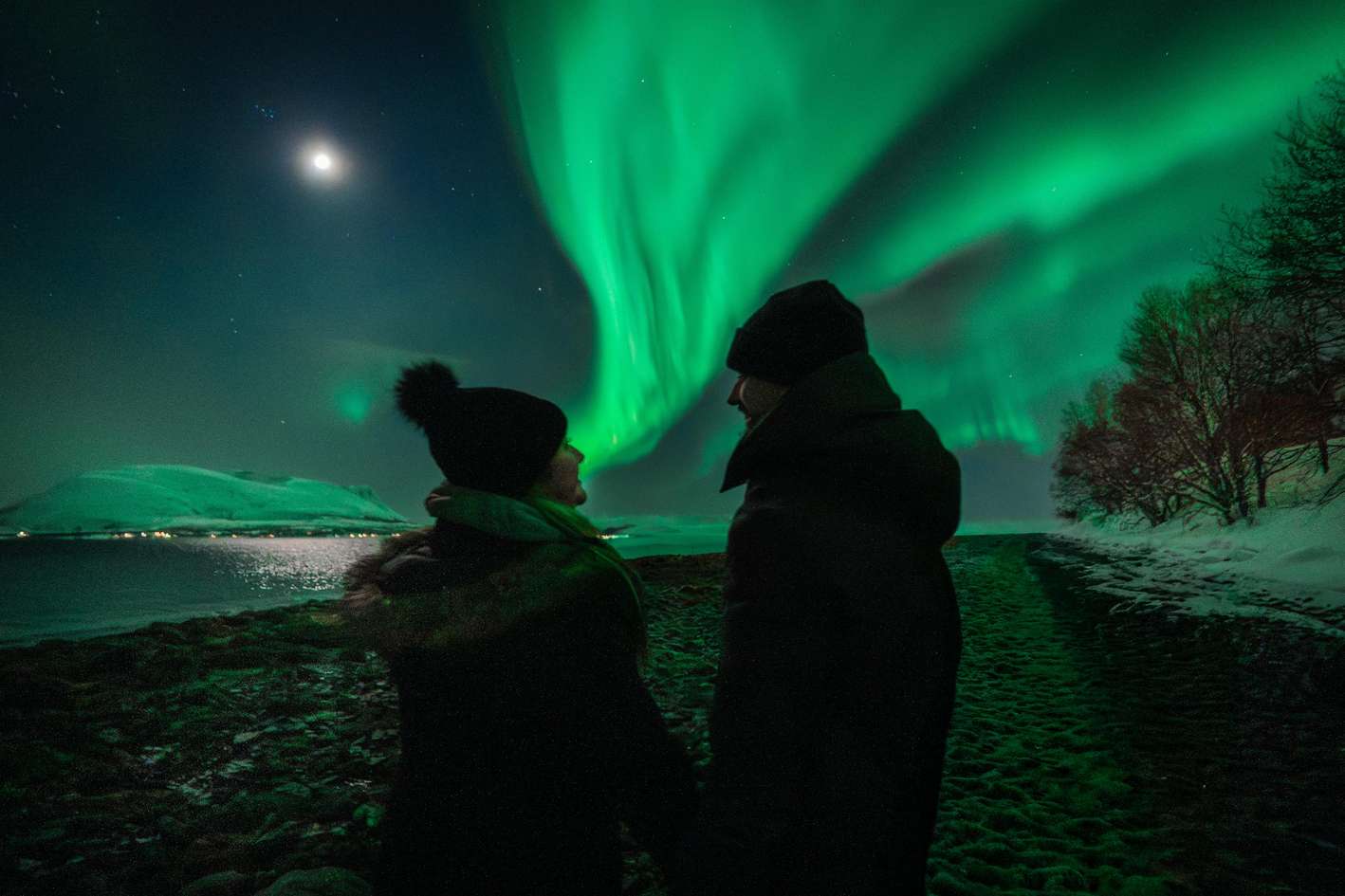
Strong displays stay visible, and moonlight lights up the peaks and snow for your compositions
The practical answer is to stack nights. Three guided chases booked early in a trip bring a cumulative chance of 85 to 90 percent, counted across every night you go out, cloudy ones included.
The nine-in-ten figure in the first chapter is a single chase's odds once clear sky lies within reach, which the drive makes likely on most evenings. Book your first chase for the first evening of your trip, then keep the spare nights free for rebooking.
Which northern lights photography tour is right for you
Three formats share the waterfront, and the right one follows from what you want out of the frame. A dedicated small-group workshop puts a photographer beside you, teaches camera operation in the field and reviews your shots as you shoot.
A language-specific chase runs the same way in French, Italian, German or Chinese, often with a single guide who also cooks the soup.
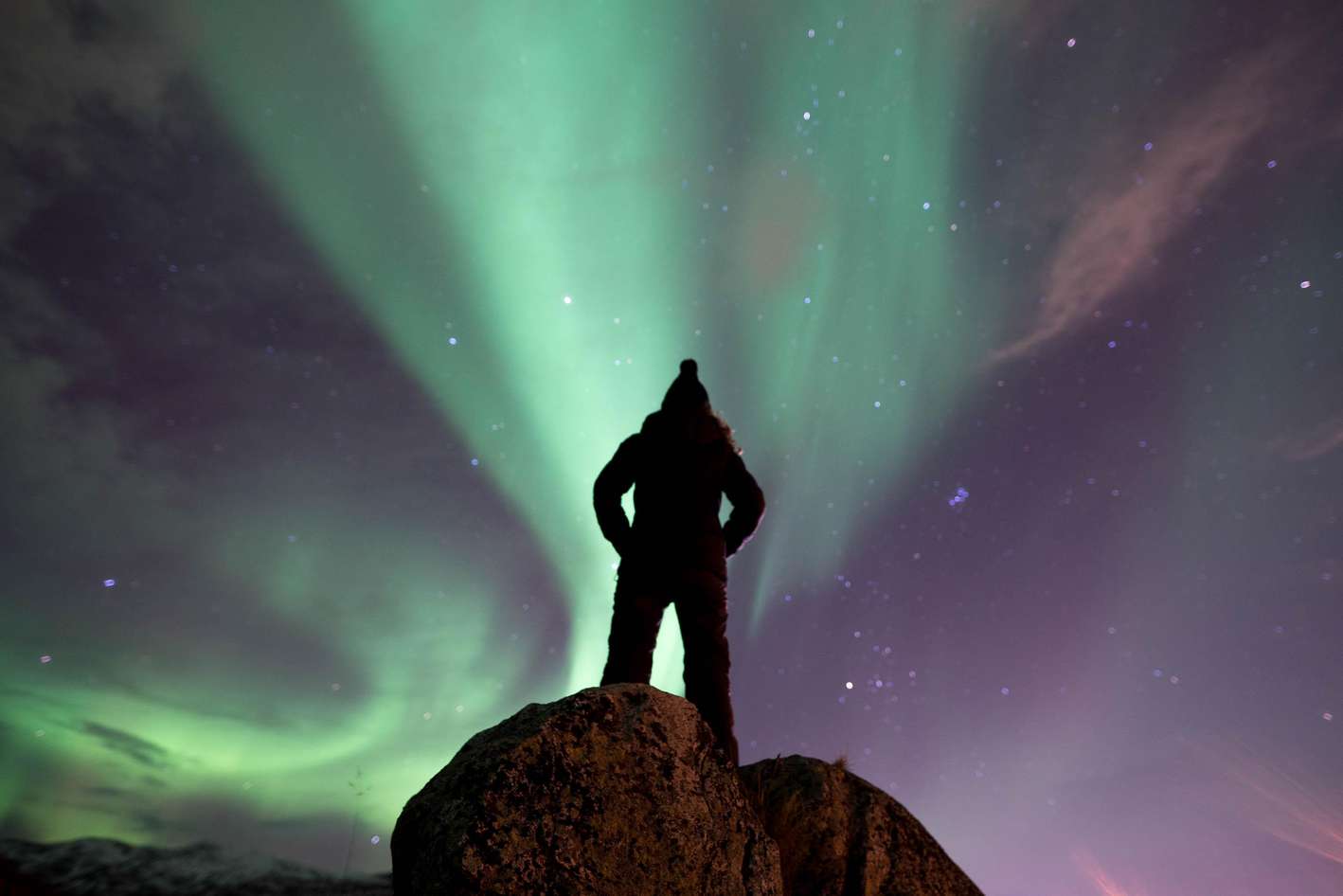
A standard minibus chase hunts clear sky, and afterwards the guide sends professional photos of you under the lights; there is no instruction along the way, which suits anyone happy to be shot rather than to shoot.
Choosing a northern lights photography tour
Small-group photo workshop
Language-specific photo chase
Minibus chase with free photos
Group size
About 8 to 15 guests
A single guide and a small van
Up to 20 or a big coach
Instruction
Field workshop on your own camera
Workshop in your language
None; guide shoots on own gear
Gear and warmth
Tripods, thermal suits, soup
Tripods, suits, campfire dinner
Suits on most, free portraits
Suits best
Hobbyists who want their own shots
Anyone shooting in French, German, Italian or Chinese
Travelers who just want the souvenir photo
Small-group photo workshop
Group size
About 8 to 15 guests
Instruction
Field workshop on your own camera
Gear and warmth
Tripods, thermal suits, soup
Suits best
Hobbyists who want their own shots
Language-specific photo chase
Group size
A single guide and a small van
Instruction
Workshop in your language
Gear and warmth
Tripods, suits, campfire dinner
Suits best
Anyone shooting in French, German, Italian or Chinese
Minibus chase with free photos
Group size
Up to 20 or a big coach
Instruction
None; guide shoots on own gear
Gear and warmth
Suits on most, free portraits
Suits best
Travelers who just want the souvenir photo
Two honest limits before you choose: these chases need a general fitness level for deep snow and rough ground, and several minibuses state plainly that they do not suit travelers prone to motion sickness. Age rules also bite, with some departures asking for 8 or 14 as a minimum.
Tour for this
Tromsø: Northern Lights Chase with Professional Photographer in Italian5.0★ (6) · 7 hours · Free cancellation
Where northern lights photography tours leave from
Every departure lives within a few hundred metres of the same harbourfront. The meeting points sit outside the Scandic Ishavshotel, at the Prostneset terminal on Samuel Arnesens gate, and in front of the Radisson Blu. Hotel pickups are not standard in the centre, because walking is faster than any vehicle could be.
Arriving at Tromsø Airport the same day leaves you three ways into town, and the airport express bus covers the route in 15 to 20 minutes.
A taxi from the rank outside arrivals takes about a quarter of an hour. Give yourself slack anyway: tour crews ask for arrival well before the stated departure, and icy pavements slow everyone down.
Getting to the departure point
Airport express bus15 to 20 minutes from TOS to Prostneset, timed departures
Easy
Taxi10 to 16 minutes from the rank outside arrivals
Easy
Local bus 40 or 42About 20 minutes, cheaper, but check the winter timetable
Moderate
Coming back is easier than it sounds. Taxis run around the clock, with ranks at Prostneset, Stortorget and Jekta, and booking goes by app or phone even at three in the morning. One small trap catches newcomers: gate on the tour instructions is the Norwegian word for street, so it points to a city address.
How you get the shot - northern lights photography settings
Nobody on these vans needs prior experience. The coach takes your camera in hand, and the setup takes two minutes once you know the numbers.
Manual mode, the lowest f-stop your lens allows, ISO between 400 and 1600, and a shutter open for several seconds. Automatic modes produce black or blurry frames every time, because the camera cannot see what you can.
Smartphones play too. iPhone 11 and newer carry a Night Mode that wakes up in low light on its own, and a phone held still can catch real colour. Tripods loaned on these tours fit cameras, so a phone shooter brings a small stand of their own.
What nobody tells you
Guides focus in the dark with a flashlight
Autofocus gives up at night, so the guide lights you briefly to lock focus
The shutter delay does the steadying work
Photographers use a remote or timer so no hand touches the camera during the exposure
You can shoot aurora without a DSLR
Pixel Astrophotography mode and Galaxy Pro mode handle long exposures, and apps like Halide add manual control
The lights come in bursts, sometimes minutes apart. Guides watch for the first flicker and stop the van on the spot, so keep the bag open and the camera mounted while you drive.
Tour for this
Tromsø: 6 people only | Northern Lights + Photos & Videos4.9★ (52) · 8 hours · Hotel pickup · Free cancellation
Will your camera survive a northern lights photography night?
Cold is the quiet opponent on every chase. At -15°C, a phone battery that lasted all day at home dies within 30 to 45 minutes, and camera batteries can shed most of their capacity.
The fix costs nothing: spares and power banks ride in an inside jacket pocket near body heat, and the phone lives there too between shots.
Fog is the second surprise. Bring the camera from freezing air into the warm bus and moisture condenses inside it. Seal it in a plastic bag while still outdoors and let it warm up slowly inside the bag; never breathe on the lens or set it on a heater.
Pro tipA cold battery stored in an inside pocket near body heat keeps working, so spares ride warm until the moment you swap them in
The tripod question solves itself on a workshop tour, where a sturdy loaner rides along. Shoot independently and you can buy a basic model locally at electronics shops for a modest sum; dedicated rental shops here are scarce. Wear liner gloves under flip-top mitts so you can work the dials without baring fingers.
Tour for this
Tromsø: Northern Lights Chase with Photographer in French4.9★ (54) · 7 hours · Free cancellation
What to wear for northern lights photography nights
Standing still for hours is what makes these nights cold. The coast can start near freezing, and two hours inland the same evening can sit 10 or more degrees colder, deep into minus twenties. The suit helps only if the layers under it work.
Build three layers under the loaner thermal suit: a wool or synthetic base next to the skin, never cotton, then a fleece or heavy wool mid-layer, then the suit itself.
Insulated winter boots, wool socks in two pairs, a hat and mittens finish it. Squeeze too many socks into a tight boot and your feet freeze faster, since the trapped air is the insulation.
The checklist separates the two columns that matter: what the small-group tours hand you at the van, and what shows up on your own packing list regardless. Boots are the usual gap, since many tours supply suits but leave footwear to you.
Know the toilet reality before you go. Remote stops have no facilities, some tours pause at gas stations en route, and otherwise the forest is the option.
Tour for this
Tromsø: Northern Lights Hunt with a Professional Photographer in German5.0★ (5) · 7 hours · Free cancellation
Weather, refunds and late returns on a northern lights photography tour
Rain on the quay does not end the evening. Chases drive east past the Lyngen Alps toward Skibotn, or over the border into Finland, sometimes 250 km one way, because mountain ranges strip the moisture and leave inland valleys clear.
What cancels a tour is not snow or wind but danger: closed roads or official warnings. On those nights, the operator rebooks you or refunds in full.
When the tour runs and the lights still fail, terms differ by tour. Some operators offer a free second chase, others sell a retry at half price, and a few refund nothing at all, which is why the terms on the card deserve a read before you pay.
If the night changes
If this happens
What happens then
Severe weather or closed roads cancel the tour
Full refund or a free move to another date
The tour runs but the lights stay hidden
A free second chase or a discounted retry on some tours, nothing automatic on others
The route crosses into Finland
Carry a passport or national ID card, even though border checks are rare
The chase runs late
Taxis run all night from central ranks for the ride back to bed
Bring your passport or ID every night regardless. Late returns have a bright side too: one kitchen by the harbour serves its full menu until well past one in the morning on weekends.
A chase that lands home past midnight quietly rewrites the next day, so plan the daylight like a budget. One main activity per day, and no early starts after a chase. A quiet city day with museums, cafés and short walks between chase nights keeps the trip fun instead of punishing.
The hours before departure hold good food and warm rooms. The Prostneset terminal building stays open until half past one in the morning with seats and restrooms, the Polar Museum and the seafarers' museum around the harbour close at six, and the library gives you a warm chair until early evening on weekdays.
Grill kitchens open mid-afternoon, early enough for a proper dinner before the van leaves.
Between chases, a cultural evening earns its place. Reindeer camps serve dinner by the fire while hosts tell Sámi stories, including the old warning never to whistle or wave at the lights, which tradition held were souls of the departed.
Two consecutive late nights in the cold are tiring; three need a plan. Spread them out and the whole week keeps its energy.
A northern lights photography tour earns its place the moment coastal cloud closes in, which here is most nights. Choose a small-group workshop if you want your own shots, a language-specific chase if instruction in your language matters, and let the chase do the driving.
Go ifYou want sharp portraits or your own aurora shots without guessing at manual settingsYou can book February or March and reserve small-group dates weeks aheadYou plan three or more chase nights early in the trip
Skip ifYou are prone to motion sickness on winding fjord roadsYou need step-free access or cannot manage deep snow and rough groundYou travel with young children below the tour's minimum age
Quick answers for anyone planning a Tromsø aurora photo tour, from camera settings to what happens if the sky stays cloudy.
Tromsø2026
A guide fires a small flashlight at you so autofocus locks, then the shutter opens for seconds. Pack wool gloves so you can work the dials.
Do I need photography experience to join a northern lights photo tour in Tromsø?
No previous experience is needed. Guides give a tutorial on how to photograph the aurora, and they actively help you adjust settings on your camera or phone during the stops.
What camera settings capture the northern lights?
Switch the camera and lens to manual mode, pick the lowest f-stop number such as f/2.8, set ISO between 400 and 1600, and use a shutter speed of several seconds. Automatic modes usually return black or blurry frames.
Do the tours provide tripods?
Yes. Dedicated photography tours in Tromsø include professional tripods, and one Chinese-language tour rents tripods for free with advance reservation. A sturdy tripod is required for long night exposures.
Can I photograph the aurora with an iPhone or Android phone?
Phones with a dedicated night mode can capture visible aurora colors. IPhone 11 and newer have a Night Mode that activates in low light, Samsung Galaxy models from the S10 onward have a night mode plus a Pro mode, and Pixel phones have an Astrophotography mode when the phone sits still on a tripod.
How do I stop my camera and phone batteries dying in the cold?
At -15°C a phone battery can die within 30 to 45 minutes, and a camera battery can lose most of its capacity. Carry spares and power banks in an inside pocket near your body, and keep a phone in a wool sock or ziplock bag when not in use.
How do I stop my lens fogging up back on the warm bus?
Seal the camera in a plastic bag while still in the cold air and let it warm up slowly inside the bag. Never wipe a lens that keeps fogging, and never breathe on it, since warm breath adds moisture.
Why do the lights look grey to my eyes but green in photos?
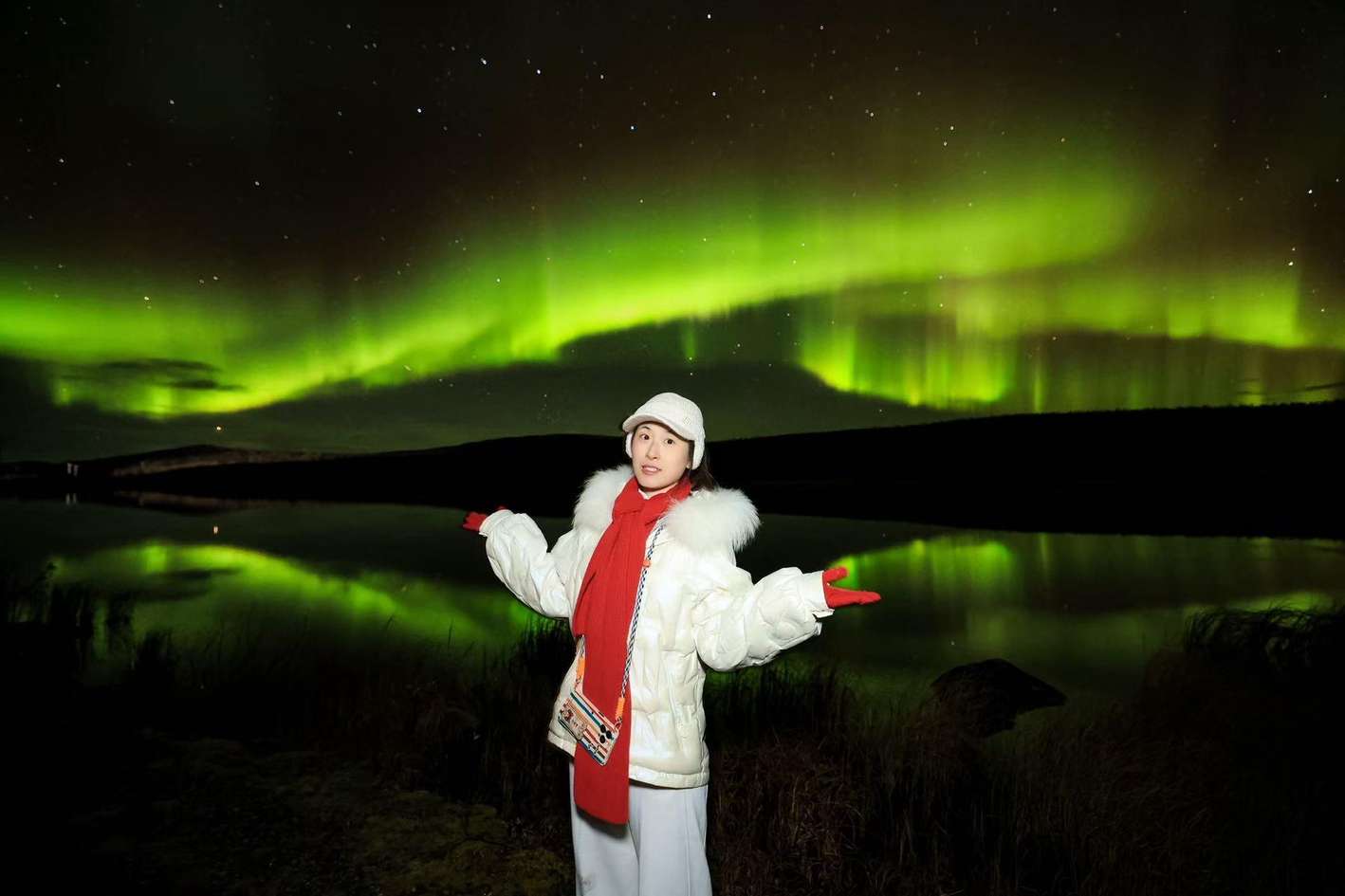
Human eyes switch to rod cells in the dark, which only see shades of grey. Camera sensors keep their color sensitivity and build up light over long exposures, so they record colors your eyes miss.
Where do the tours go for the best foregrounds and reflections?
Guides choose fjords, beaches and lakes for framing, such as Ersfjordbotn where steep peaks rise straight out of calm water, or Sommarøy with its open ocean horizon. Calm nights give mirror-like reflections.
Do I need a passport or ID card on the tour?
Yes, bring a passport or national ID card. Some chase routes cross into Finland, and travelers from outside the Schengen area must carry a passport there even though the border is rarely checked.
Will I be warm enough waiting outside for hours?
The dedicated photography tours provide thermal suits, and one also adds hand warmers and heated boot insoles. You still need wool base layers, warm boots, a hat and gloves, because standing still in the Arctic cold drains heat fast.
What happens if the lights do not appear?
Sightings are never guaranteed. One photography tour offers a 50% discount on a second tour if the lights stay hidden, and the Chinese-language tour offers either half-price rebooking or a 50% refund.
When do I get my photos after the tour?
Guides share the professional pictures by email download link or online gallery. Delivery ranges from within 10 hours on some tours to the next day, 48 hours, or up to 3 to 5 days on others.
Northern lights photography is only the beginning - keep exploring Tromsø



 Your best match