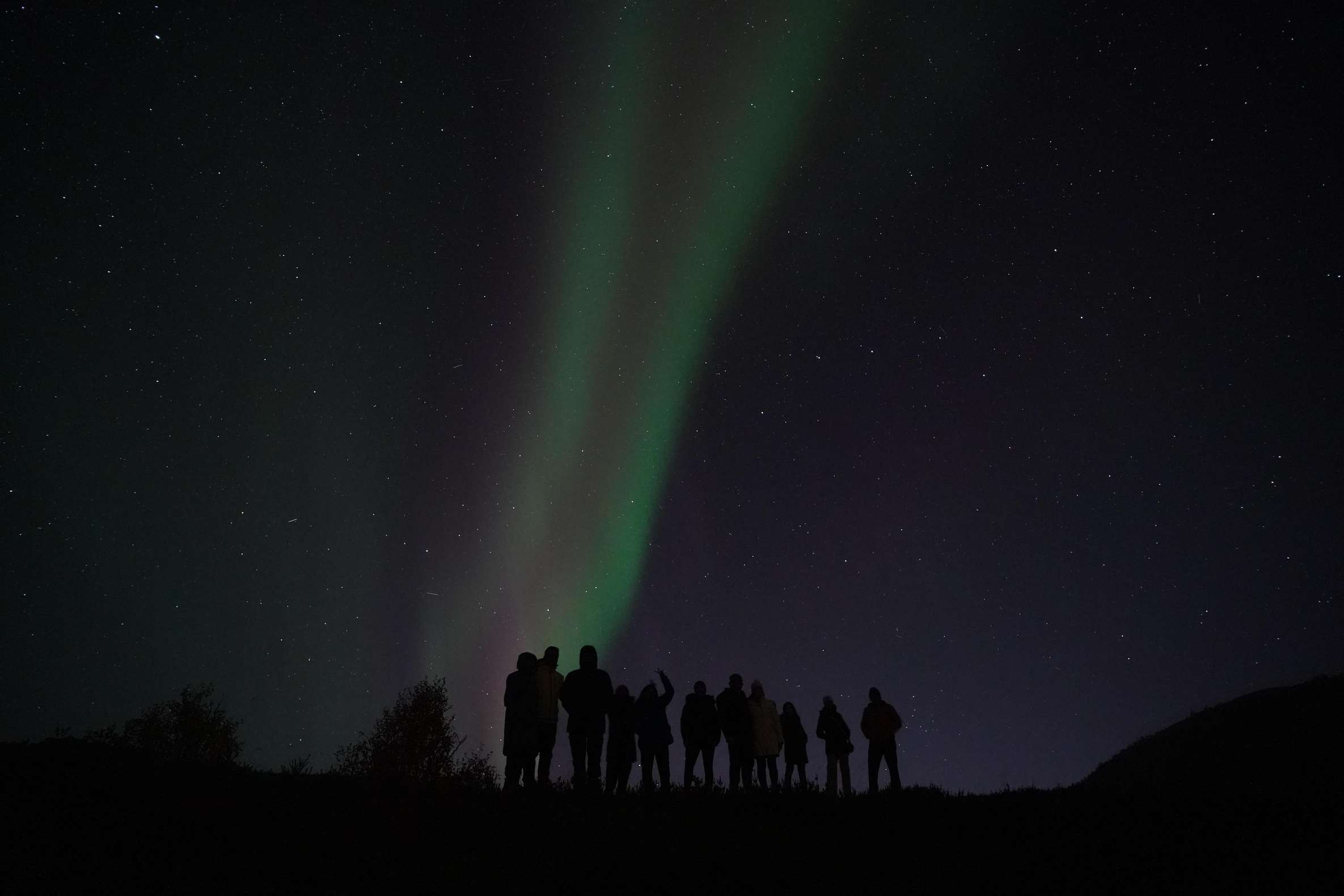
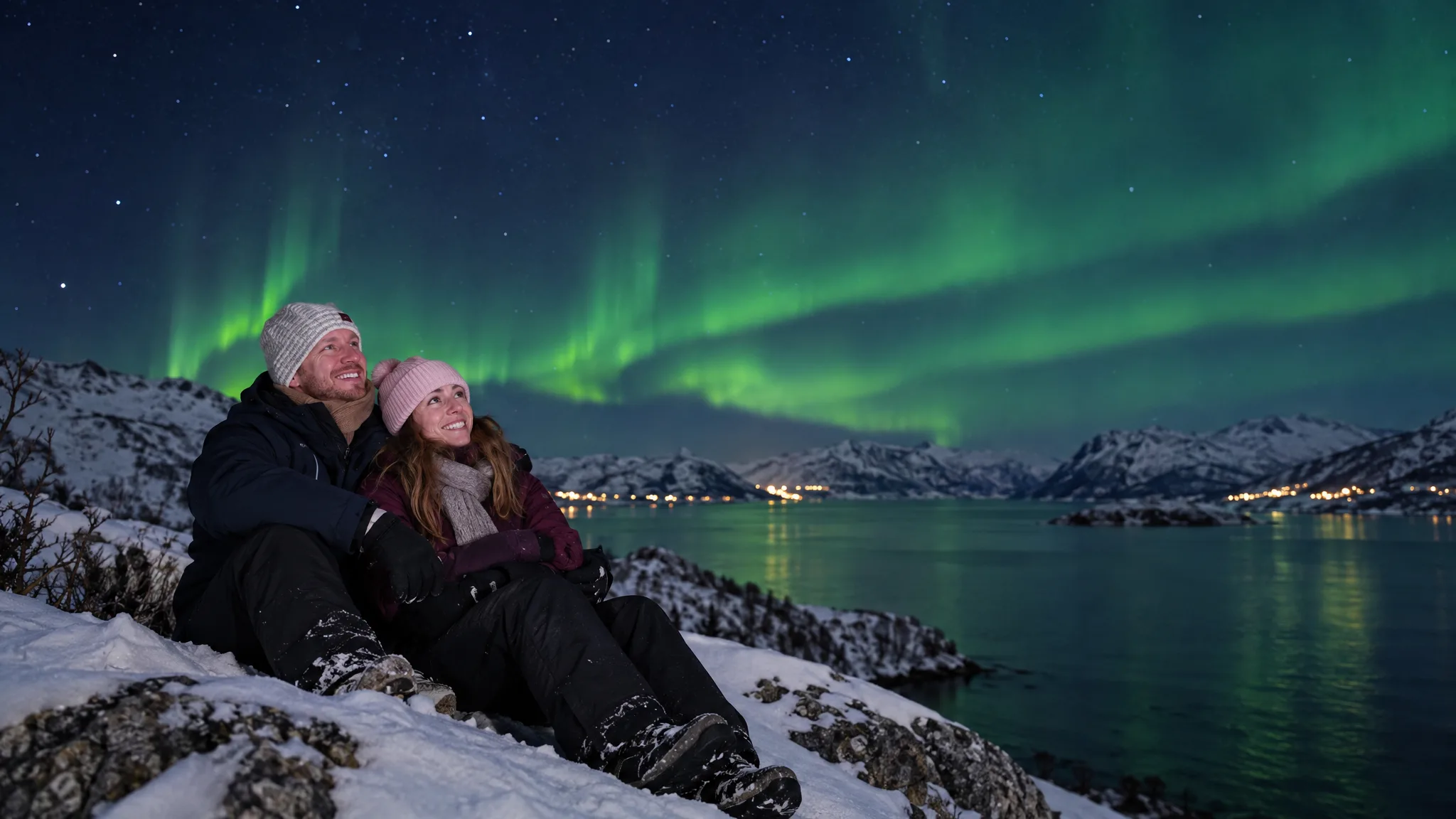
- 1
Plan at least three nights: mobile chases push three-night odds to about 90 percent.
- 2
Watch the cloud forecast; the Kp index matters far less. Clear sky decides everything here.
- 3
Book chases for your first nights and small-group vans weeks ahead in December and January.
Some chase tours cross into Finland to reach clear skies, so bring your passport or national ID card on the night; third-country nationals need a passport. Check whether the tour you book may cross the border and carry a valid travel document with you that evening. Nordic citizens can travel without a passport if they can prove their identity another way.
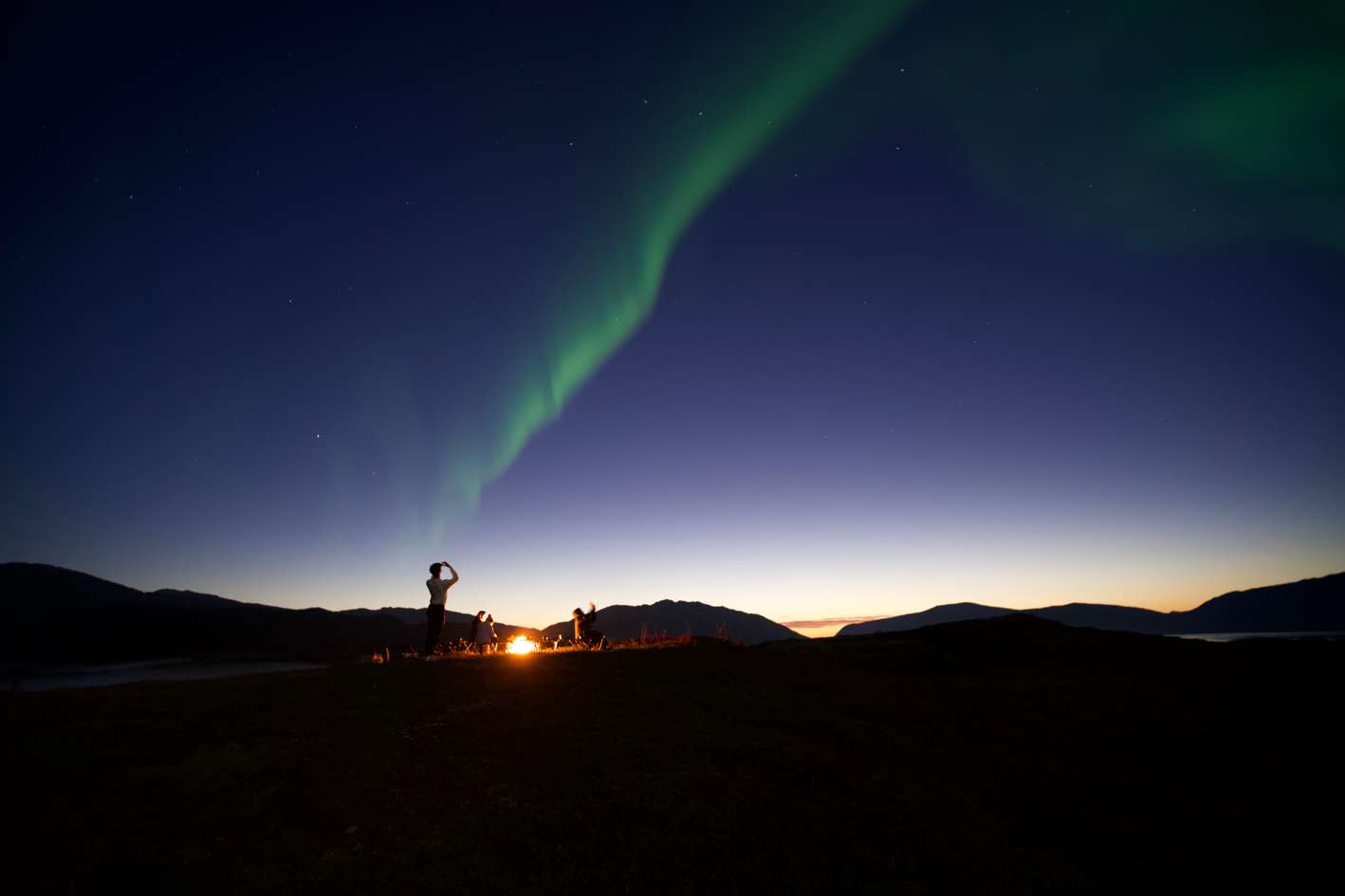
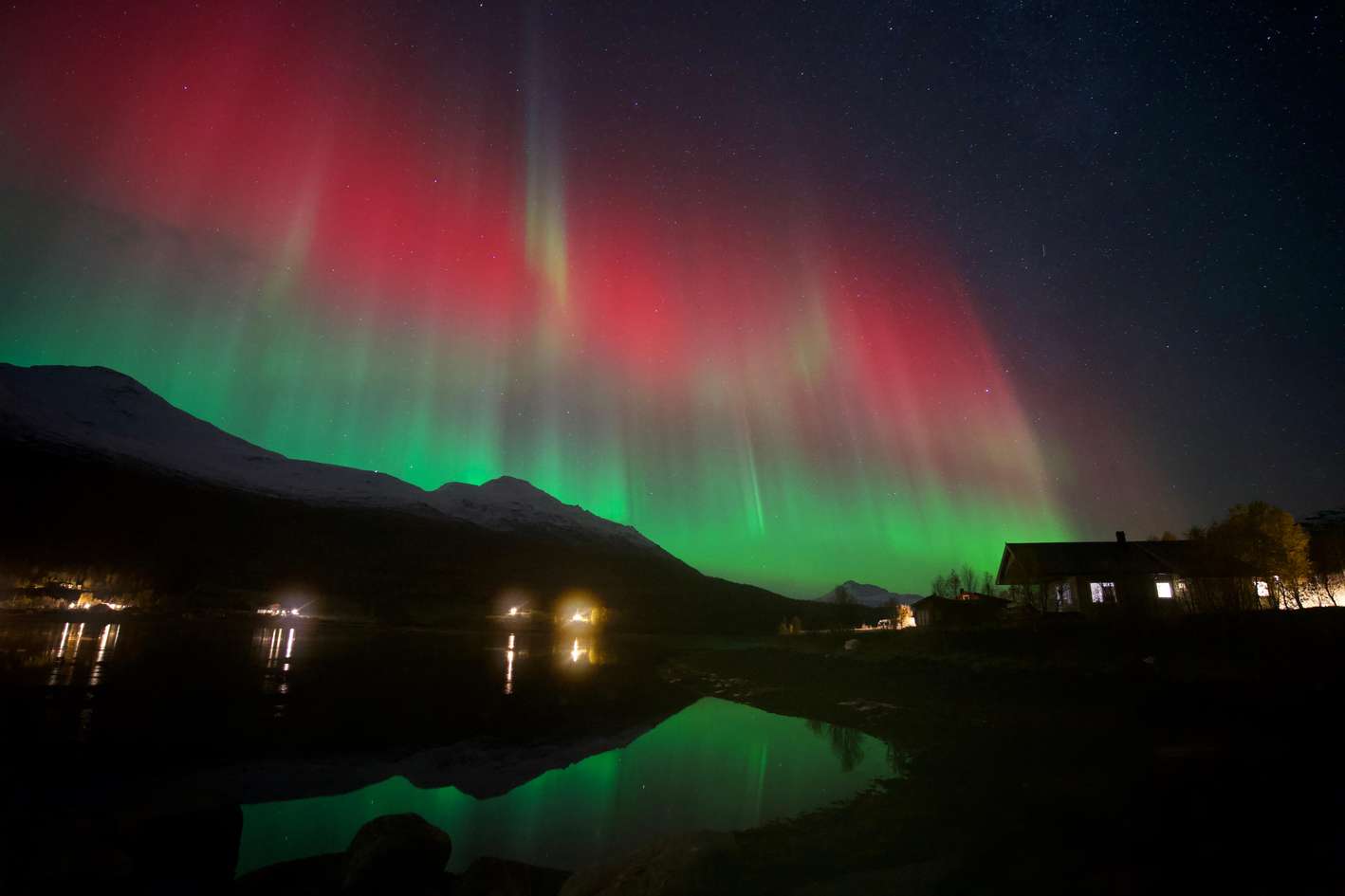
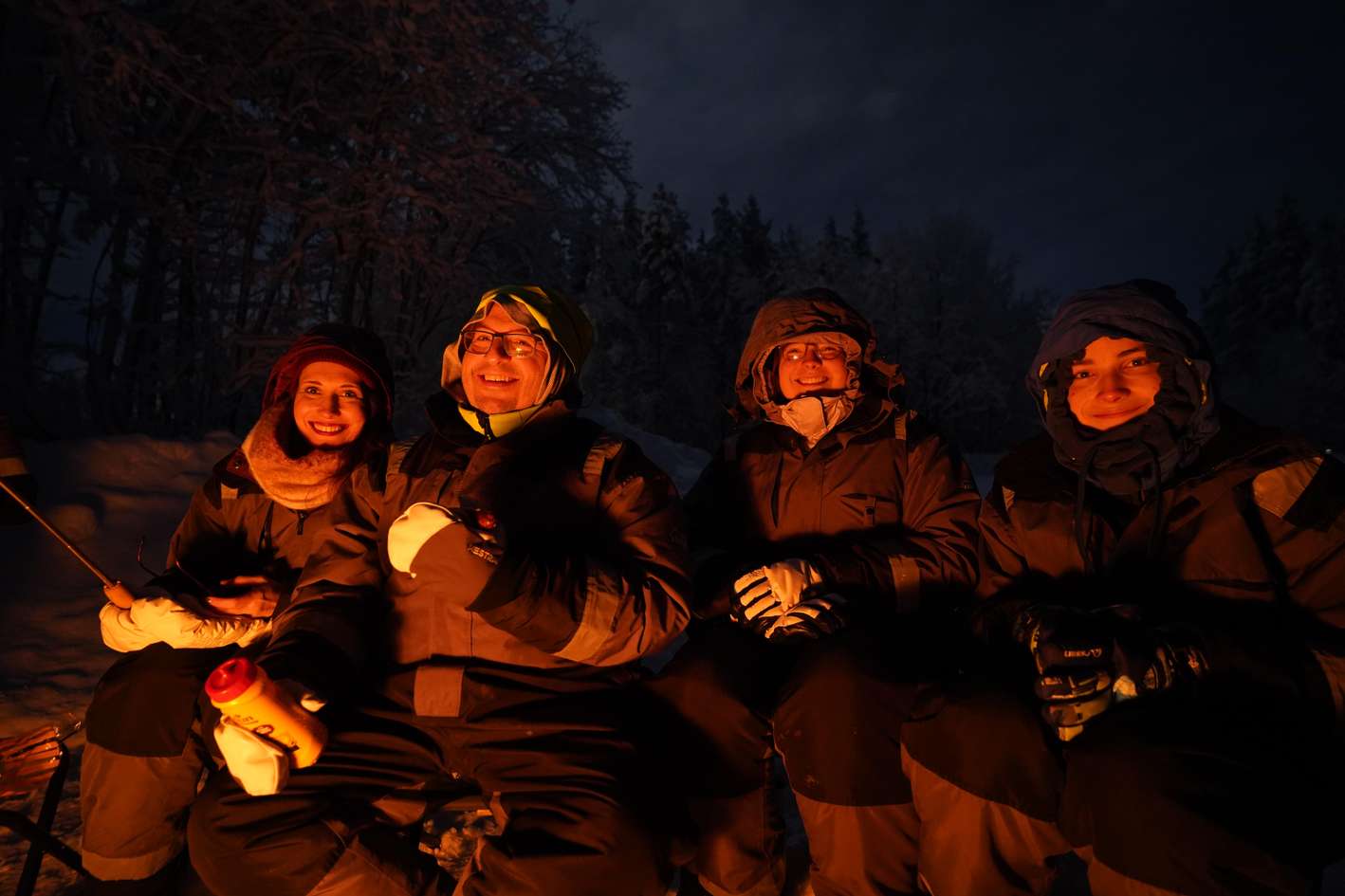
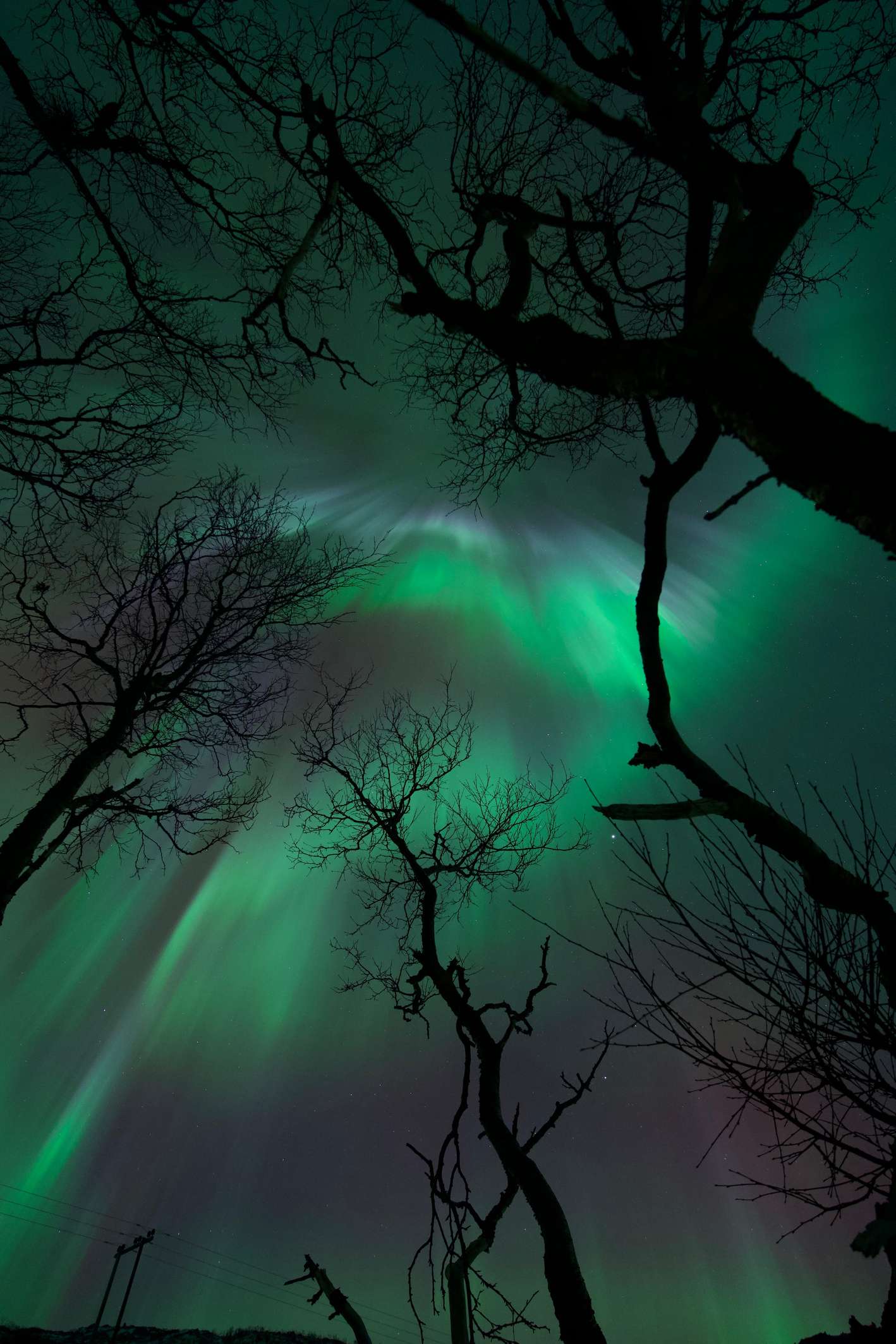
What you see - chances of seeing northern lights in Tromsø photos
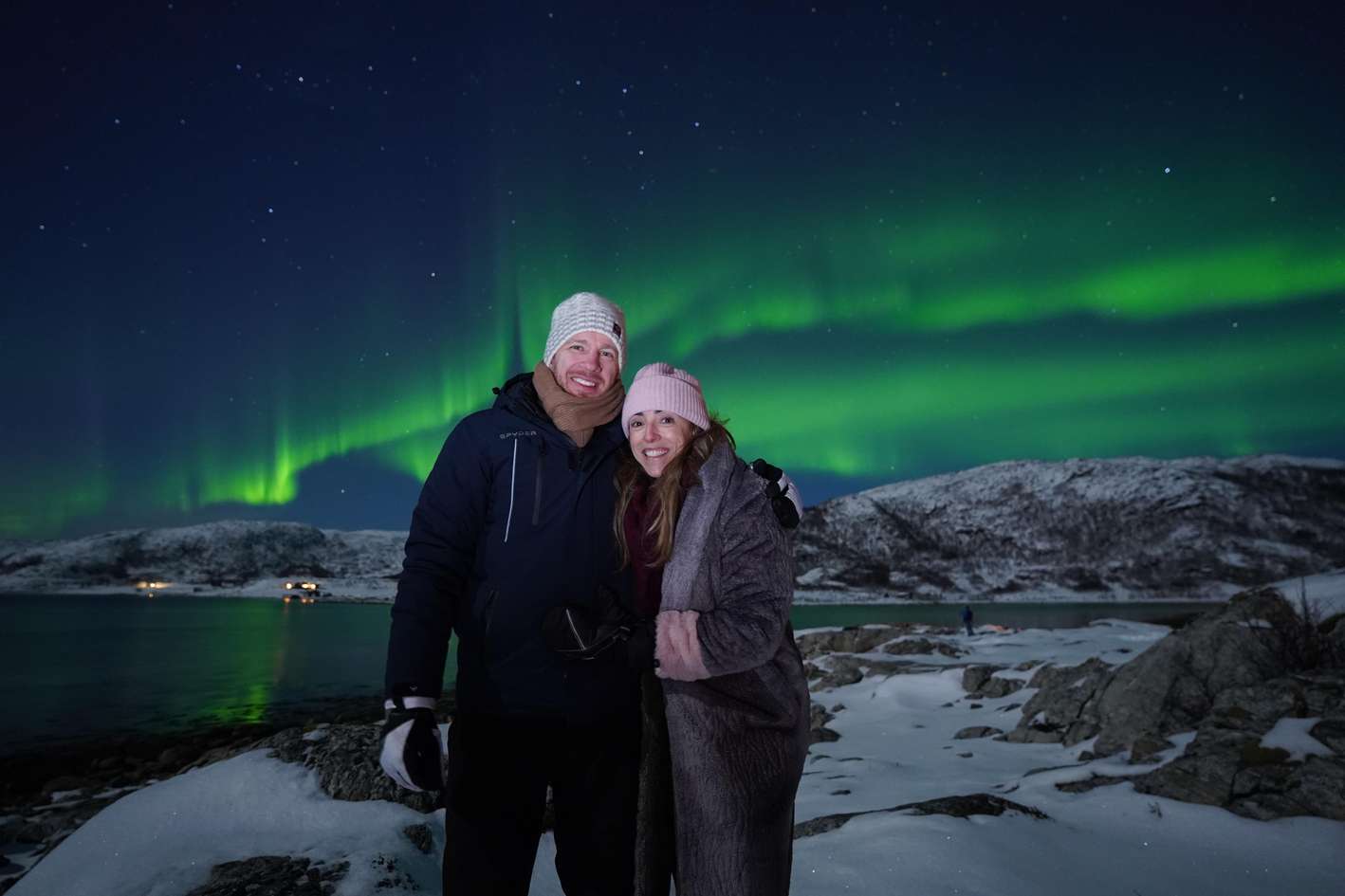
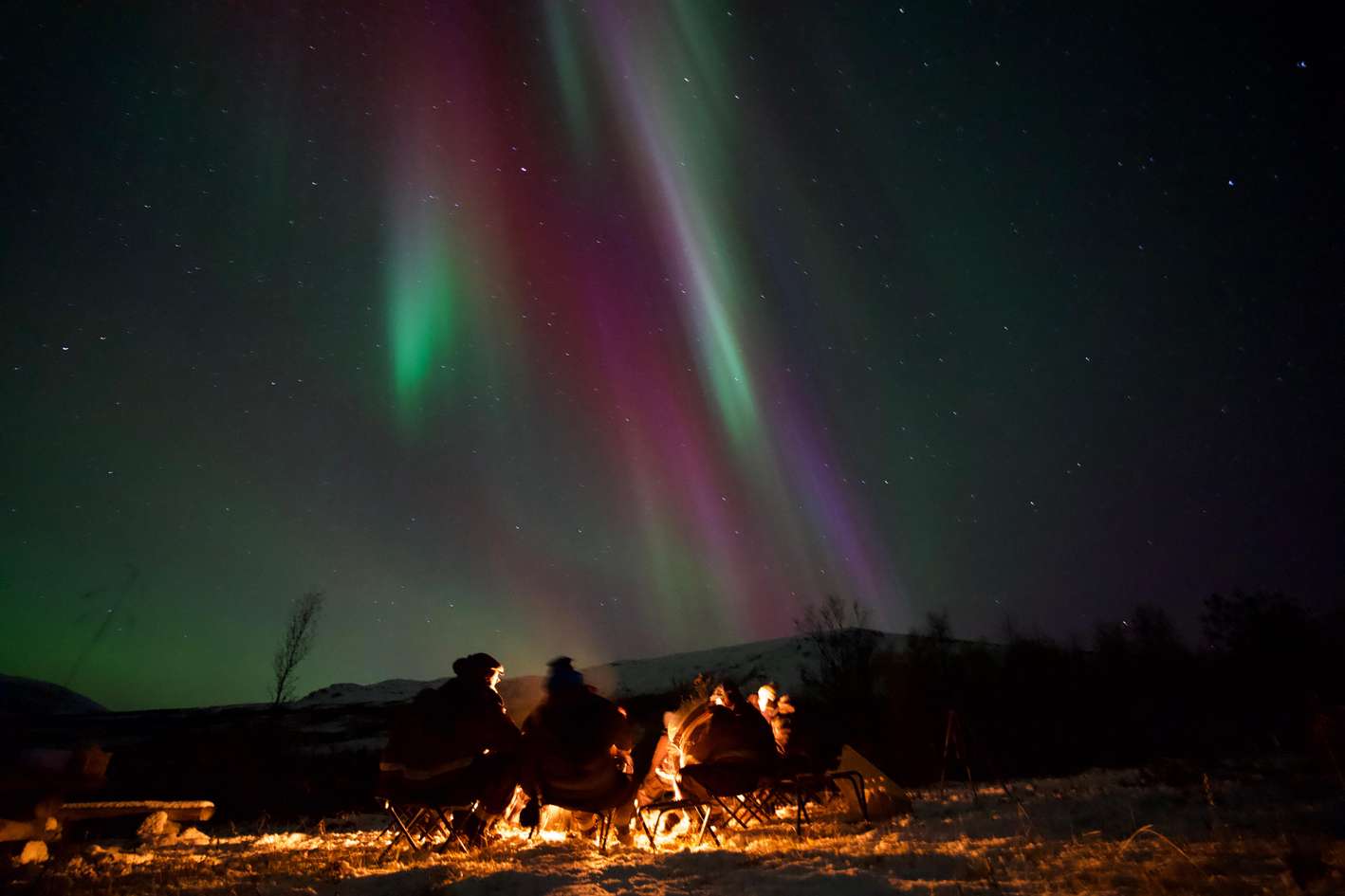
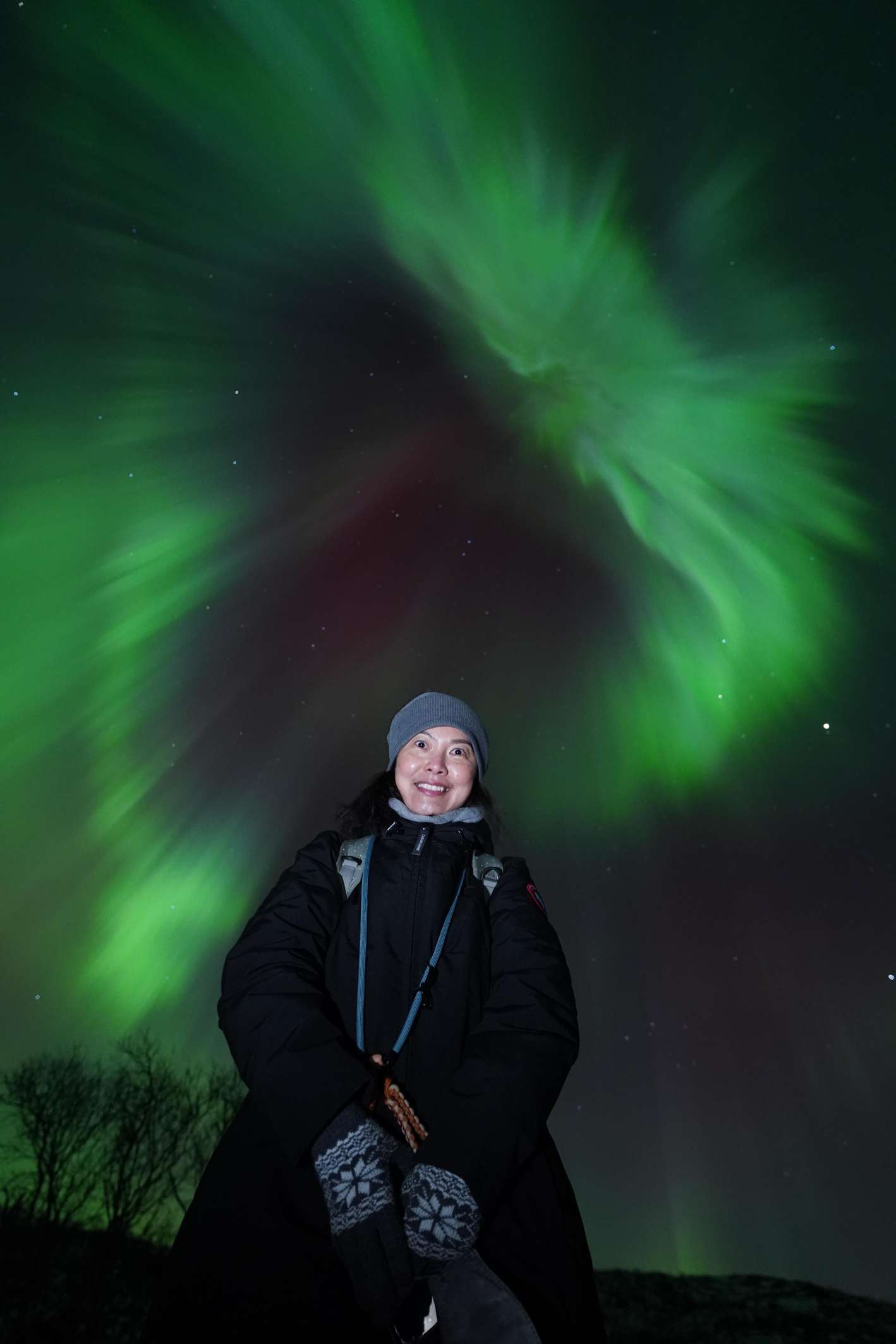
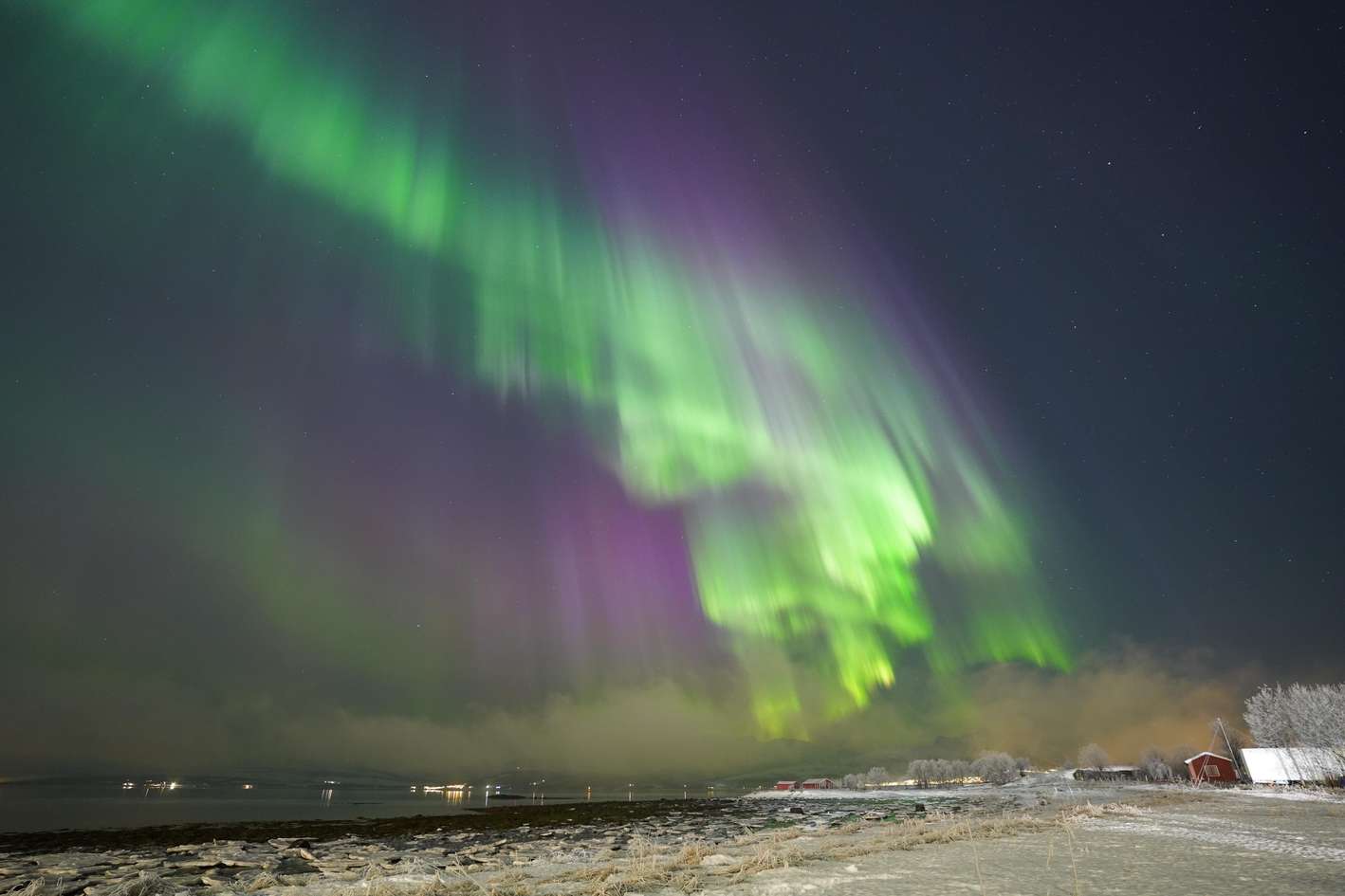
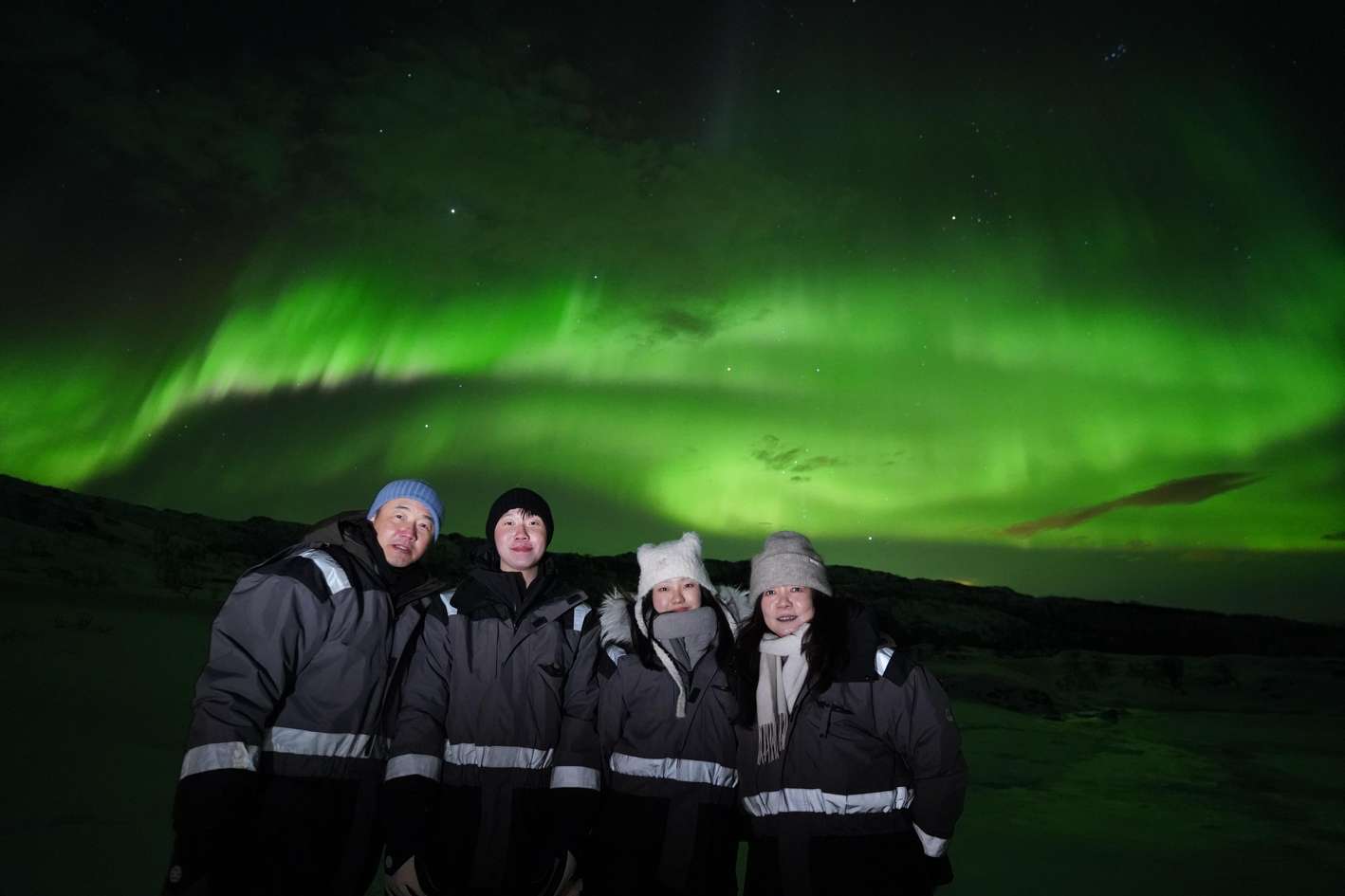
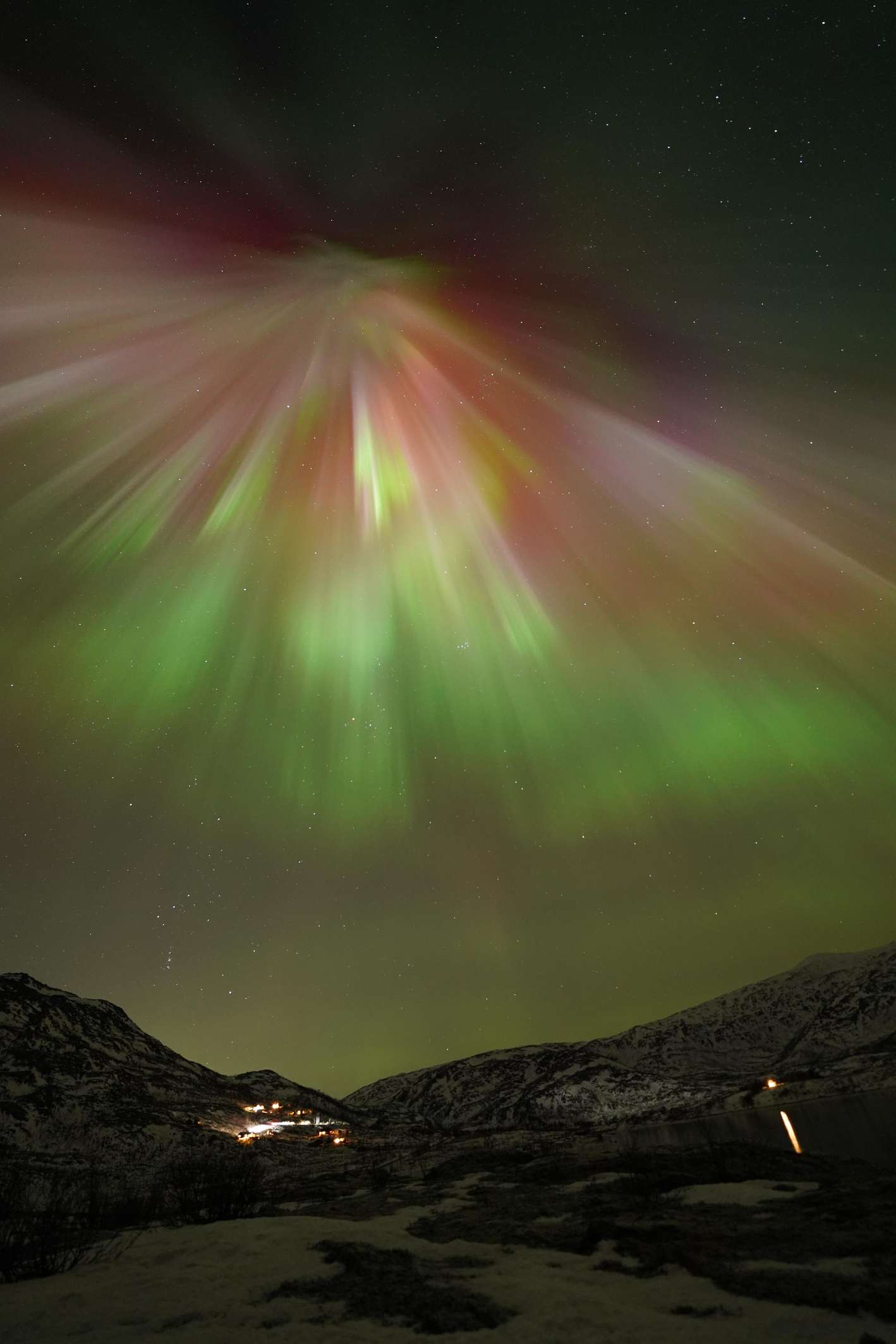
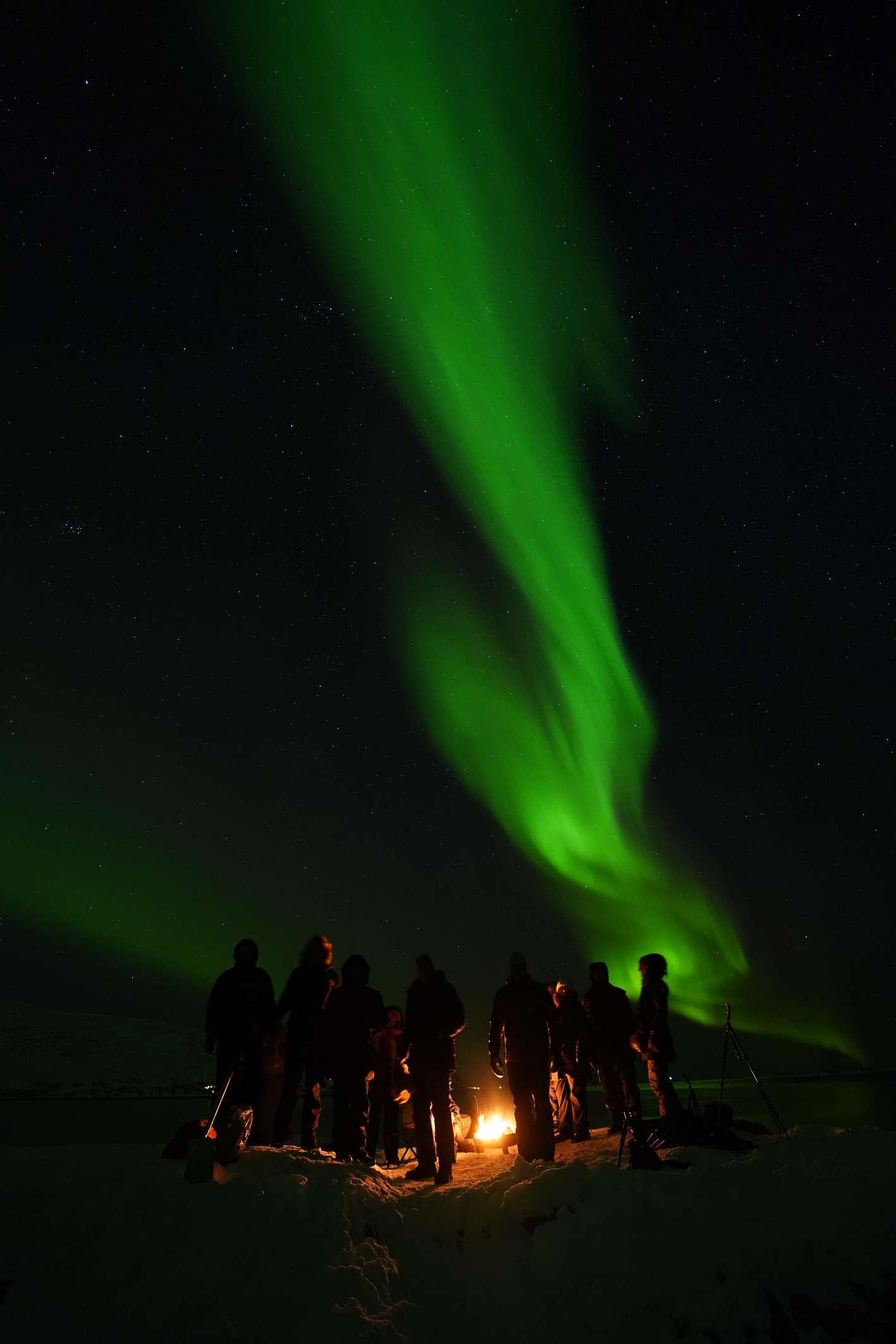
Chances of seeing the northern lights in Tromsø by length of stay
3 nights chasing ≈ 90% odds
Three nights is where the arithmetic starts working in your favor. Statistical models put the chance of catching the lights on a three-night stay at 60 to 70 percent, and a fourth night lifts that to 70 to 80 percent. Stationary viewing from town alone lands lower, around 50 percent over three nights.
Join a mobile chase and the same three nights climb to about 90 percent. The difference is entirely the driving: a van that hunts clear skies converts cloud-bound evenings into sighting chances. Waiting it out at one fixed spot needs five to seven nights to reach what three chasing nights deliver.
The chase numbers count nights actually spent hunting clear skies by van, and the stay numbers count whole trips whether or not you go out; the first column on each list is a single night, the last the full trip.
What it means for your booking: hold at least three nights in Tromsø, and put them at the start of your trip where a rebooking can still be used.
People who split a short Arctic break with a detour to Oslo or Bergen spend their clear-night budget on cities where the aurora is far weaker.

Why cloud cover matters more than solar activity in Tromsø
The lights themselves are rarely the problem. Tromsø lies inside the auroral oval, the band where solar particles hit the atmosphere, so activity runs overhead almost continuously through winter.
Displays appear on nearly every clear night, strongest between 8 pm and 2 am, and even a Kp of 1 puts a glow on the northern horizon while a Kp of 3 brings the aurora straight overhead.
Low cloud is what actually ruins aurora nights here. Cloud sits below 12 kilometers and the aurora glows at 100 or more, so a solid deck blocks it completely no matter how strong the storm is.
The Kp index misleads first-timers for two reasons: it measures global magnetic activity across the whole planet, it says nothing about the sky above you, and it reflects the last three hours rather than what comes next.
Check the cloud forecast instead. The Norwegian meteorological service's Yr app shows local cloud breaks, and evening forecasts are the dependable ones because the afternoon data is fairly settled.
High, thin cloud is often transparent enough to watch through. Low, dense cloud is not, and it is the single most common reason travelers go home disappointed.
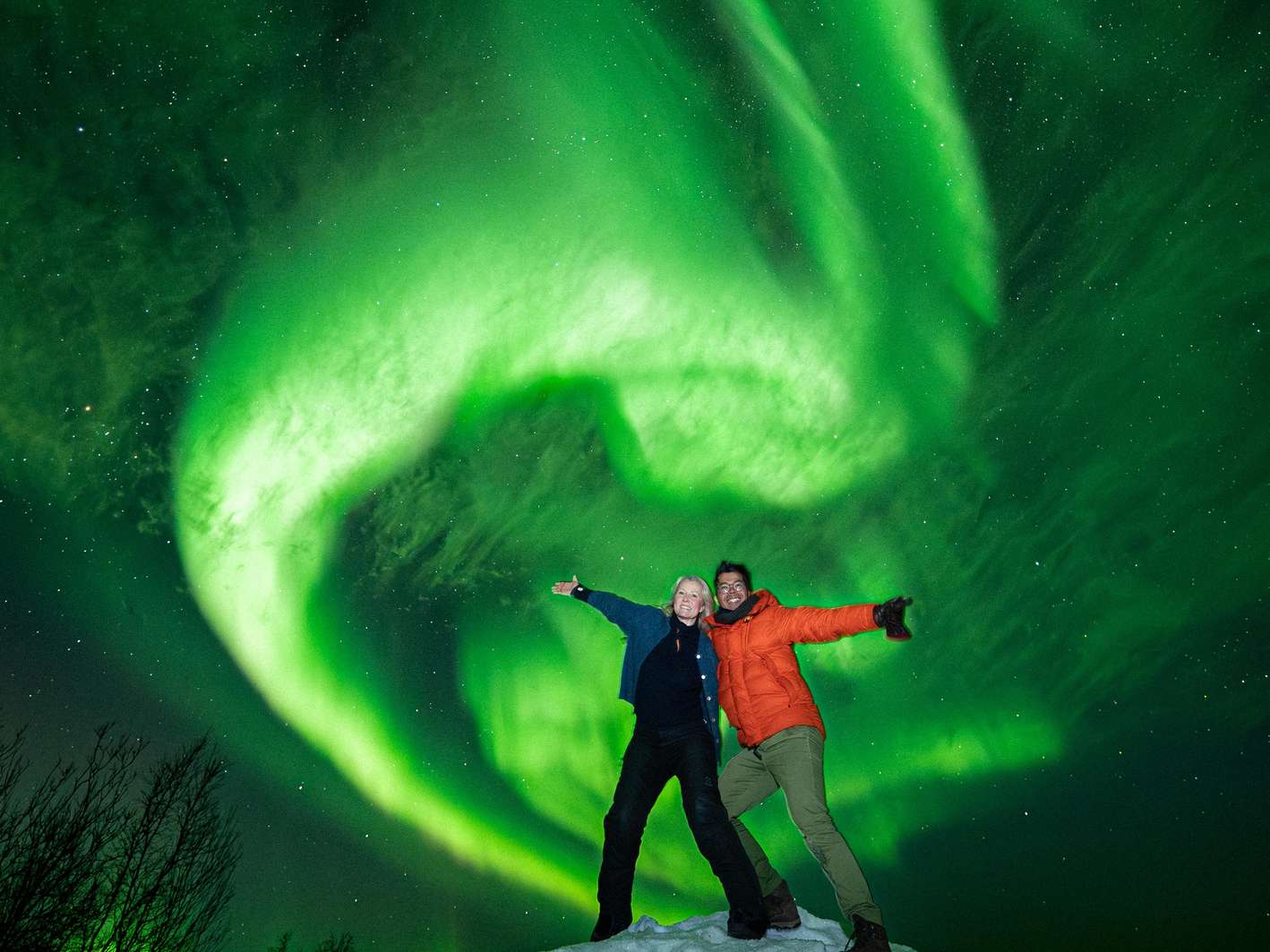
A moving aurora chase in Tromsø versus staying put in one spot
Picture the same cloudy night twice. At a fixed camp or a reindeer lodge, the group waits and the cloud waits with them. Twenty minutes down the road, a chase van is already moving toward a valley where the stars are out.
The numbers explain why. A single spot in Tromsø offers roughly 2 to 4 clear dark nights a month, from 1.7 in November to 4.3 in March. A chase working a 75-kilometer radius reaches 13 to 16.
That is three to eight times the clear-sky opportunities. Tour companies put their own success on a chase night between 90 and 98 percent; that figure is what operators report about their own trips, and it sits against the 5 to 10 percent you face staying in town on a rainy or snowy evening.
The gap between those two numbers is the van.
One tour built around exactly this is Tromsø: Northern Lights Chase - We Drive Until We Find Them, which sets no limit on distance or time and pushes into Finland if the coast stays clouded.
Two habits separate good nights from blank ones. Skip tours that return you to your hotel before midnight, because peak displays tend to come late. And prefer dark wilderness stops over city viewing, where streetlights wash the faint bands into a pale smear.
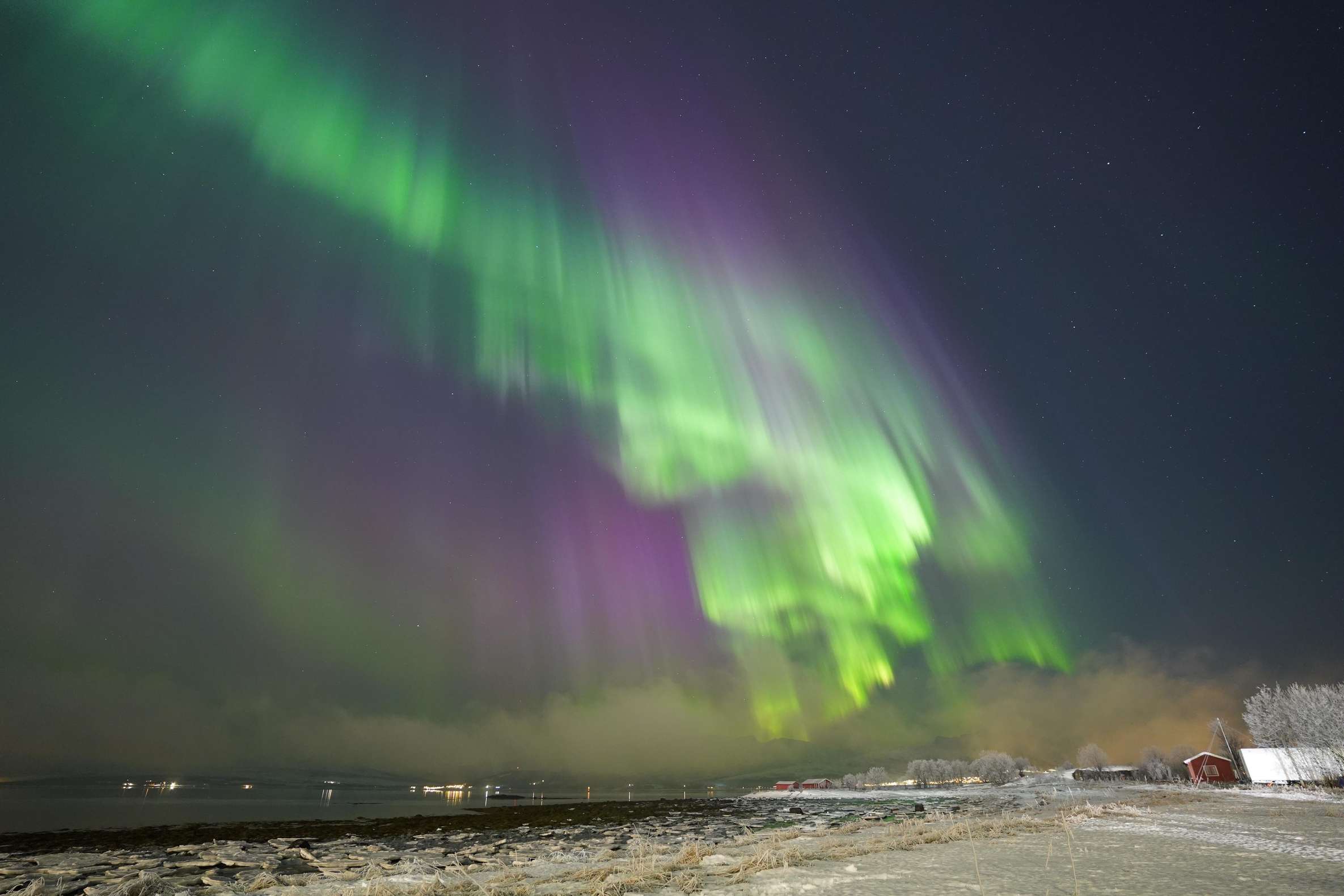
How far aurora chases drive to find clear skies
When Tromsø island is socked in, the van heads inland and the geography does the rest. Moist air off the Norwegian Sea climbs the western slopes of the Lyngen Alps and dumps its rain there, so the air sliding down into the Skibotn valley arrives much drier.
The 1,833-meter range works as a wall against incoming cloud, and Kilpisjärvi on the Finnish side sits on a high plateau with a drier, continental climate.
A chase covering this range turns 2 to 4 local clear nights a month into 13 to 16.
The distances are real: about 25 kilometers west to coastal islands like Kvaløya when the fjords catch a break, roughly 127 kilometers inland along the E8 to Skibotn, and 150 to 170 kilometers to the Finnish border, a one-way drive of two and a half to three hours.
On stubborn nights vans push up to 250 kilometers one way, and a full night's round trip can reach 400 kilometers.
Read that as hours of your evening: Kilpisjärvi sits two and a half to three hours from the harbor, so a van that reaches it has committed most of the night to one direction.
Tromsø: Unlimited Northern Lights Chase Across Borders runs this exact pattern, adapting its route to the weather and crossing into Finland or Sweden when clearer skies sit on the other side. Its guides track live reports from a team spread across all three countries, which finds openings even when the forecast apps disagree.
The point for your planning: unlike an island destination where one weather system blankets everything, this coast has weather divides within a couple of hours' drive.
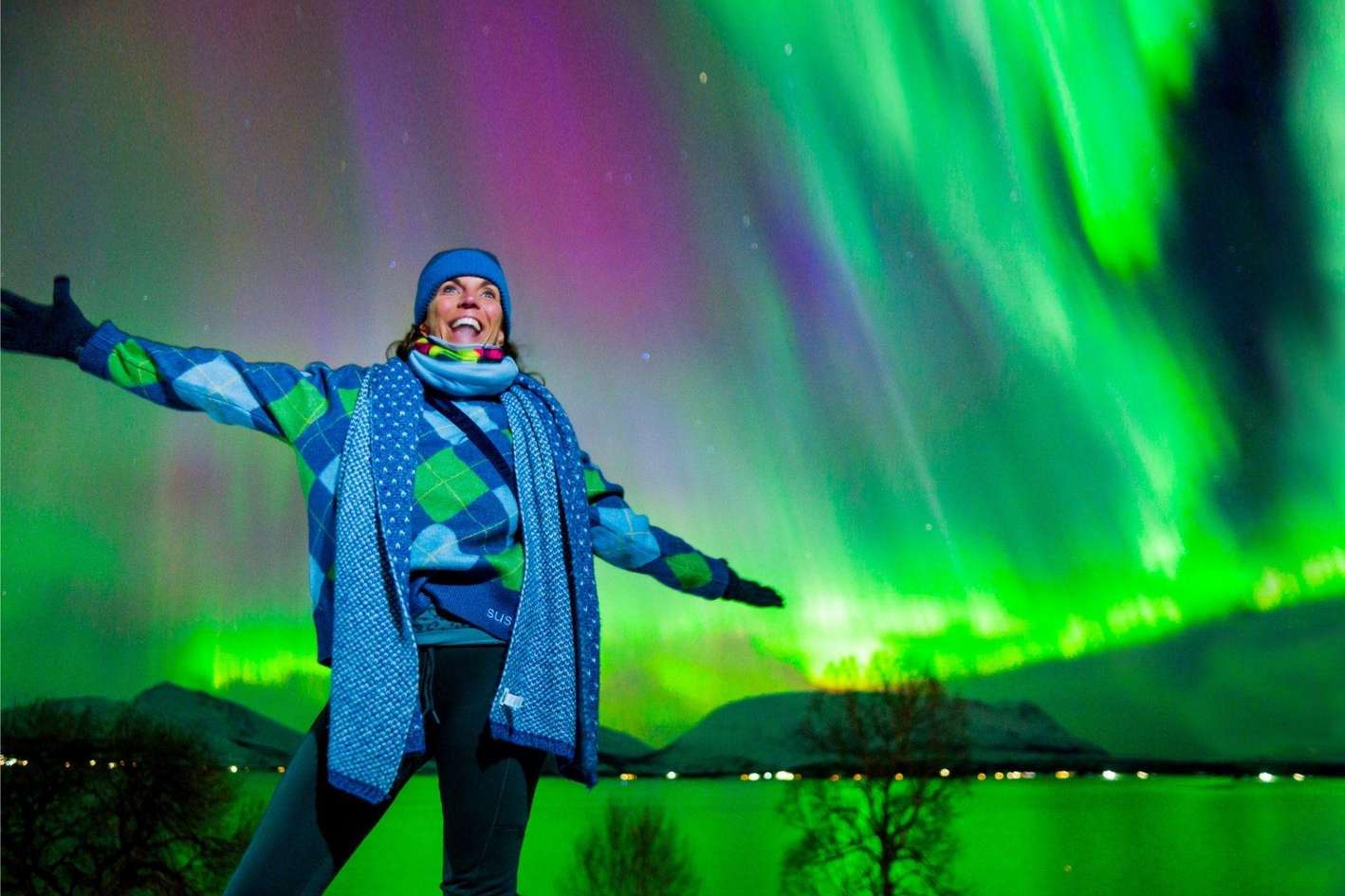
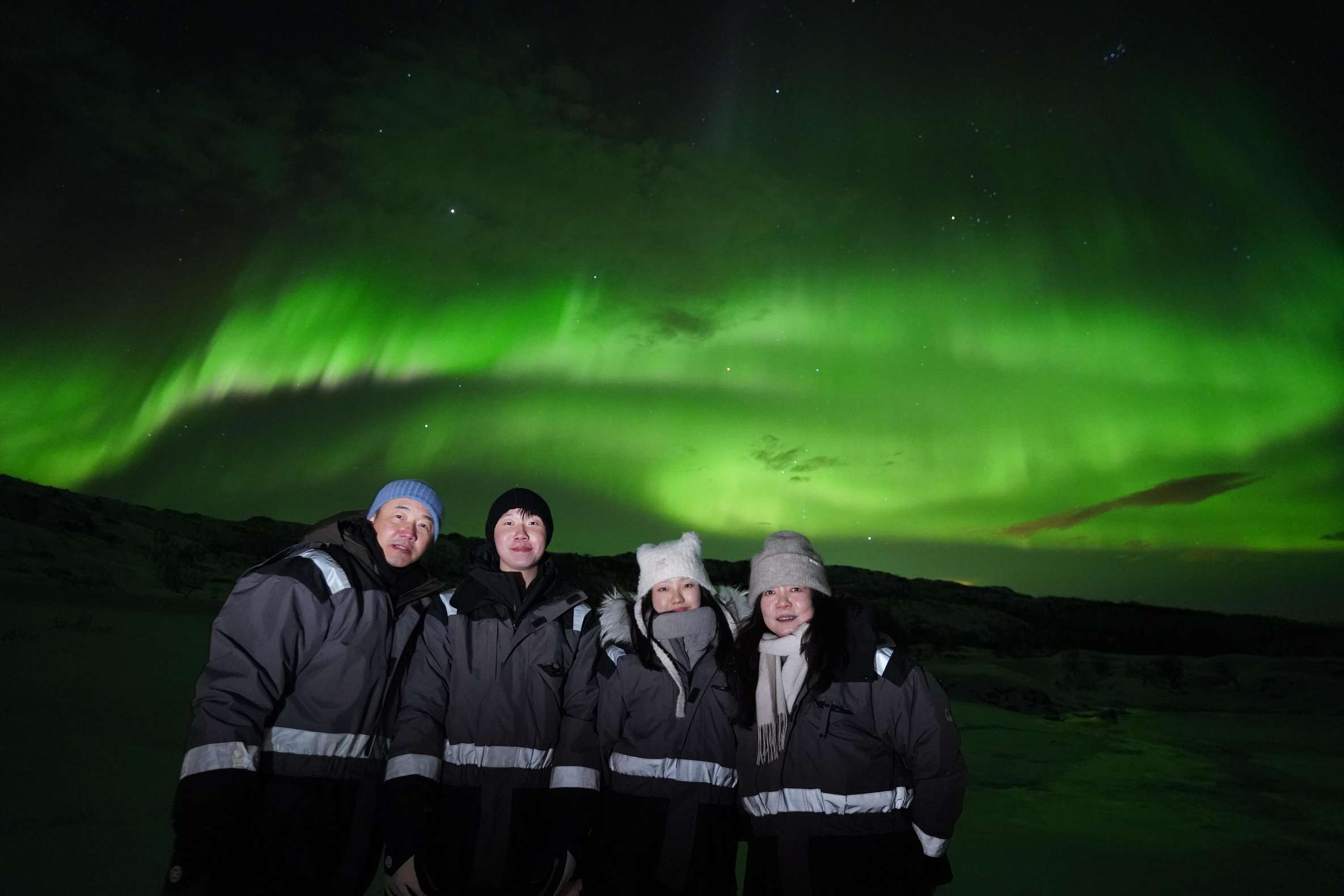
Choosing between minibus, big bus and private aurora chases
Once you have settled on a mobile chase, the vehicle decides the kind of night you get. The split falls on four things: how many people you share it with, what warmth is included, whether dinner appears, and how the photos come back.
Small-group minibuses carry 8 to 15 guests, hand out thermal suits and often boots, and move fast when a forecast shifts.
Big buses are cheaper and seat more, but suits usually cost extra to rent and full meals rarely do; a hot drink and biscuits around a campfire is the standard, so pack extra food if you run hungry.
Small vans also sell out fast: 2 to 4 weeks ahead in December and January, up to 10 to 12 weeks over the holidays. Private chases cost the most and bend the night to your family's pace, which matters if you travel with young children.
How to choose a Tromsø aurora chase
| 8 to 15 guests | Thermal suit usually included, sometimes boots | Bonfire snacks and hot drinks on most tours | |
|---|---|---|---|
| Big bus | 40 or more guests | Suit typically rented or brought yourself | Hot drinks and biscuits, full dinner not included |
| Private chase | Your own group | Gear provided on most tours | Food tailored to the booking |
- Big bus
- 40 or more guests
- Private chase
- Your own group
- Big bus
- Suit typically rented or brought yourself
- Private chase
- Gear provided on most tours
- Big bus
- Hot drinks and biscuits, full dinner not included
- Private chase
- Food tailored to the booking
Two small notes before you pay. Budget bus tours sometimes field seasonal guides with little camera experience, so edited photos are not a given. And toddlers make long mobile chases hard: car seat rules, deep cold and midnight returns favor a cabin with a sky window instead.
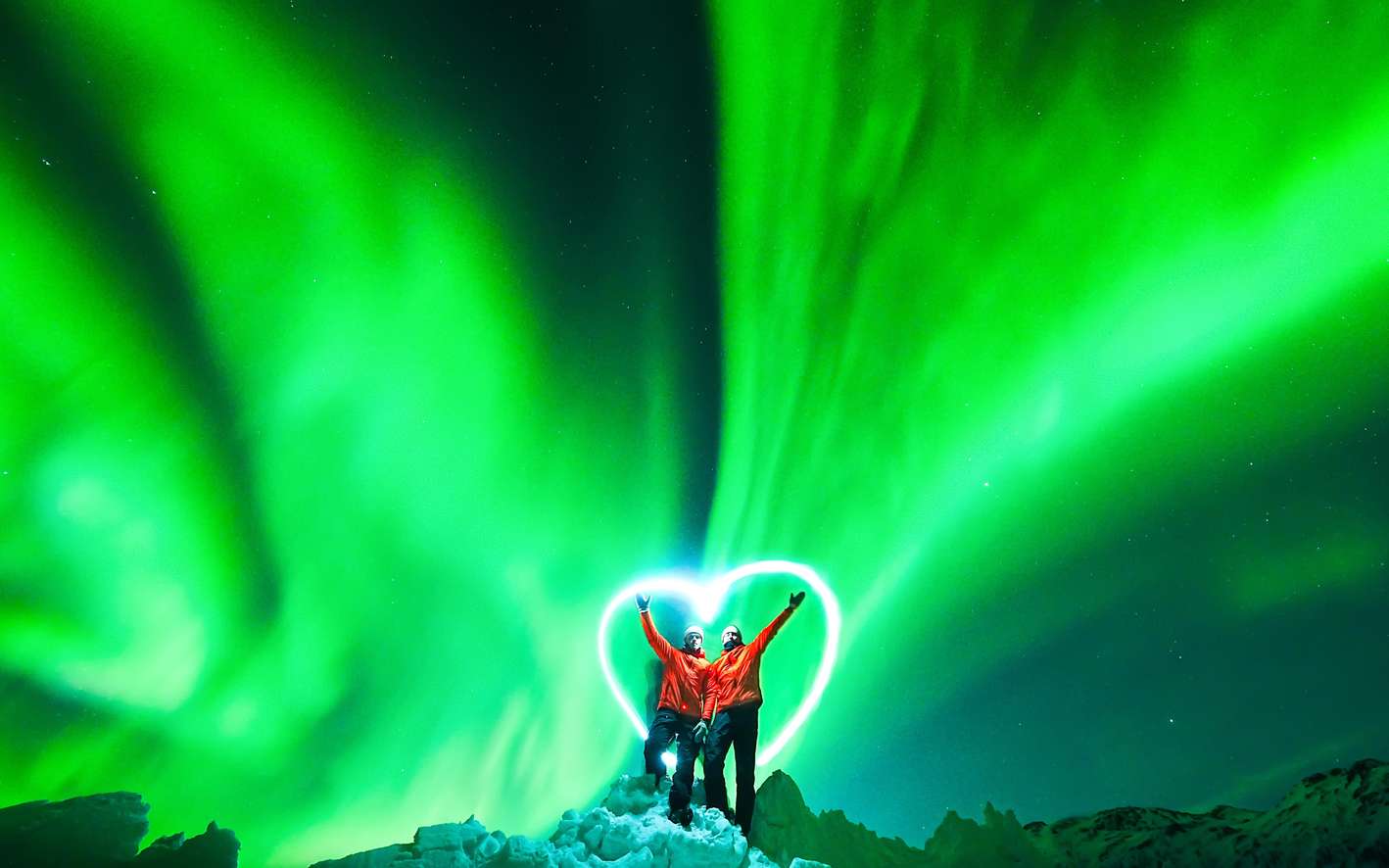
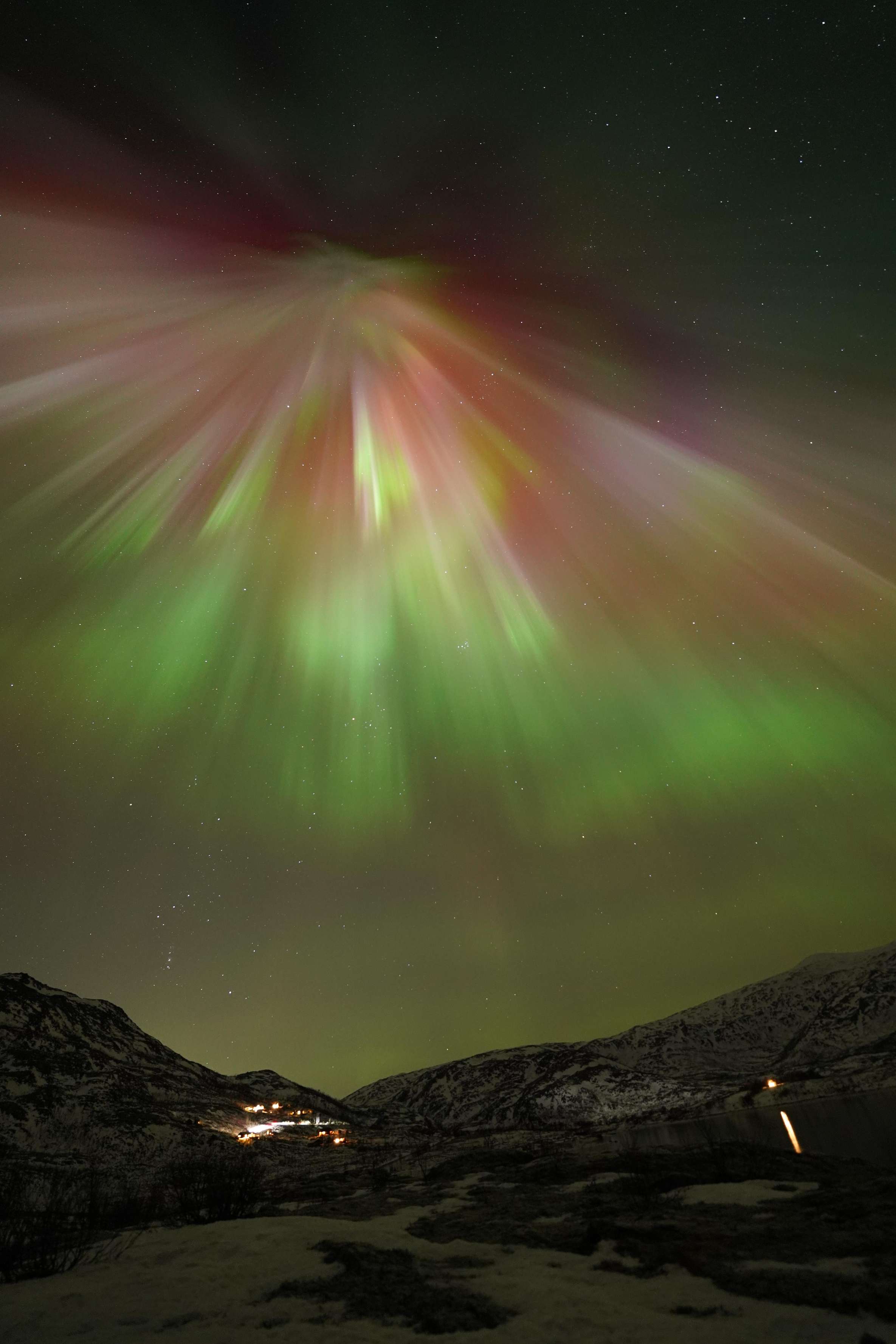
Best months for northern lights in Tromsø
The season runs from September to early April, and the honest answer about the best month is that every window trades something.
Polar night, late November to mid-January, gives 14 to 16 hours of full darkness and chases that start in mid-afternoon. The payback is near-total darkness for daytime plans and the busiest tour calendar of the year.
February and March balance the two sides best: 8 to 12 hours of darkness plus 7 to 12 hours of daylight for dog sledding or whale trips, with reliable snow underfoot.
Late March adds a small equinox lift in geomagnetic activity. September and October bring milder temperatures and open water that reflects the lights, though the coast often rains then.
January: 5 out of 5 for how busy it gets. Deep winter brings peak tour crowds, polar night conditions with 15 hours of darkness, and freezing temperatures.
Tap a month to read it.
December: 16 clear dark nights within 75 km. Continuous darkness and holiday demand peak, though coastal cloud cover is common.
Tap a month to read it.
December: 16 hours of darkness. Continuous darkness and holiday demand peak, though coastal cloud cover is common.
Tap a month to read it.
June: 24 hours of daylight. Northern lights tours do not operate under the 24-hour midnight sun.
Tap a month to read it.
July: highs around 18°C. Continuous daylight makes northern lights viewings impossible, and tours do not run.
Tap a month to read it.
The monthly picture sorts itself into two choices: polar night buys you the most darkness, February and March buy you days for the rest of the Arctic.
Within chase range, every core month delivers roughly 13 to 16 clear dark nights, so a competent guide can work with any of them. A single magic month does not exist. Autumn brings rain, spring brings daylight, and the weather stays variable either way.
One rule helps more than any calendar: when the lights are the reason for the trip, keep the whole trip inside the season, without a detour to cities further south.
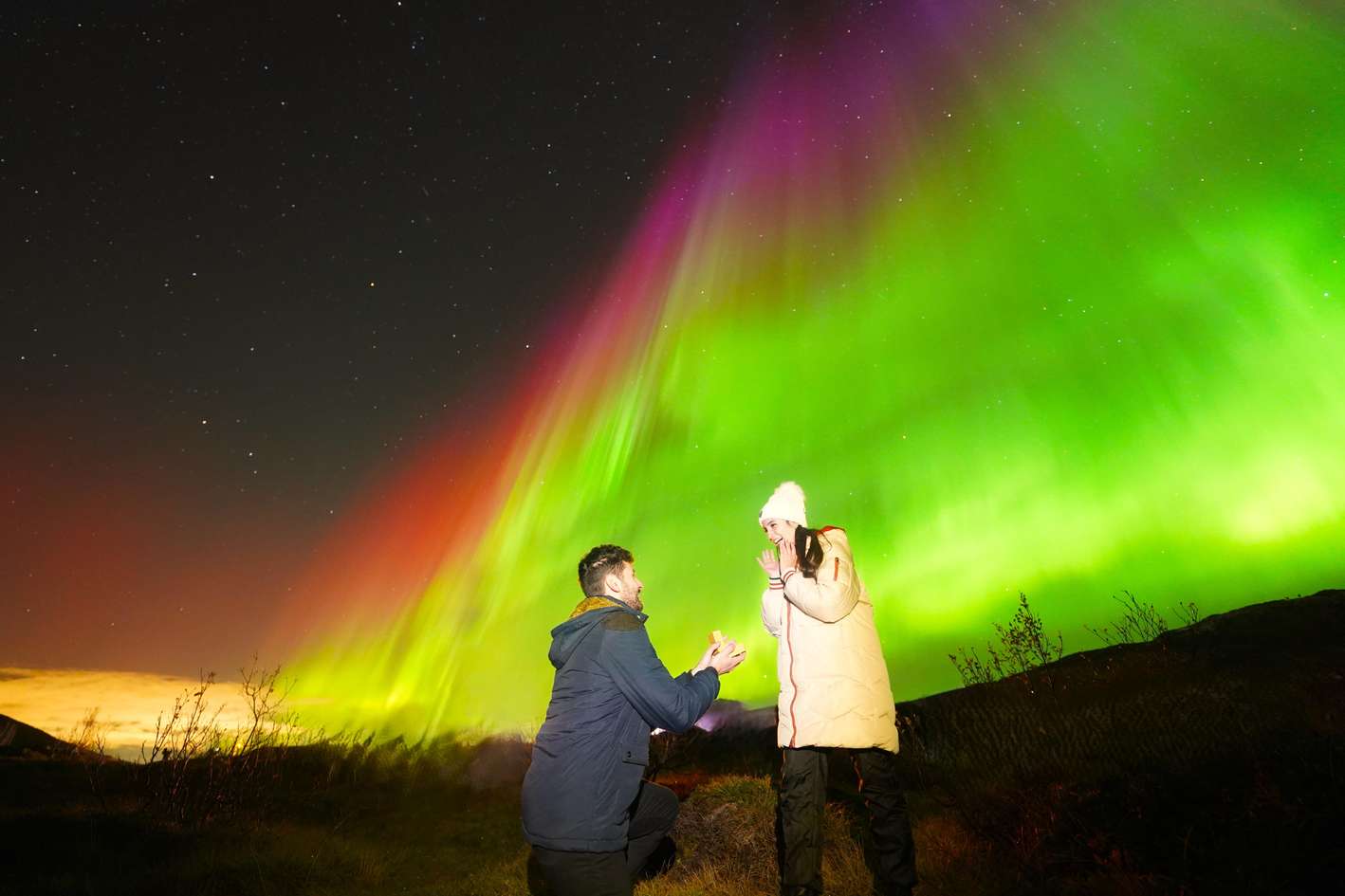
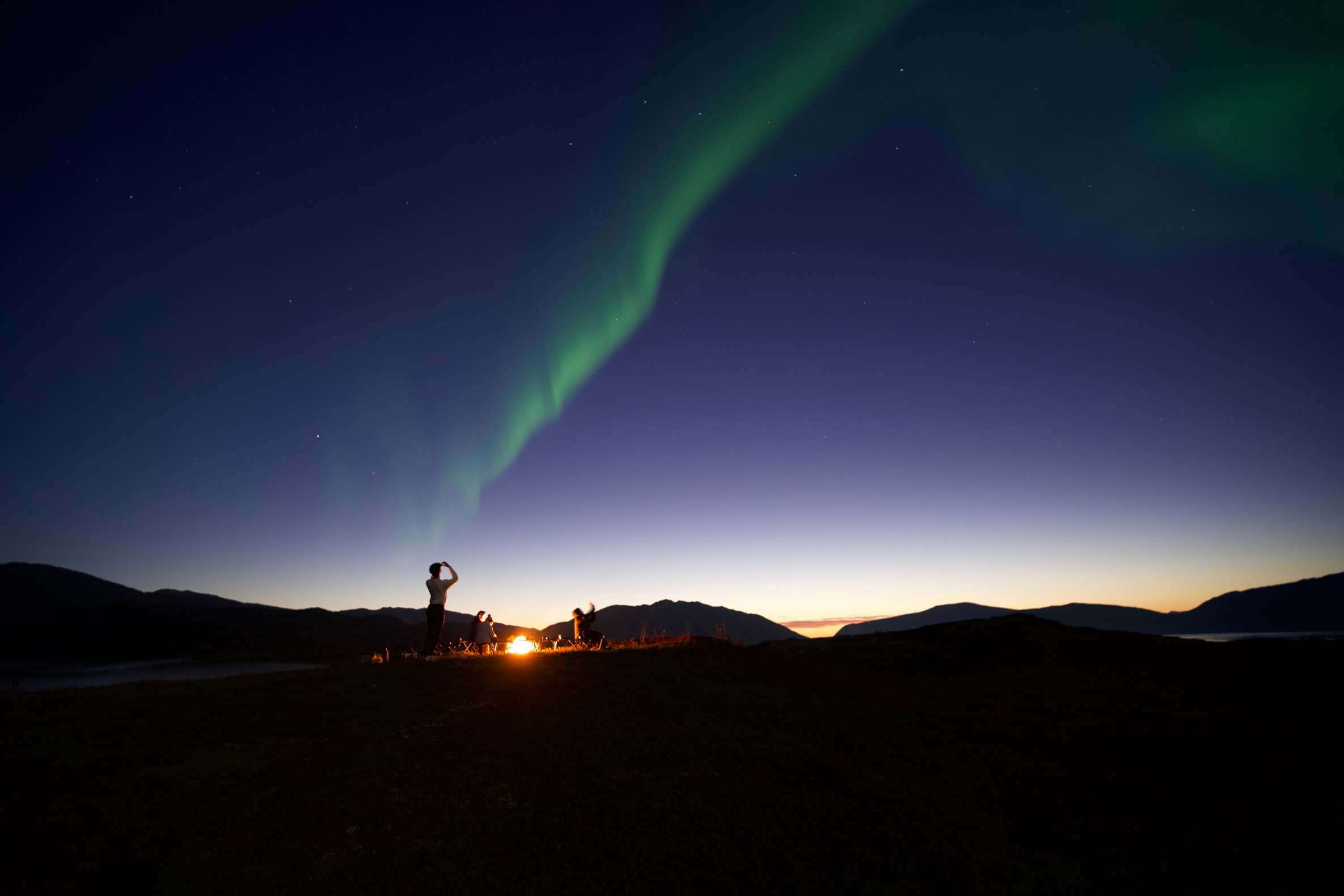
What the northern lights look like to the naked eye versus a camera
Set expectations before the first display, because the sky often under-delivers to the eye and over-delivers to the lens. Human eyes switch to rod cells in the dark, and those see in black, white and grey.
Faint aurora is usually too dim to trigger color vision, so it can look like a pale greenish-grey haze.
The vivid green in your guide's photo may have looked grey in the moment, because a camera sensor holds its color sensitivity in the dark and stacks light over a long exposure that no eye can match. That is the eye's limitation, and it says nothing about how good the display was.
Phones compensate with computational tricks, and guides actively help you set exposure and framing, then send the professional portraits afterwards by download link, often the next day or within 48 hours.
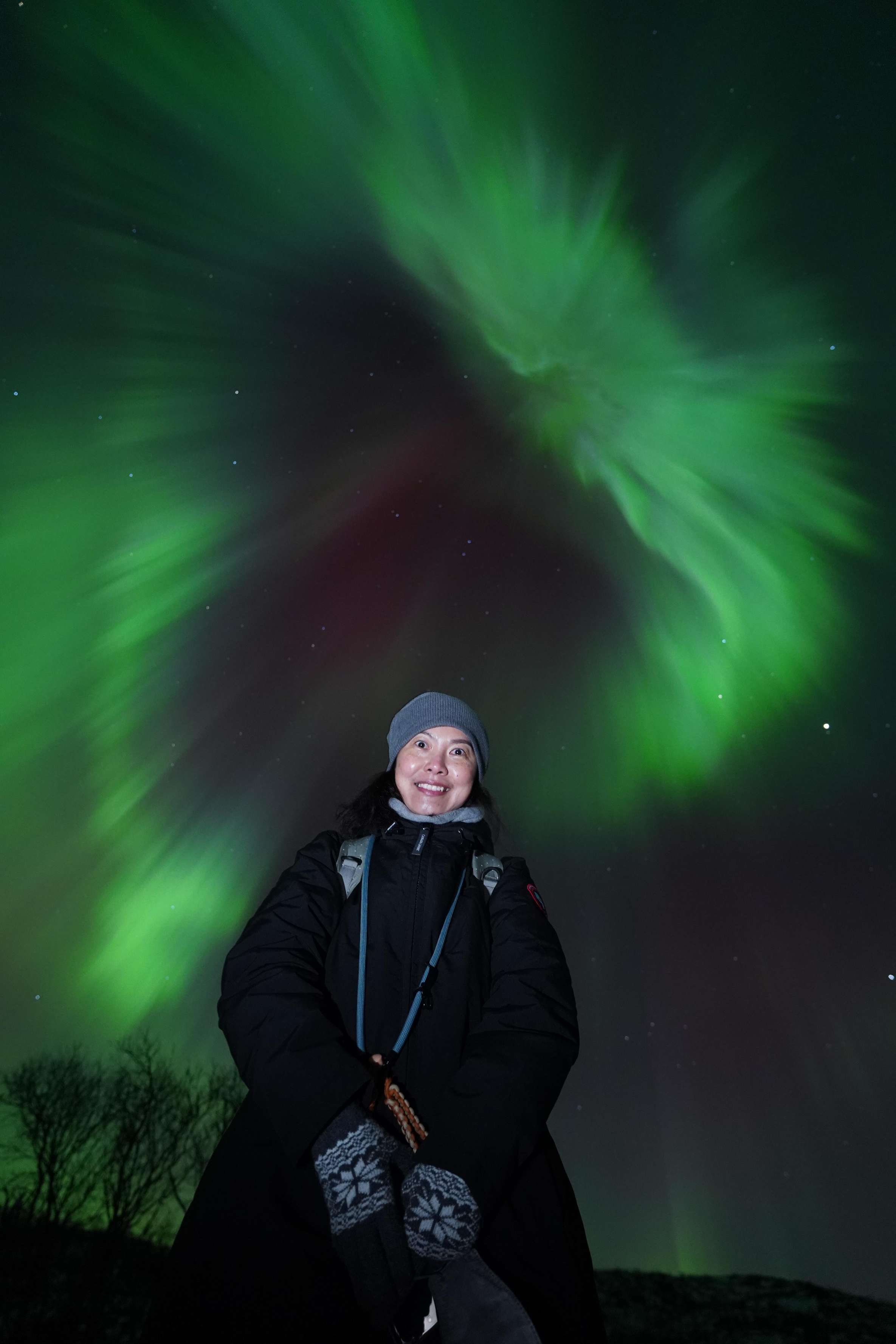
Faint aurora looks colourless to the eye; the camera still captures the colour you cannot see
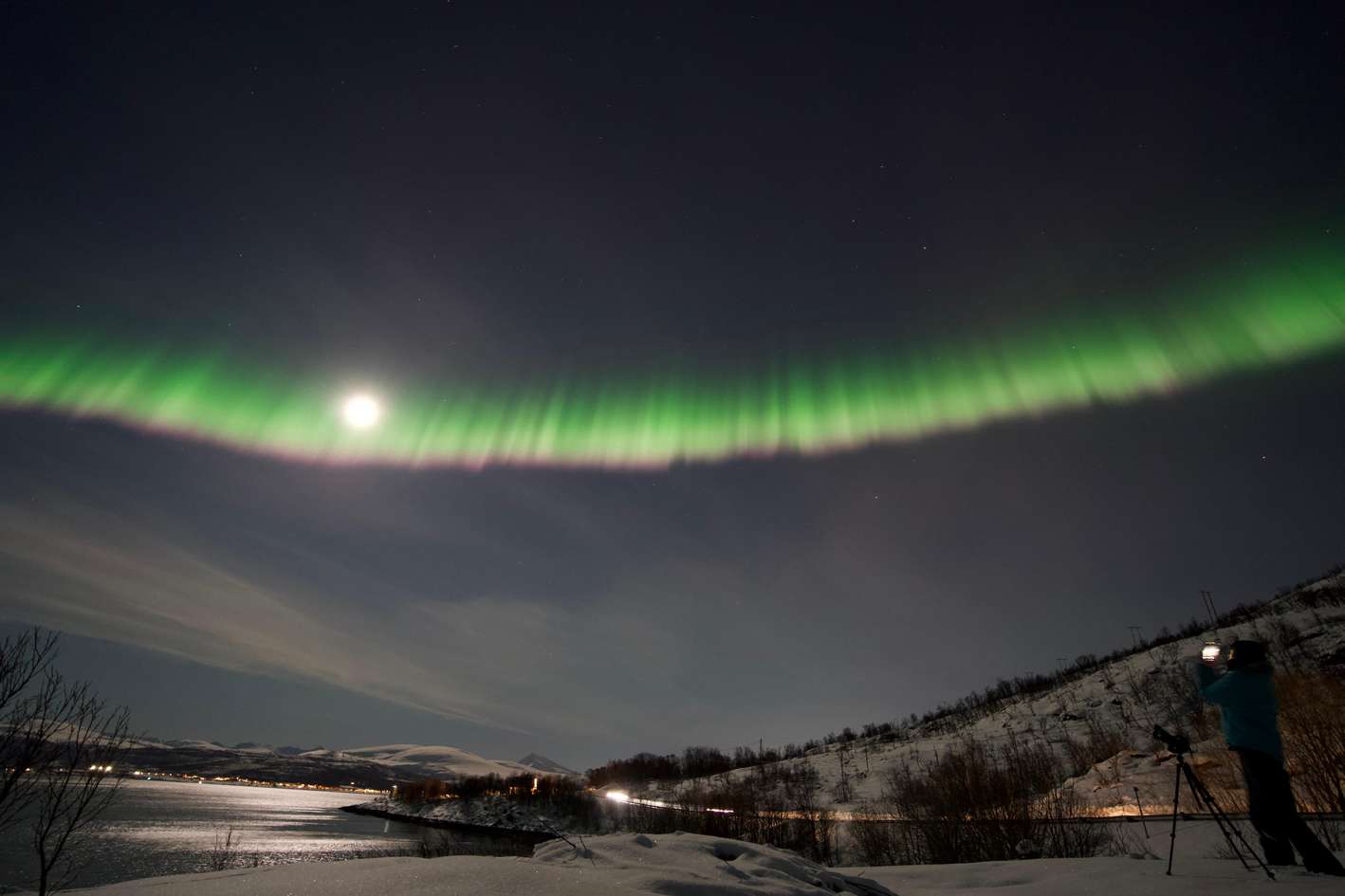
Strong displays stay clearly visible through moonlight, which brightens the snowy landscape for photos
Displays come in short bursts, and some of the best ones last only minutes
The cold is the other surprise. Displays can be brief, which means hours of standing still in deep cold for a few moments of movement.
Keep spare batteries and your phone in an inside pocket near body heat: at minus 15 a phone can die within half an hour, and a camera battery can lose most of its capacity. Seal the camera in a bag before stepping back into the warm van, or condensation will fog the lens from inside.
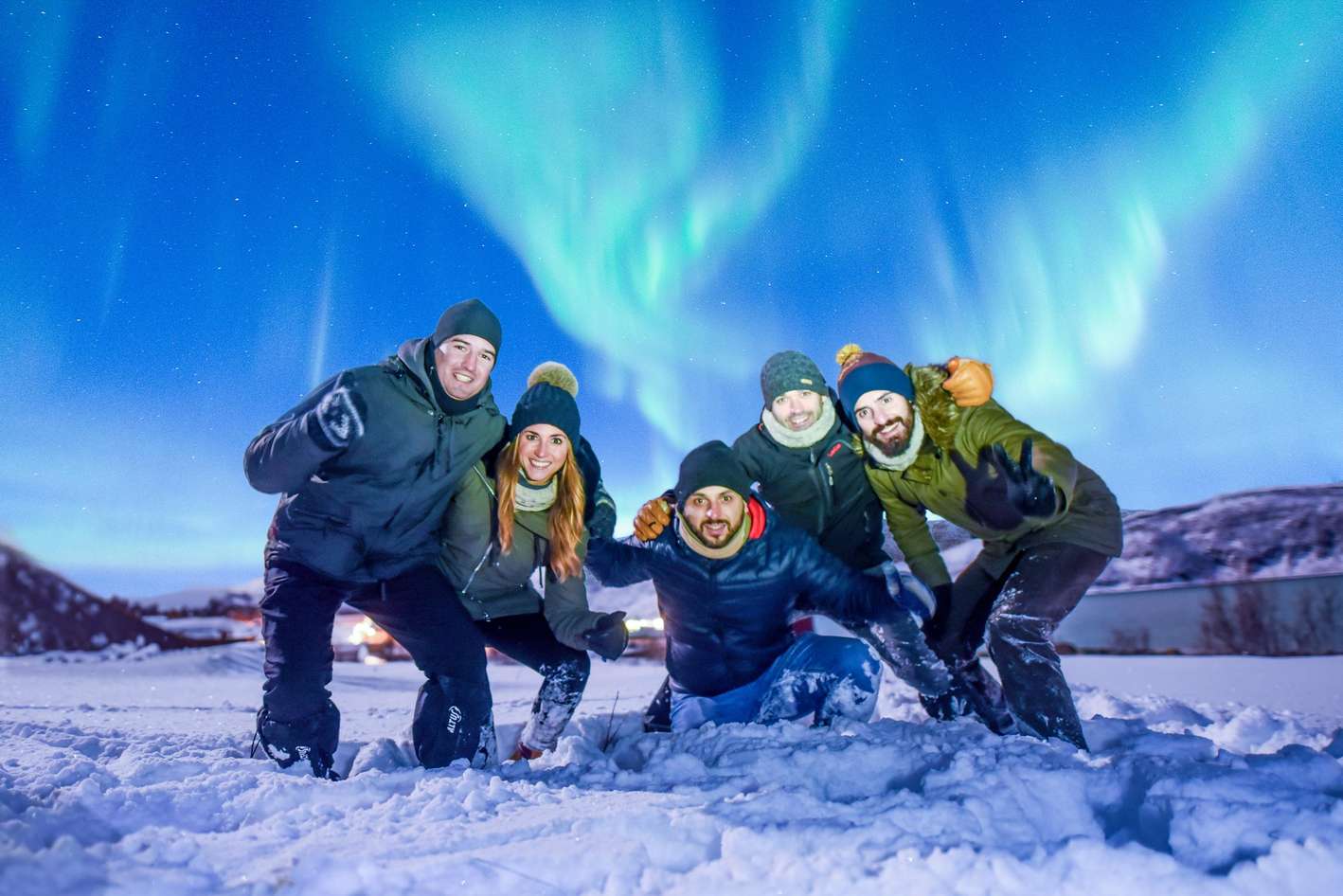
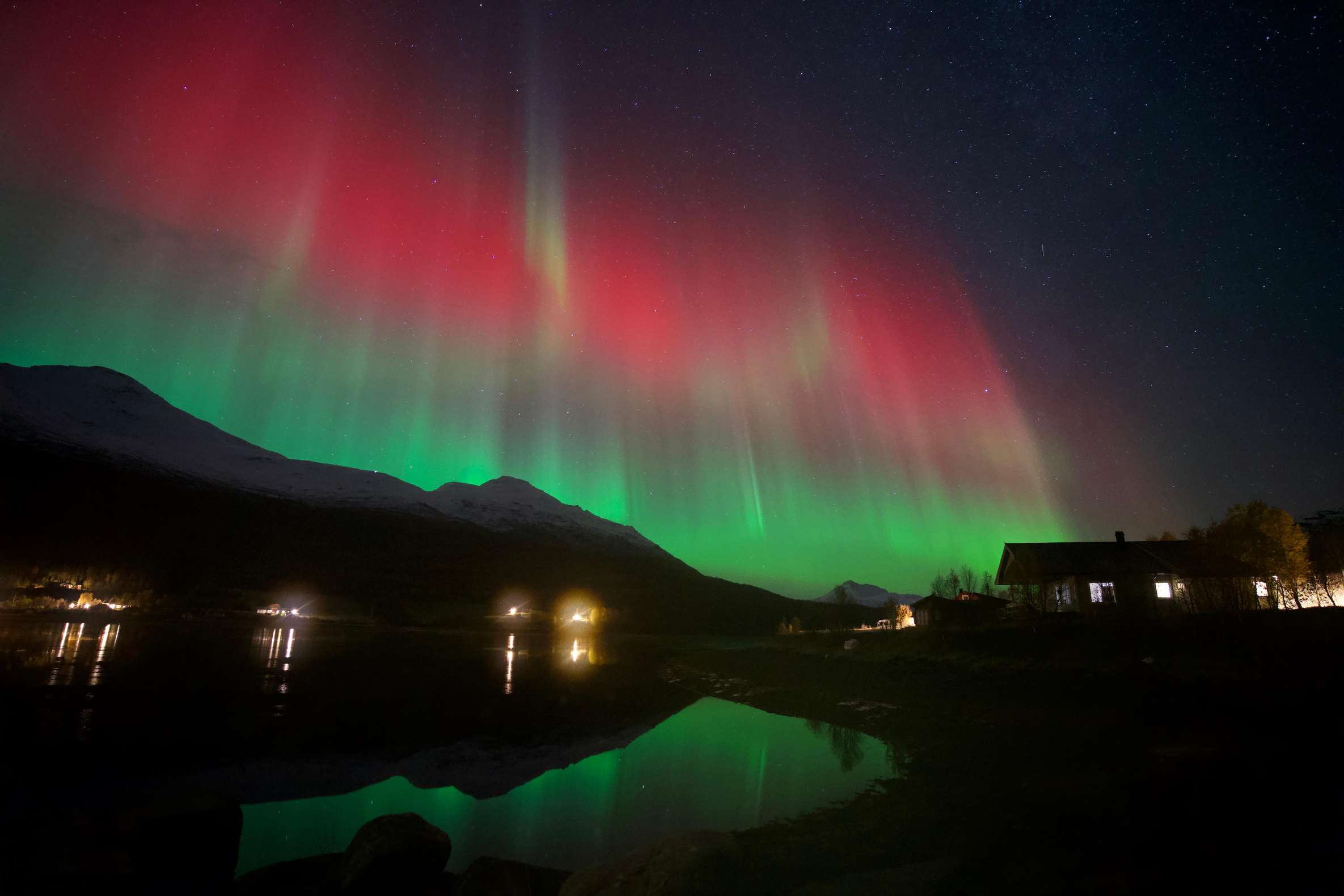
Seeing the northern lights from Tromsø without a tour
On the nights when the sky over Tromsø itself clears, no tour is needed. Strong displays stay visible right from central streets and bridges, and the walkable dark pockets beat the city centre. Prestvannet lake and Telegrafbukta beach sit away from the streetlights and show faint aurora that downtown would wash out.
The shoreline toward Polaria works too, city bus 42 reaches Håkøya island in about 20 minutes for dark skies and a grill hut, and the Fjellheisen cable car lifts you above street level when it runs.
Be honest about what these nights are: the free option that works when the local sky cooperates. Faint displays vanish under city light even when the aurora is up, so the dark spots matter more than the vantage height.
Self-driving is the part to weigh carefully. Dark, icy mountain roads are unforgiving if you lack winter driving experience, and a remote lodge without a car leaves you stranded if clouds settle over that one valley.
Many visitors decide the rental car adds risk without adding sighting odds, since a chase van covers the same dark corners and follows the weather instead of committing to one.
When you stay outside the centre, step outside and check the sky every hour or two around midnight. App alerts are a poor substitute for your own eyes on the cloud.
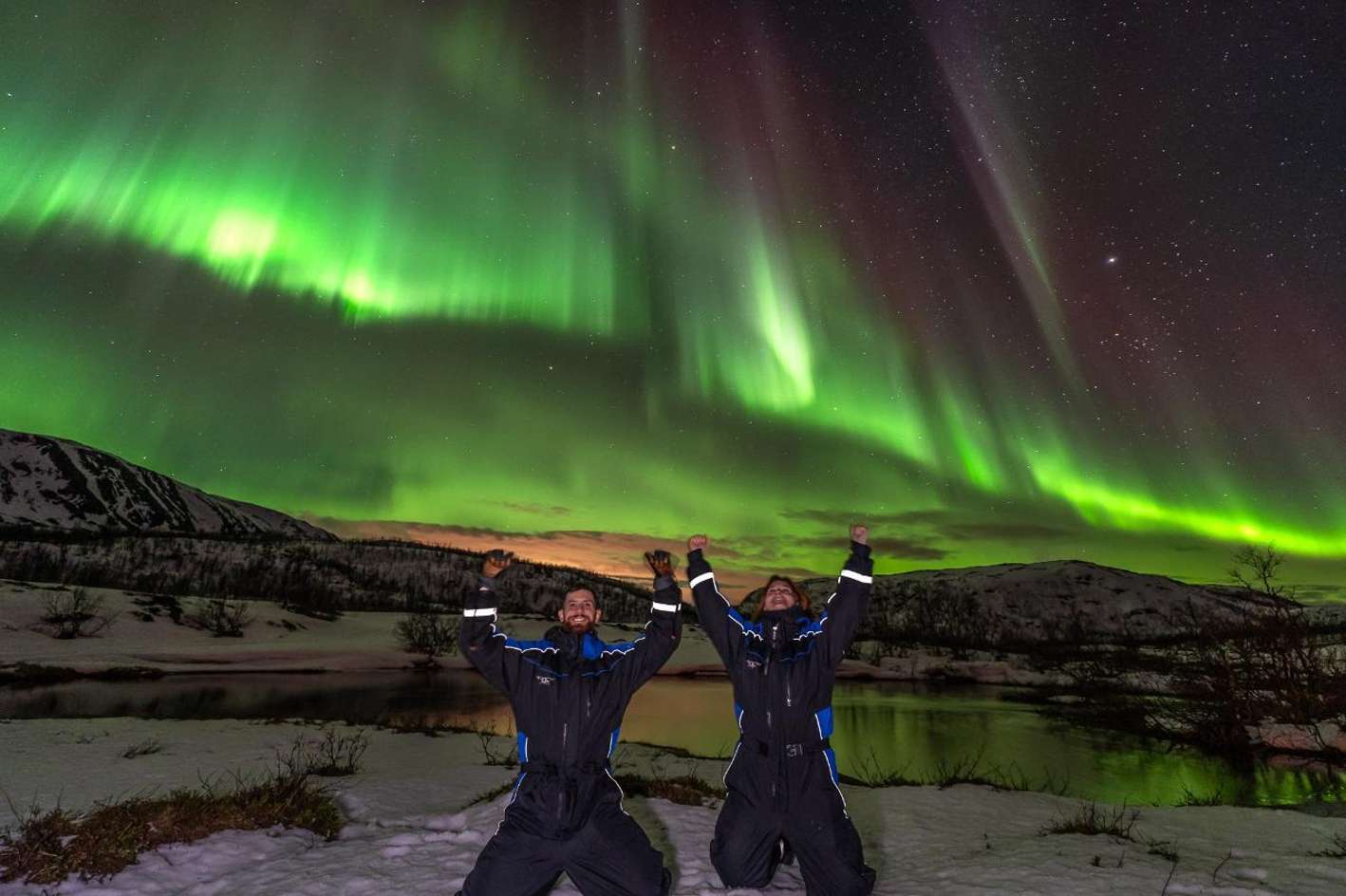
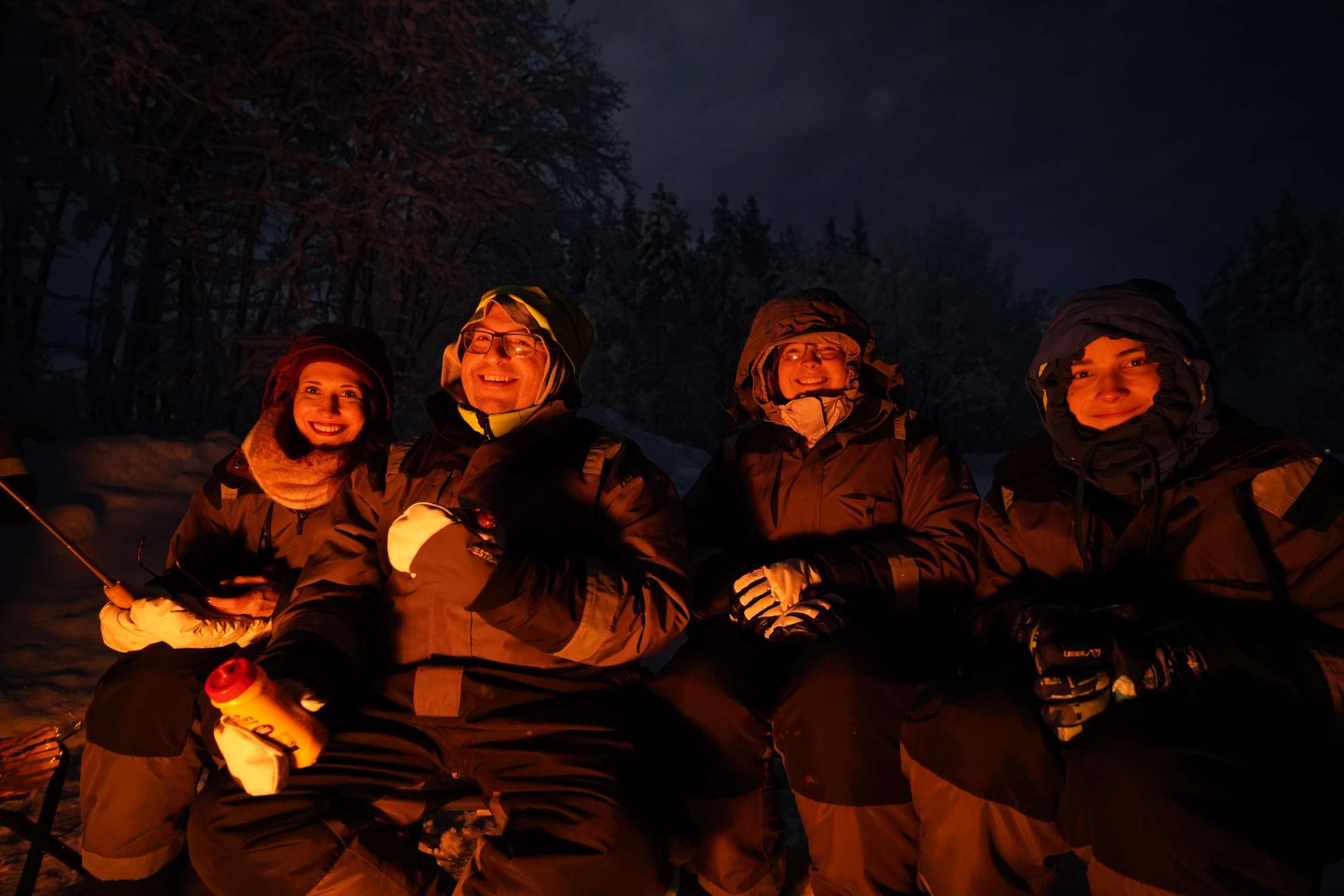
How to prepare for a night of aurora chasing in Tromsø
Preparation decides whether you enjoy the wait, and the wait is most of the night. Under the thermal suit your operator hands out, wear merino wool or synthetic base layers next to the skin, never cotton, then a fleece or heavy wool sweater with warm leggings.
Inland chases can sink to minus 20 or minus 30, so carry one extra packable jacket.
Boots matter more than coats: size up a full size for two sock layers, a thin liner under a thick wool sock, so your toes keep an insulating air pocket while you stand still on frozen ground.
Book your chases for the first nights of the trip. That leaves room to rebook after a washed-out evening, and free cancellation windows on later nights become useful if the aurora performs early. For December and February, book months ahead; small-group vans sell out 2 to 4 weeks in advance even in ordinary weeks.
Plan the mornings after. Chases return between midnight and 2 am on standard nights, and past 3 am when Finland is the destination. Keep the next morning free, choose one main activity per day, and give a chase night a museum-and-café day to recover.
Back-to-back late nights in the cold wear people down faster than the cold itself. Taxis run around the clock from central ranks if your drop-off is not at the hotel door.
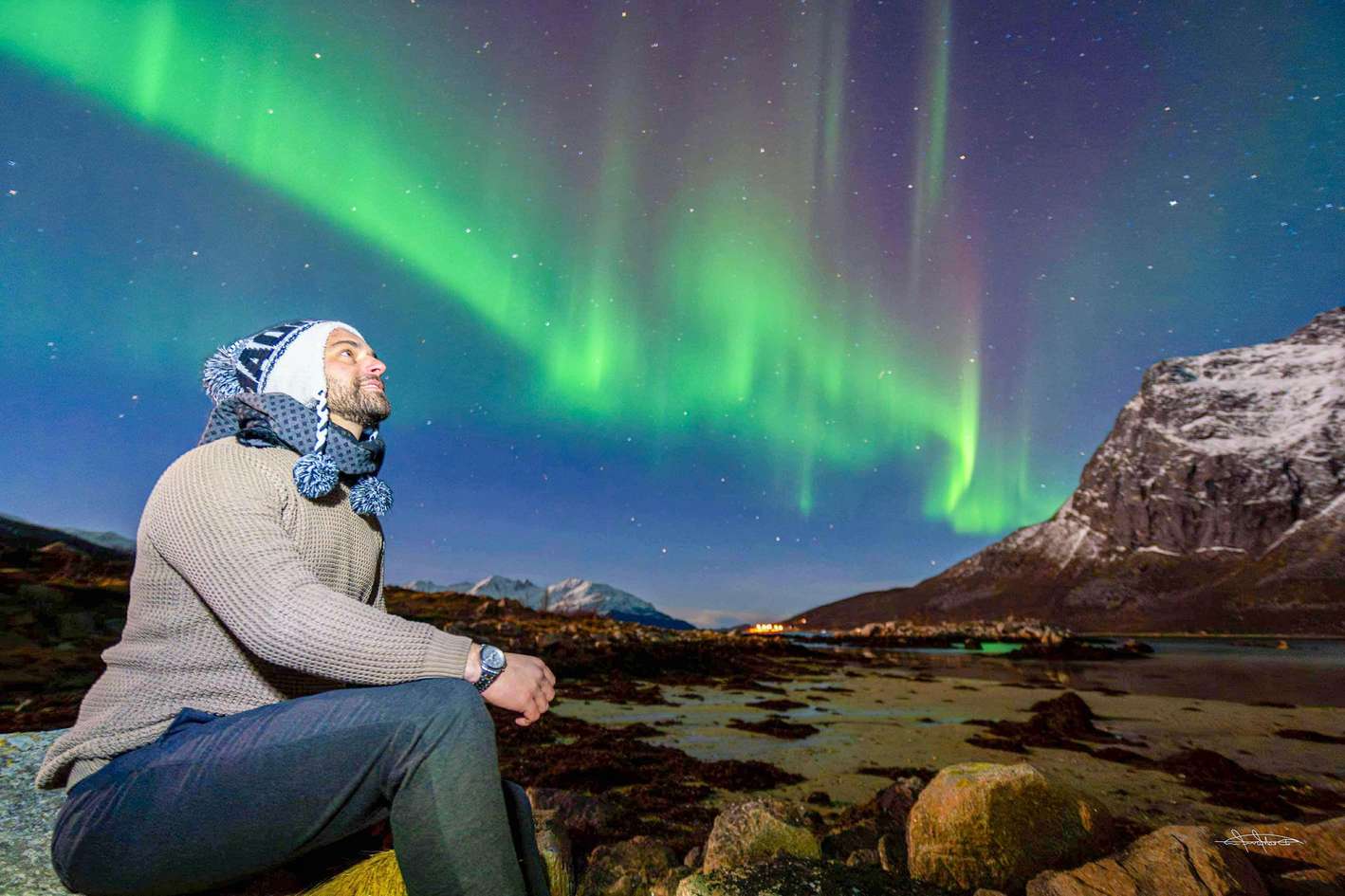
What happens if the weather turns - cancellations, refunds and retry options
The last fear to retire is the financial one. Tromsø operators cancel honestly: when guides judge there is no chance of seeing the lights anywhere within reach, or roads close and driving becomes unsafe, the tour is called off in advance and you get a full refund or a free move to another night.
Ordinary snow, wind and shifting Arctic weather do not trigger a cancellation; the chase simply reroutes. Only genuine dead ends, storms that close passes and skies no van can outrun, stop the night.
If the night does not deliver
| If this happens | What happens then |
|---|---|
| Tour cancelled for unsafe roads or zero viewing chance | Full refund or free rebooking on another date |
| Weather makes sightings impossible before departure | Cancelled in advance with a full refund |
| No clear photo of the lights on a retry-guarantee tour | Join another chase free until you do |
The retry guarantee is the piece that turns one blank night into a plan rather than a loss.
Tromsø: Northern Lights Chase + Unlimited Free Retry Option promises another chase, free of charge, every night your stay allows, until its camera captures a clear photograph of the aurora. That single clause is why repeat chases feel less like a gamble.
What no one can promise is the aurora itself. Sightings depend on solar activity and local cloud, and every honest guide says so. The odds you can control are the nights you allocate and the mobility you buy.
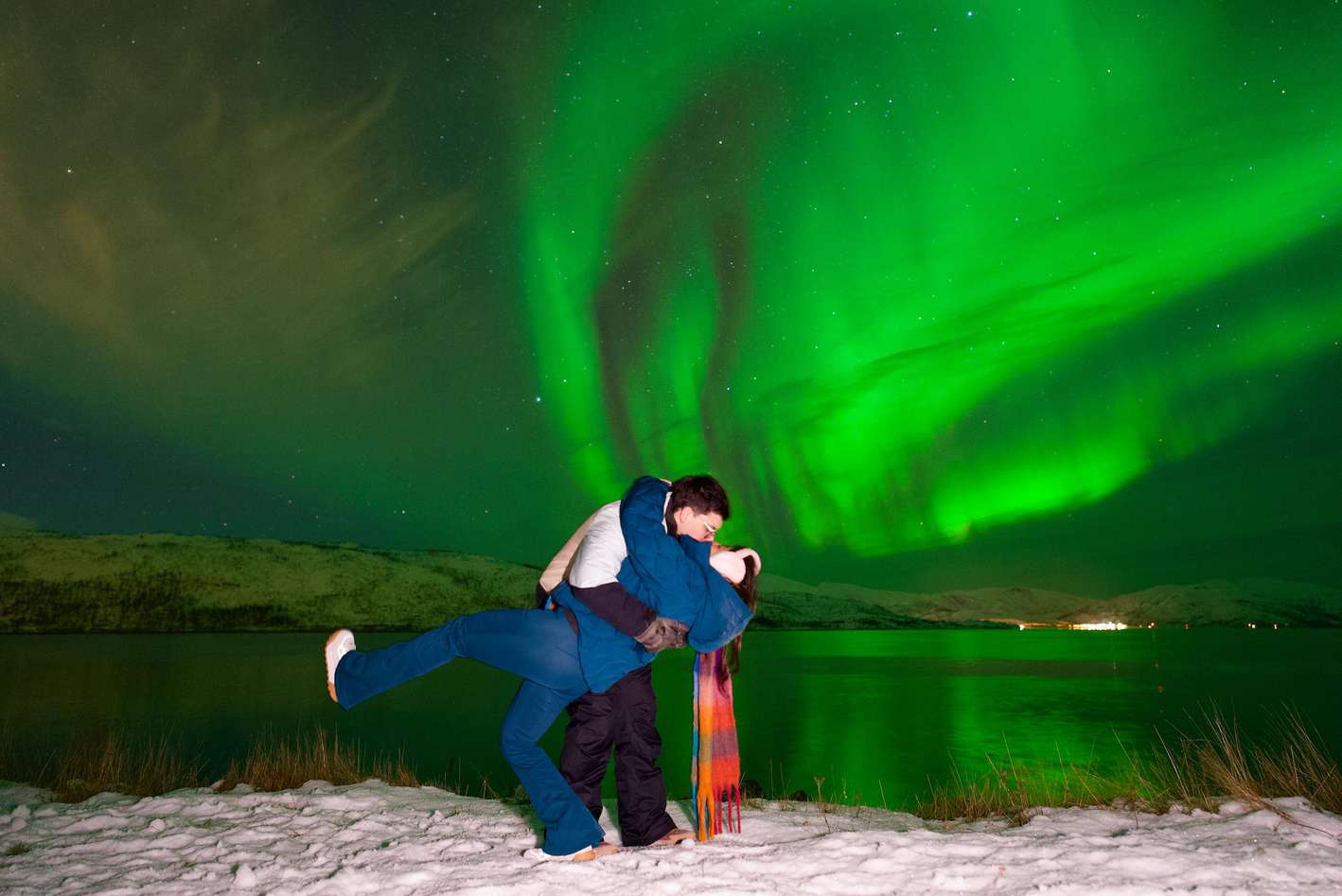
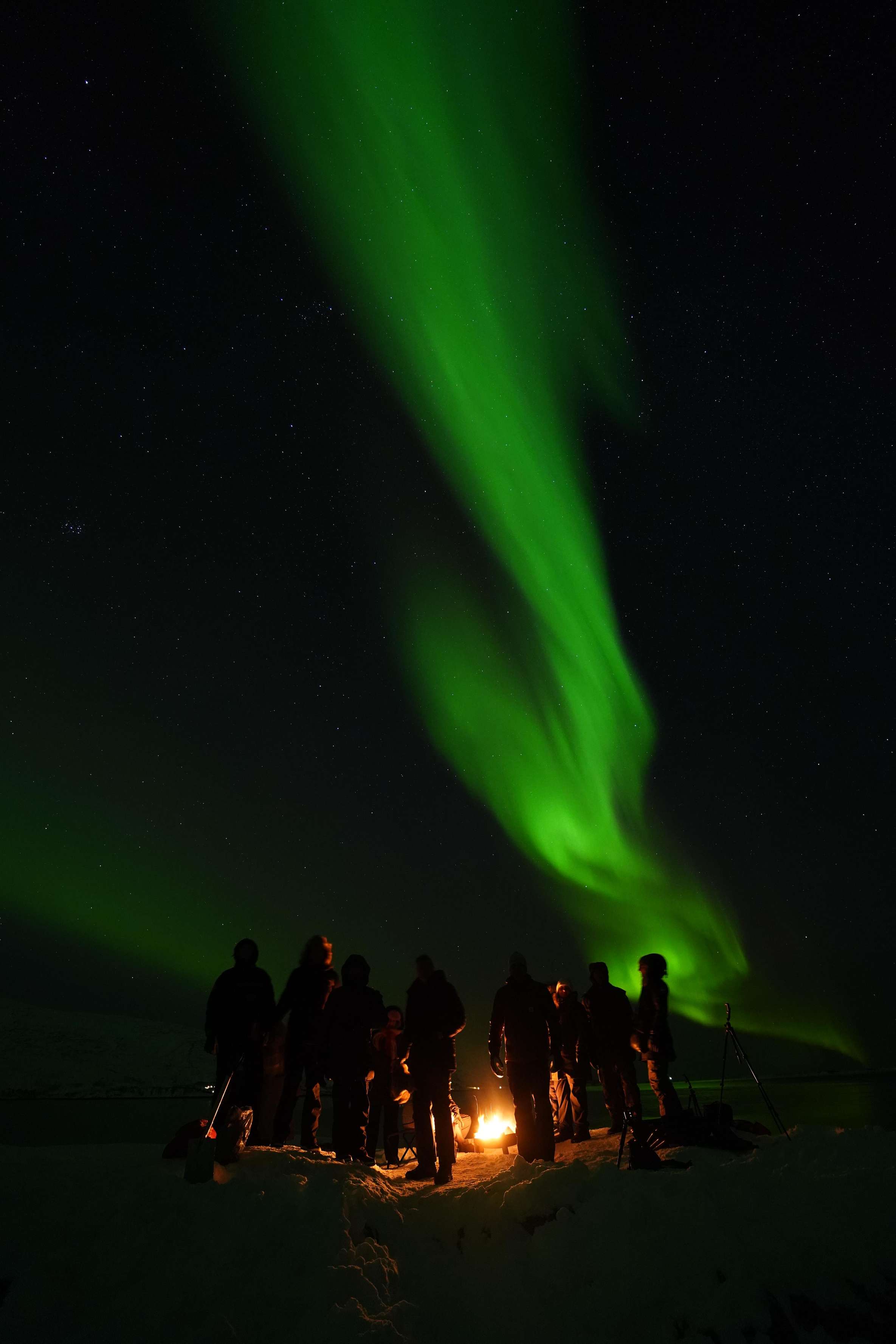
Great experience thanks to our guide Tomas! Cloudy everywhere, but he drove us all the way to Finland for clear skies. His stories, enthusiasm, and photos made it unforgettable. Highly recommend!
A safe bet, if you plan for the cloud
Tromsø is one of the most dependable places on Earth to see the northern lights, because the aurora sits overhead almost every winter night.
The risk is local cloud, and the fix is mobility: a mobile chase across three or four nights pushes your odds toward 90 percent. The answer changes for short stays of one or two nights and for anyone fixed to a single spot all evening.

What to know about your chances of seeing the northern lights in Tromsø before you book
Several chases cross into Finland when the coast is cloudy, and Finland requires a valid travel document even inside Schengen. Bring a passport, or a national ID card if you are an EU citizen. Third-country nationals need a passport.
If weather makes a sighting impossible or roads close, operators cancel in advance and give you a full refund or a free rebooking to another night. One chase on this page refunds you in full if its camera never captures the aurora at all.
Most minibus chases hand out a thermal suit, but that is an outer shell. Wear a wool or synthetic base layer and a fleece under it, never cotton, because inland stops can sink to -20°C or colder. Bring your own hat, gloves and insulated boots, since suits often come without boots.
Once the chase leaves the city, built facilities are scarce and many roadside toilets close for winter. Go before departure, as one tour operator tells guests outright. Coaches have onboard toilets, and some guides plan a gas station stop, though that can take twenty minutes or more when other tours queue.
Hotel pickup is the exception, not the rule. Most chases start from central meeting points along the waterfront, outside Scandic Ishavshotel, at the Prostneset terminal or near the Radisson Blu, and nearly every hotel in the center sits within a five-minute walk. Pavements ice over, so slip-on ice grips help.
The chases here run from coaches with dozens of seats to minibuses capped at 8 or 15 guests. A smaller vehicle changes route faster and reaches narrower valleys, while a big bus costs less and adds an onboard toilet. Both hunt the same clear skies.
Your guide photographs you under the lights and sends the portraits afterwards by email link, at no extra cost on nearly every chase here. Delivery ranges from within 10 hours to a few days, and one small-group tour gets portraits to you by 6 pm the next day.
A full moon does not spoil the night. Strong displays still show clearly against it, and moonlight lights the snowy mountains for photography. Expect a faint aurora to look a little dimmer than it would on a dark night.
“Wonderful tour! Oscar was an excellent guide, chatting about Norwegian culture was a privilege.”
Chances of seeing northern lights in Tromsø - your questions answered
What are the chances of seeing the northern lights in Tromsø on a three- or four-night trip?
On a three-night stay, statistical models put your odds at 60 to 70 percent, rising to 70 to 80 percent over four nights. Join a mobile chase tour that drives inland for clear sky and three nights push the cumulative odds to around 90 percent.
Can you see the northern lights in Tromsø if it rains or snows in the city center?
From the city center, dense cloud makes the chances virtually zero. On a mobile chase, the odds stay good, because within about 75 kilometers the inland valleys, fjords and the Finnish border offer 13 to 16 clear dark nights a month while Tromsø itself gets only 2 to 5.
Why does a chase tour beat staying put when Tromsø is clouded over?
Standing still in town gives you 2 to 4 clear dark nights a month on average. A chase van covering a 75-kilometer radius reaches 13 to 16, which multiplies your clear-sky odds by three to eight times. Operators that hunt this way report success rates of 90 to 98 percent.
How far will a chase go to find clear skies?
When the coast is overcast, mobile chases drive 150 to 170 km inland toward the Finnish border and Kilpisjärvi, a one-way drive of 2.5 to 3 hours. When they need to, tours push up to 250 km one way deeper into Finland.
Why is Tromsø so good for the northern lights in the first place?
The aurora follows Earth's magnetic field, and Tromsø sits directly under the auroral oval. Even on the quietest nights at Kp 0, the southern edge of the oval stays overhead, so a display can appear without any strong solar storm.
How often are the northern lights active on a clear winter night?
Almost every clear night. Because the auroral oval sits overhead, activity runs continuously above the city, showing on at least every other clear night, most actively between 8 pm and 2 am.
Do I need a high Kp forecast to see the aurora borealis from Tromsø?
No. At this latitude a Kp around 1 is enough for a glow in the north, and a Kp of about 3 puts the aurora overhead. Cloud cover decides far more than the Kp index does, since a thick cloud layer blocks the lights at any strength.
What happens if the tour is cancelled because of the weather?
Operators cancel in advance with a full refund when weather makes sightings impossible, and they offer a refund or rescheduling if roads or conditions turn unsafe. Many also let you move free of charge to a clearer night when the outlook looks poor.
Does a full moon ruin the northern lights?
It does not. A strong display stays clearly visible through a full moon, and moonlight helps by lighting up the snowy landscape for photos. On a full-moon night the aurora may look a little fainter, that is all.
What time of night should I plan around?
Peak activity falls between 11 pm and 2 am, inside a wider active window from about 8 pm to 2 am. Most chases run 6 to 8 hours, so expect to be back after midnight, and keep the next morning free.
Is there a best month among the chances of seeing northern lights in Tromsø?
February and March offer the most balanced conditions, with 8 to 12 hours of full darkness, reliable snow and 7 to 12 hours of daylight for daytime activities. The season itself runs from September to early April, and late March benefits from a small equinox boost in geomagnetic activity.