A · Abisko
Rain-shadow village in Swedish Lapland, November to March
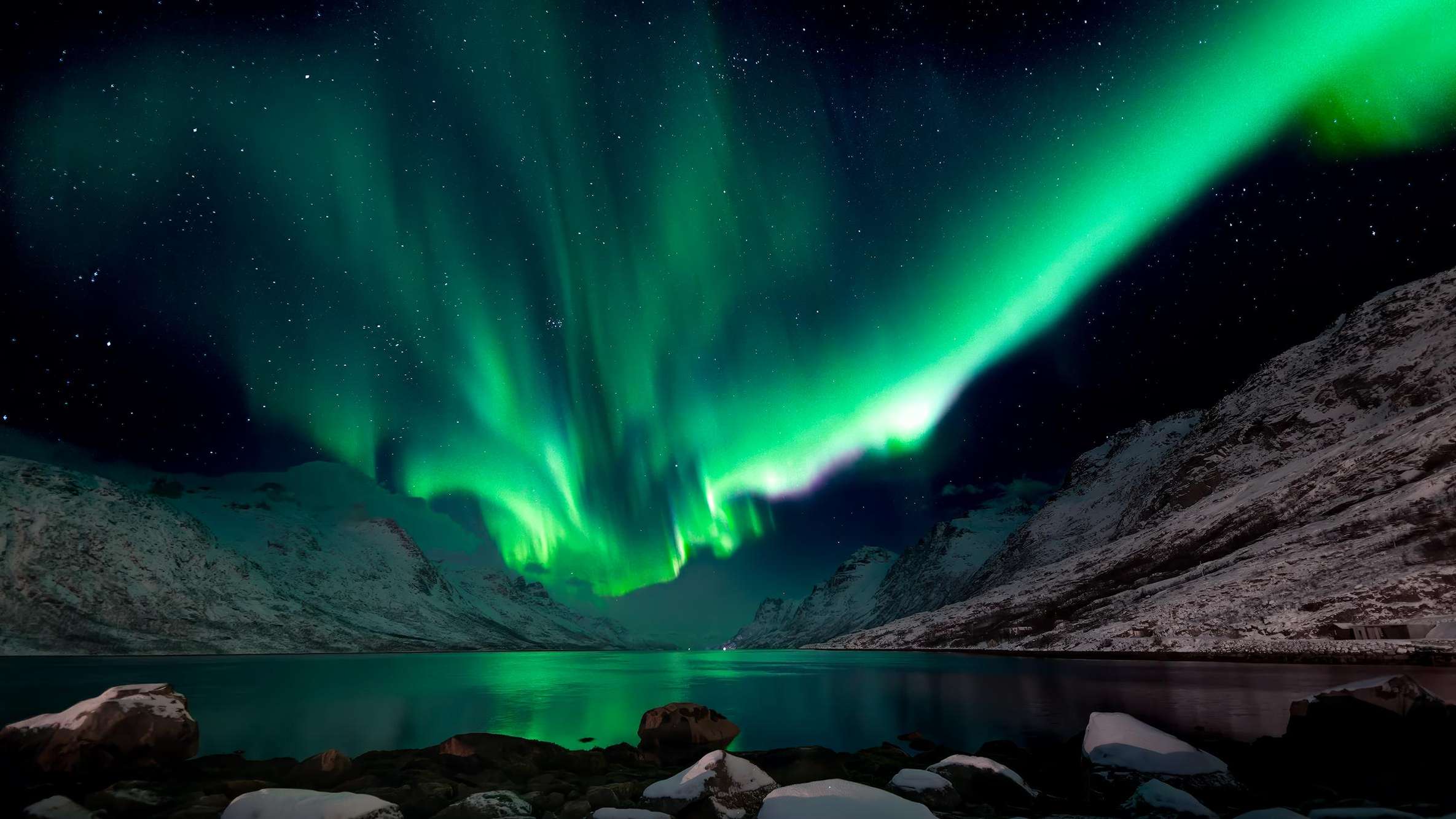
Sits in the lee of the Scandinavian mountains, where falling air dries out and clears the sky over Lake Torneträsk.
Best for: Quiet-stay wilderness travelers
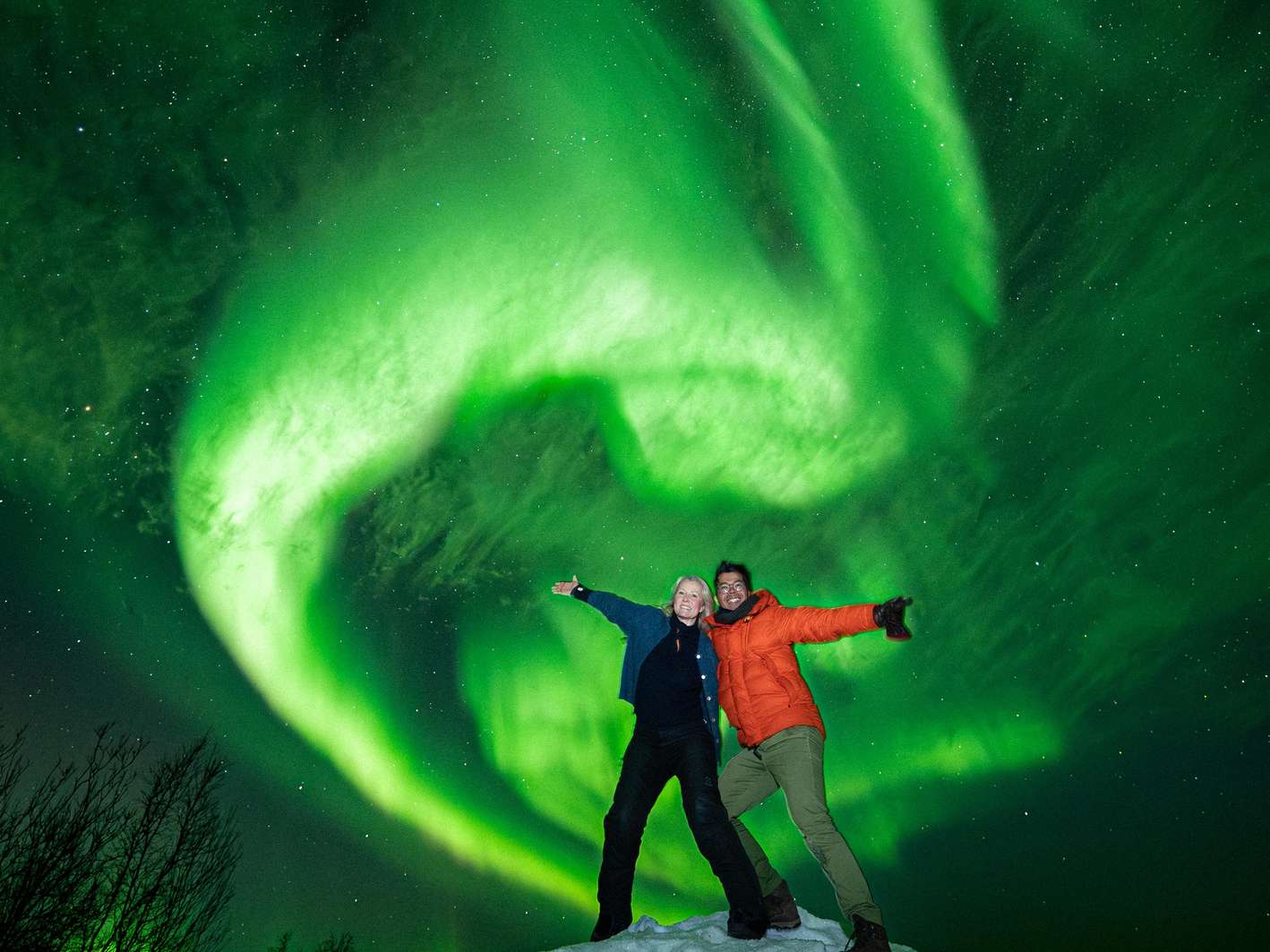
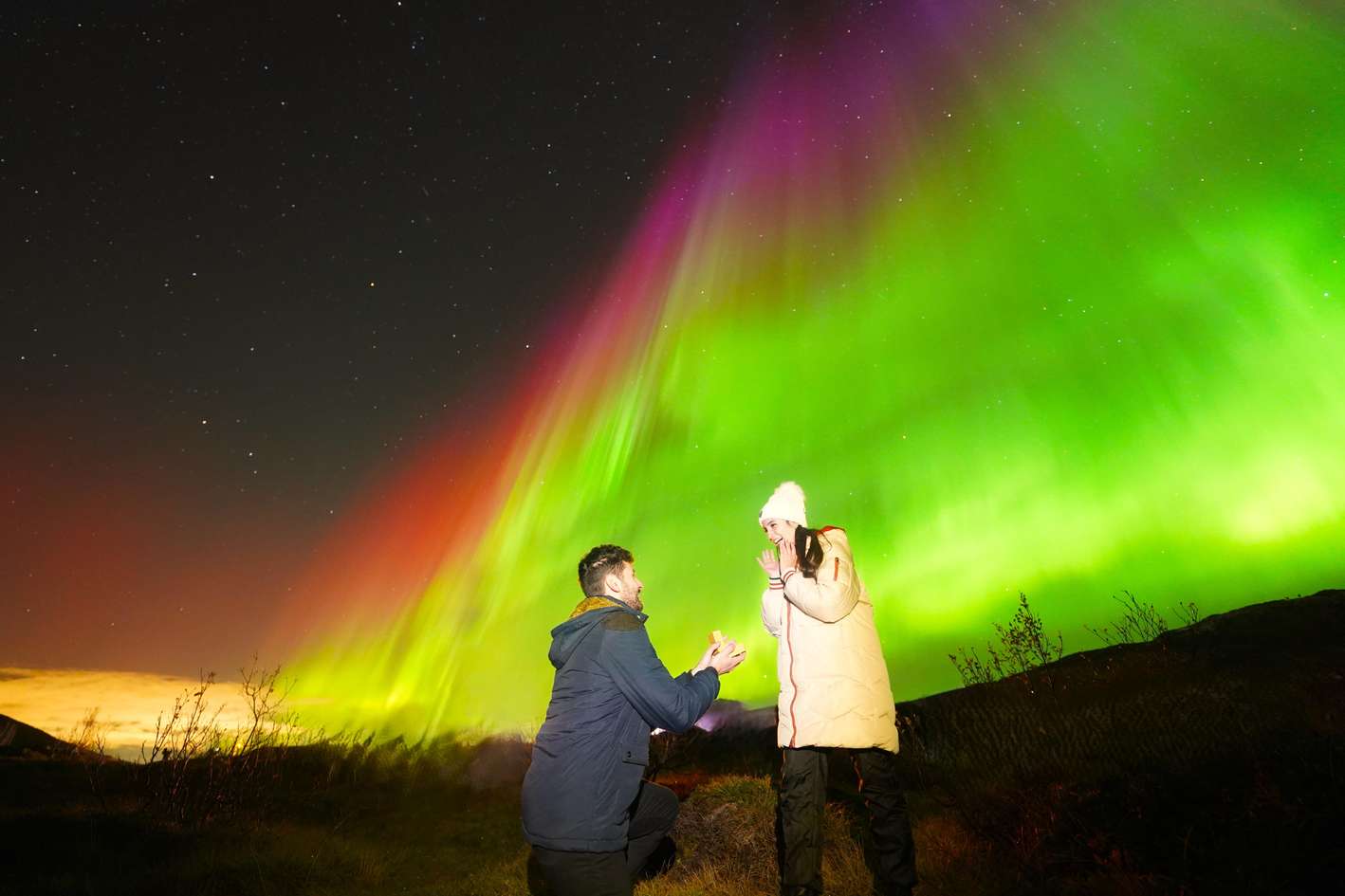
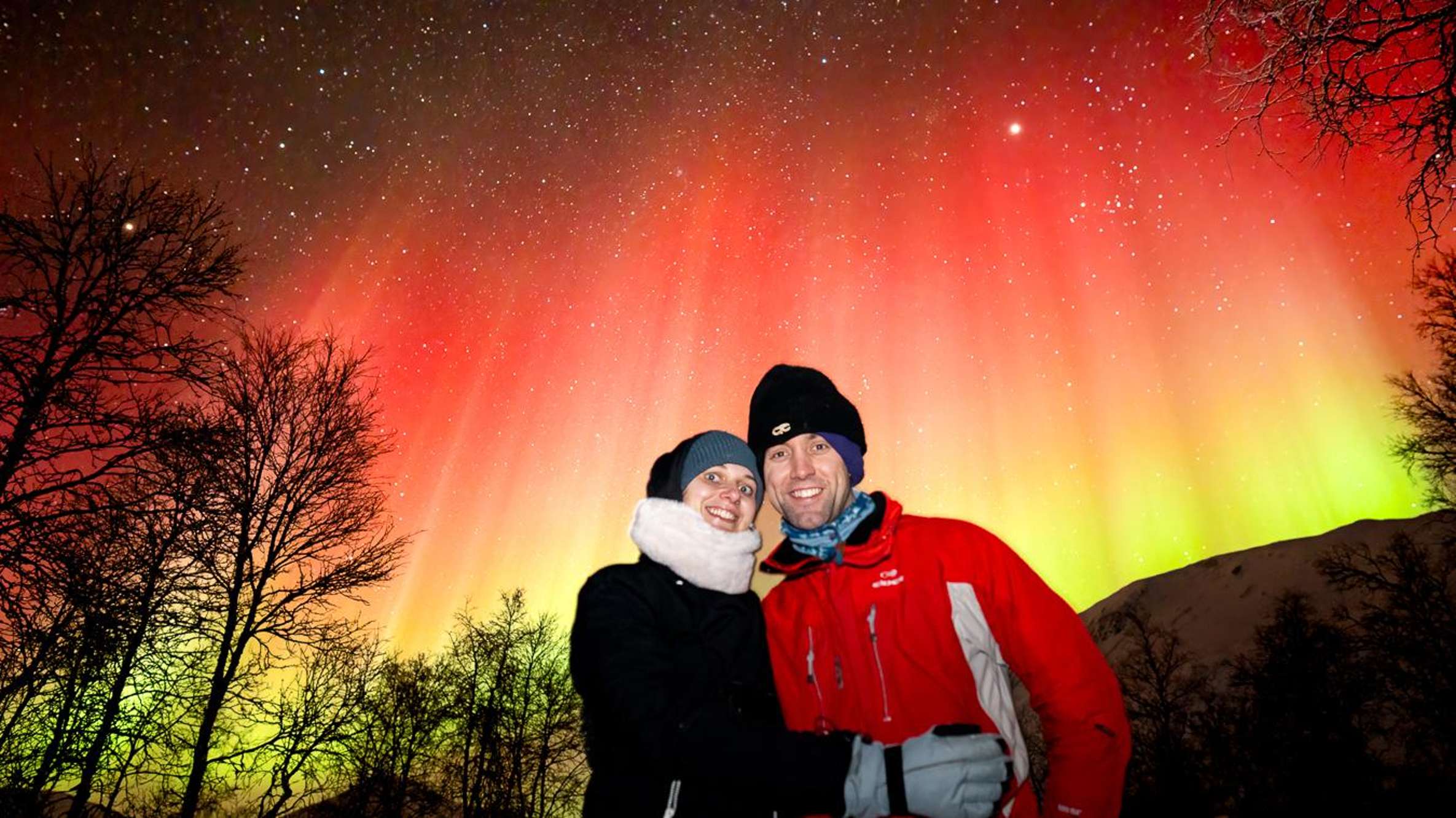
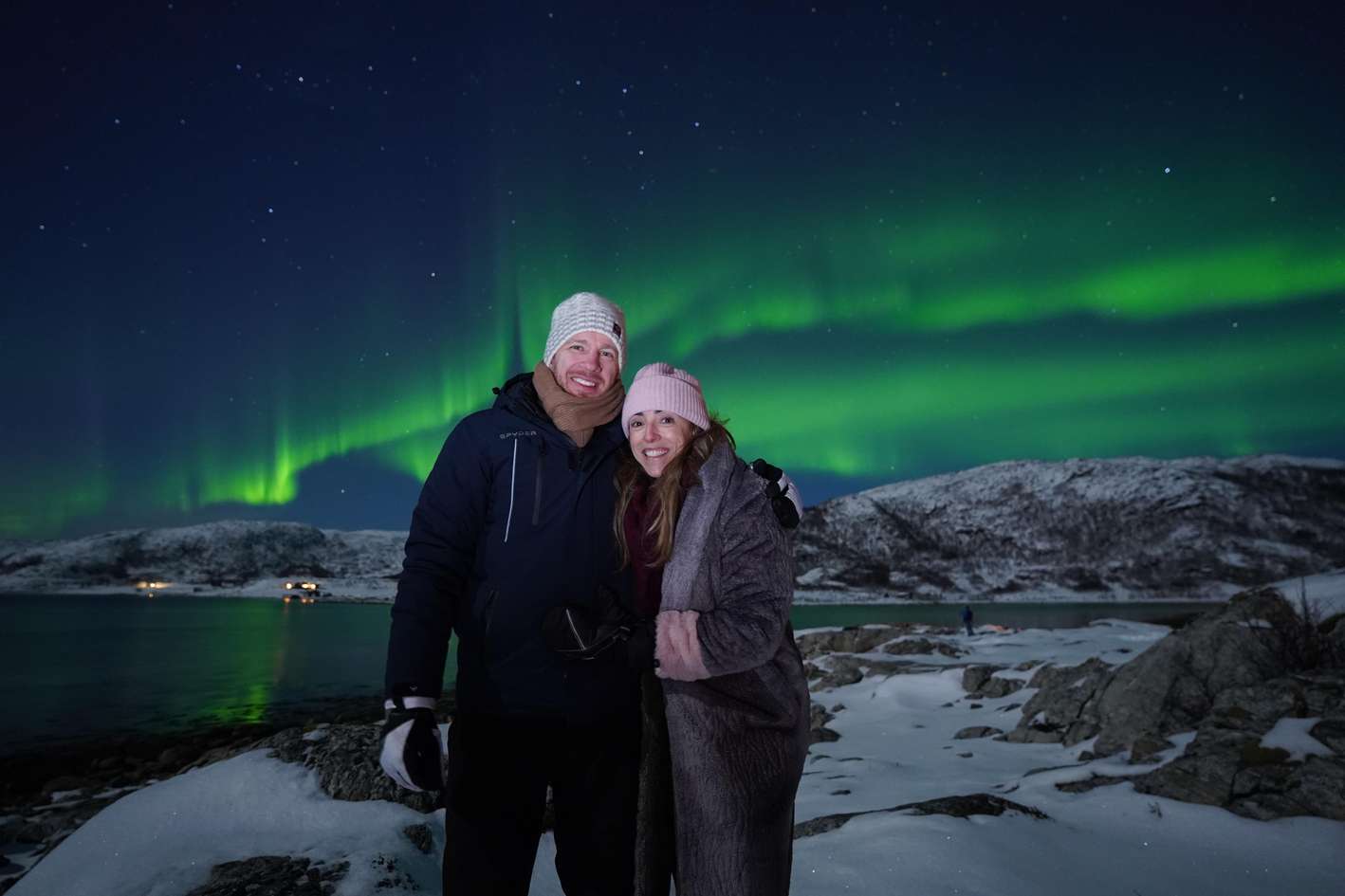
Pick Tromsø and chase clear skies like a local. Guides read live satellite maps all evening, drive inland or across the border into Finland and Sweden when the coast is cloudy, hand you a thermal suit, a campfire and hot drinks, and send home professional photos of you under the aurora. Compare both destinations below, then book a chase that goes wherever the sky is clear.
Base yourself in Tromsø, and let the chase do the driving. Abisko wins on local clear skies by a hair (86% vs 85% over three nights), while Tromsø adds a city, flights and chases that drive up to 250 km inland.
Book Tromsø. Over three nights your odds are almost identical, 86% in Abisko against 85% in Tromsø, so the sky barely decides it.
What decides it is everything around the sky: Tromsø has direct flights, a real dining scene, fjord cruises and whale safaris by day, and guides who chase up to 250 km inland into Finland or Sweden when the coast clouds over.
Pick Abisko only if a quiet village and wilderness days are the point of your trip.
The clear-sky gap between these two bases is far smaller than the internet says, and Tromsø's chases can close it entirely. Here is every point that actually decides the choice, from cloud cover to flights to what happens when a storm rolls in.
Chases that cross into Finland or Sweden require every participant to carry a valid passport or ID card, and third-country nationals must have a passport.
Put a passport or national ID card in your pocket before the pickup, since the route can change toward the border on the night itself. Nordic citizens may prove identity by other means.
chases can run past 2 am
Count the nights instead of the spots and the contest nearly ends in a draw. Across a consecutive three-night stay between September and March, the statistical chance of at least one usable dark sky free of low cloud is 86% in Abisko and 85% in Tromsø.
Fixed-camera records explain why the gap looks bigger on forums. All-sky cameras show clearly visible skies on 60% of winter nights in Abisko against 32% at stationary spots in Tromsø.
Those figures count every single night at one place; the three-night numbers count your best shot across three evenings, and Tromsø's 85% includes nights its chases spent driving elsewhere.
So the reputation is real, and so is the catch. Abisko earns it from geography: it sits in the lee of the Scandinavian mountains, east of Mounts Slåttatjåkka and Nuolja, where Atlantic fronts dump their moisture on the Norwegian side and the air descends dry over Lake Torneträsk. It is the driest station in Sweden.
One percentage point is noise. What actually differs is how each place reaches its odds, and that is a question about wheels rather than weather.

Abisko's Aurora Sky Station is a chairlift to one fixed post at 900 meters on Mount Nuolja. If the pocket over Lake Torneträsk fills with cloud, you wait in it. Tromsø guides have a different tool: a road.
When the coast is overcast, minibuses leave the city and read the sky as they go. Guides watch satellite cloud maps, live webcams and the University of Tromsø's all-sky camera feeds, then drive.
The E8 east toward Skibotn, in the rain shadow of the Lyngen Alps, is the classic route. Past Skibotn, the Finnish border and the Kilpisjärvi plateau sit roughly 200 km away, and chases will run up to 250 km one way to reach clear sky.
Tours that cross the border usually stretch to 6 to 10 hours, getting back between midnight and 3:30 am.
This is the whole argument for Tromsø in one tour: the Tromsø: Unlimited Northern Lights Chase Across Borders runs a small group in a heated van, monitors forecasts around the clock with a team across Lapland, and crosses into Finland or Sweden whenever that is where the clear sky is.
The route is planned before departure
The route changes live with the clouds
Returns run from midnight to 3:30 am on far-reaching nights
Notice the hours. A border night runs late, and the coldest hours of the chase are also the best hours for the lights. Plan the next morning accordingly.
Cloudy evenings are where the two bases feel nothing alike. Tromsø fills a polar-night day easily: fjord cruises, the cable car up Mount Storsteinen, dog sledding, whale safaris when orcas and humpbacks are in season, plus the Arctic Cathedral, the Polar Museum and Polaria.
Come evening there are restaurants and bars serving Arctic seafood, and in the darkest weeks the International Film Festival and the Northern Lights Festival add crowds and energy.
Abisko offers nature, and little else by way of town. Days go to Abisko National Park, snowshoe hikes, the canyon walk along the Kungsleden and the chairlift once it opens in mid-February. Dining means the Turiststation restaurant, lodges and a couple of small spots like the village brasserie, open from 5 pm to 9 pm
The short walk list around the Abisko village stop tells its own story: the park is minutes away, a second restaurant is not.
This chapter is really about temperament. If a cloudy evening in a lively city sounds better than a quiet one in a lodge, Tromsø is your base, and the sky statistics no longer carry the decision.

Getting there favors Tromsø, and not by a little. Tromsø Airport Langnes sits about 5 km from the city center, receives direct flights from several European cities plus connections via Oslo, and the airport express bus covers the distance in 10 to 15 minutes.
Abisko has no airport of its own. Most international travelers fly to Kiruna, which usually means transiting through Stockholm Arlanda before a domestic hop. From Kiruna, Abisko is 90 to 100 km by road, about an hour by transfer or taxi.
In practice the difference is close to a full travel day, which in a short winter trip is a chase night.
If your stay is tight, the ground you lose getting to Abisko comes straight out of your aurora odds. If your stay is long, the transfer becomes a scenic drive through Lapland and the point fades.
The booking clocks run at different speeds. Abisko guesthouses and lodges regularly sell out 12 or more months ahead for peak winter aurora travel, a function of very few beds. Tromsø needs 3 to 6 months for peak lodging, with December the tightest month and Christmas week demanding about six.
Tromsø tours have their own calendar. Popular operators sell out December chases 4 to 8 weeks in advance, and small-group minibus tours during the December and January dark season go 2 to 4 weeks ahead, up to 10 to 12 weeks over the holidays.
There is a second reason to book early: flexibility. Putting your chase on your first nights leaves room to rebook around weather, and booking across your first nights lets you use free cancellation windows if you see a strong display early.
Guides cannot guarantee the lights, so the freedom to move a booking to a better night is worth as much as the booking itself.
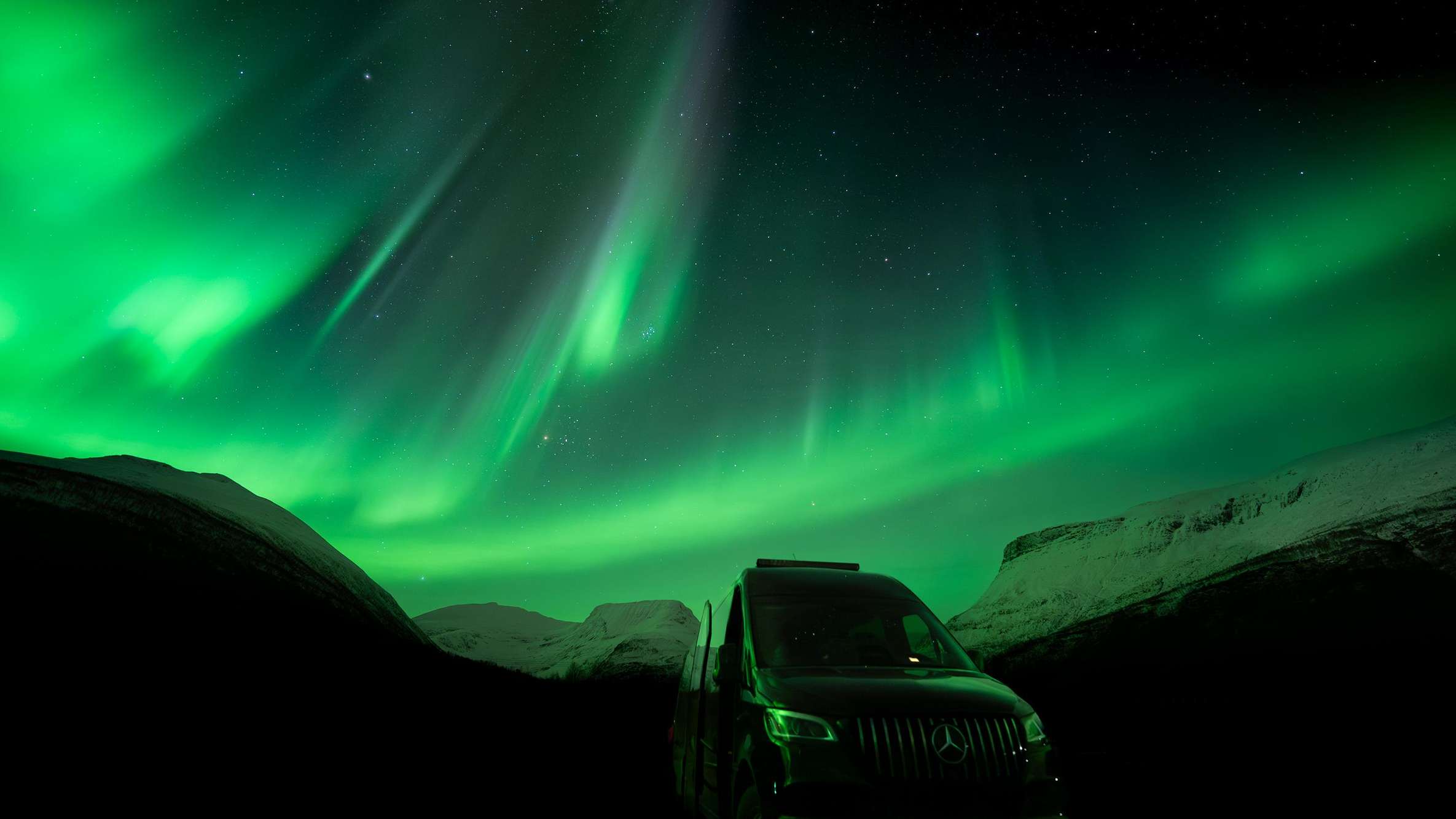
Both destinations sit under the auroral oval, so darkness is generous from October through March. The question is balance.
February and March pair long dark nights with reliable snow and, crucially, enough daylight for driving and daytime activities: February brings about 12 hours of full darkness and 7.4 hours of daylight, while March shortens the dark to roughly 7.6 to 7.9 hours but adds late-March's equinox lift in geomagnetic activity.
Polar night from late November to mid-January is the opposite trade: chases can start by mid-afternoon under near-round-the-clock darkness, with no daylight left for anything else. The E8 and E10 passes between the two destinations stay plowed all winter, though severe storms bring temporary closures in any month.
January: 5 out of 5 for how busy it gets. Deep winter brings peak tour crowds and 15 hours of darkness, but roads face frequent storms and polar night darkness.
Tap a month to read it.
December: 16 hours of darkness. High holiday demand brings 16 hours of daily darkness and heavy snow, though passes see frequent winter squalls.
Tap a month to read it.
June: 24 hours of daylight. Tours do not run under the 24-hour midnight sun.
Tap a month to read it.
December: 16 clear dark nights within 75 km. High holiday demand brings 16 hours of daily darkness and heavy snow, though passes see frequent winter squalls.
Tap a month to read it.
January: snow on 13.6 days. Deep winter brings peak tour crowds and 15 hours of darkness, but roads face frequent storms and polar night darkness.
Tap a month to read it.
Read the month layers as a trade-off, not a leaderboard. If you want both aurora nights and full days, February and March are the window; if you want maximum darkness and accept cave-dark afternoons, book polar night.
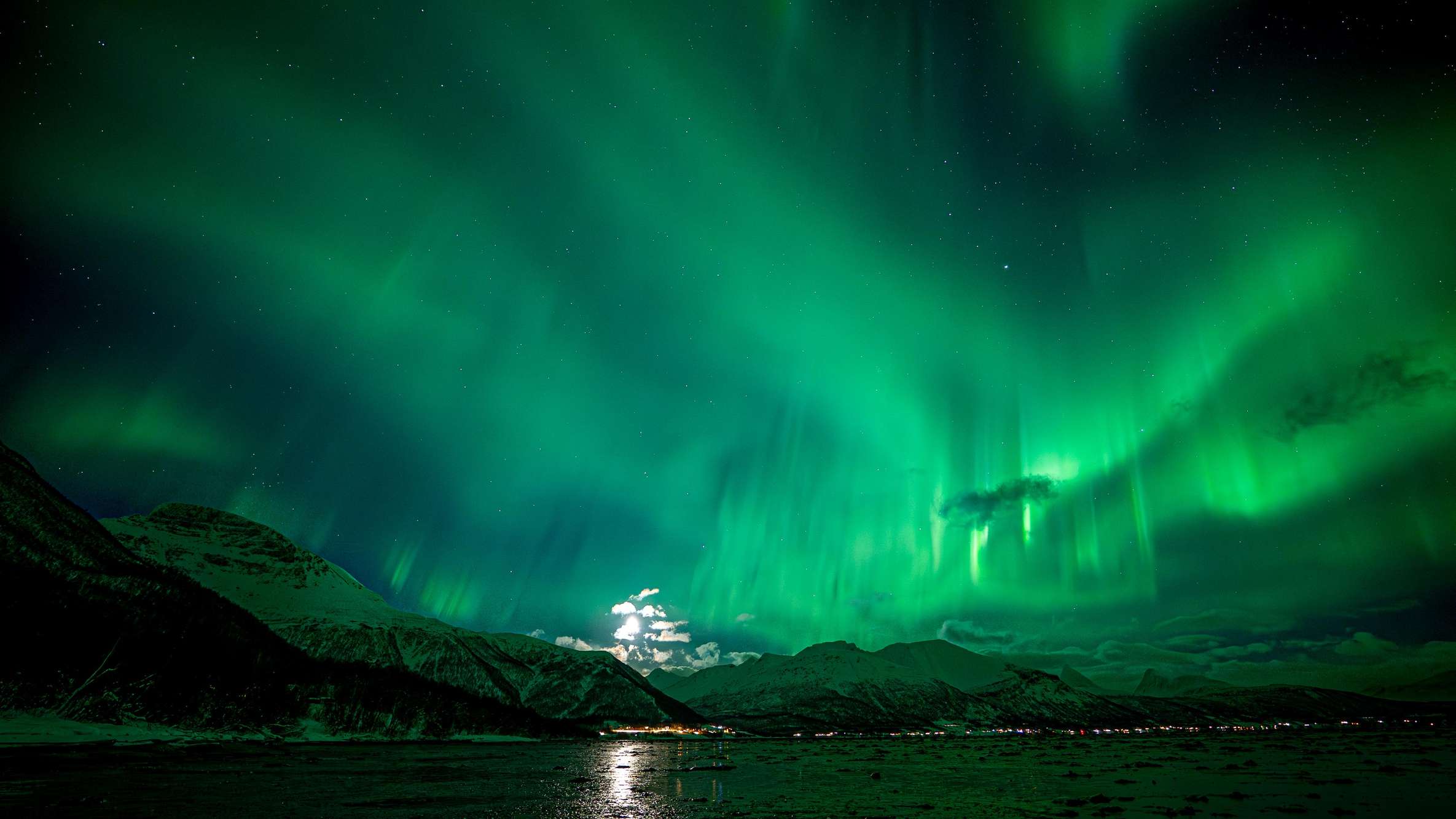
Small-group and minibus chases in Tromsø hand you a heavy Arctic thermal suit, and some add insulated boots. Big bus tours generally expect your own winter coat or rent suits separately. The suit does the outer work; what you wear under it decides whether the night is enjoyable.
Wear merino wool or a synthetic base layer next to skin, never cotton, then a fleece jacket or heavy wool sweater with warm trousers.
For chases that push inland, add a packable down layer: temperatures that start near the coast around freezing can fall to minus 25 inland, and inland nights near the Finnish border regularly sit 10 to 15 degrees colder than town.
Devices need the same care. A phone battery that lasts all day indoors can die within 30 to 45 minutes at minus 15, and camera batteries lose well over half their capacity in the cold.
Keep spares and power banks in an inside pocket, seal a cold camera in a plastic bag before stepping into a warm bus, and let it warm up slowly to keep condensation off the electronics.
The checklist turns the layering into a packing list. Pack it the night before departure; nothing here is findable at a Tromsø bus stop at 6 pm.
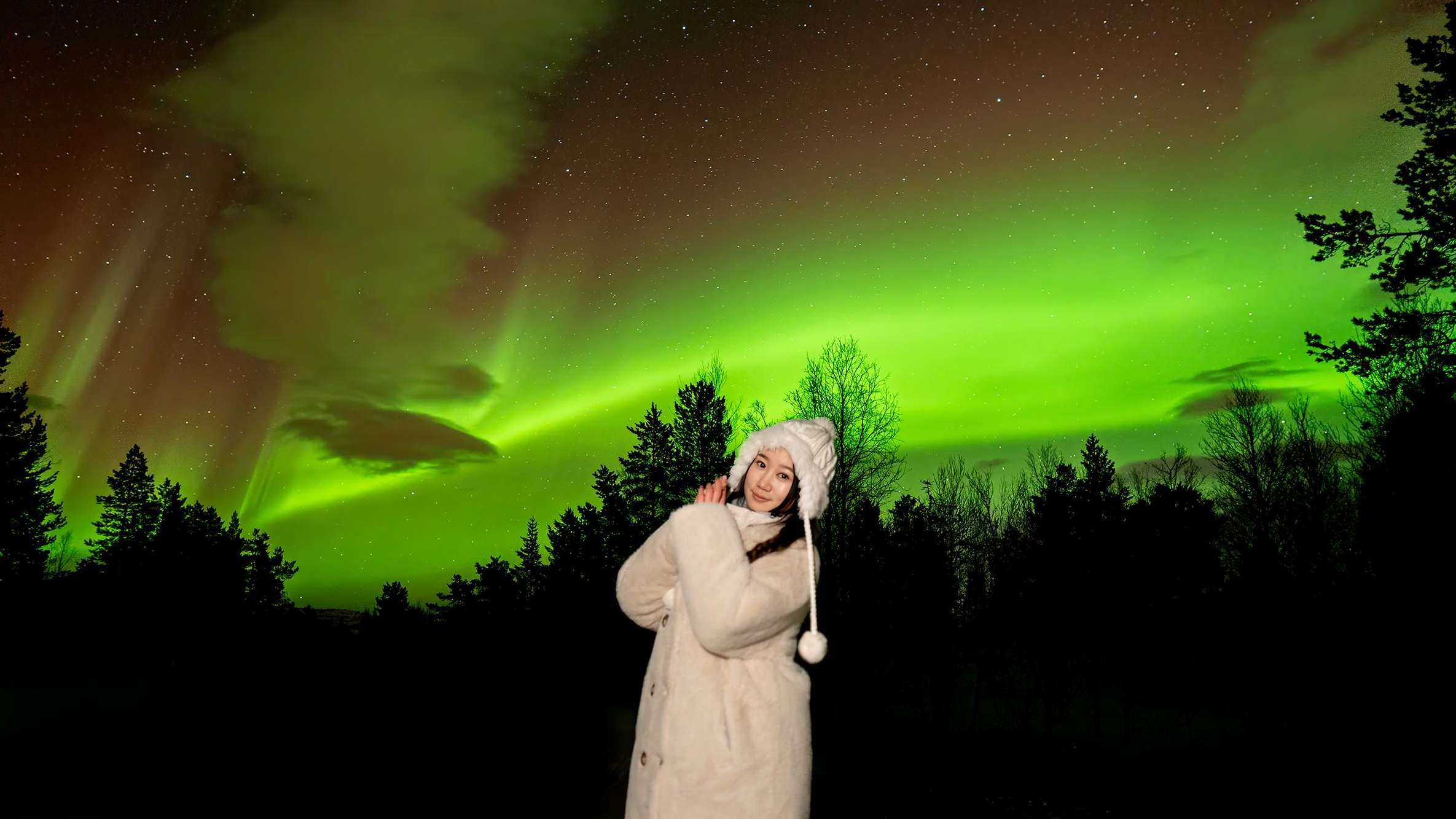
Arctic weather does not cancel a chase on its own. Snow, wind and fast-changing forecasts are normal; guides reroute inland or across the border instead. Tours are cancelled only when roads close or conditions turn officially unsafe, and when that happens you get a full refund or a free reschedule to another night.
The borders matter for your documents. Chases heading into Finland require everyone to carry a valid passport or, for EU citizens, an ID card; third-country nationals need a passport.
Nordic citizens can prove identity by other means. Authorities rarely check at internal borders, but operators require the documents because the route can cross on any given night.
One honest limit: when a major low-pressure system covers every inland route and both borders, no chase can outrun it, and severe winter storms have shut activities down for days. That is the scenario the early-booking advice exists for.
| If this happens | What happens then |
|---|---|
| Snow, wind or a shifting forecast | Guides reroute inland or across the border instead of cancelling |
| Roads close or conditions turn unsafe | Full refund or a free reschedule to another date |
| A region-wide low covers every inland route | No chase can outrun it, so keep a spare evening in the trip |
Read the rows as your risk map. The realistic worst case is a moved date, not a lost night, provided you kept a spare evening in the trip.
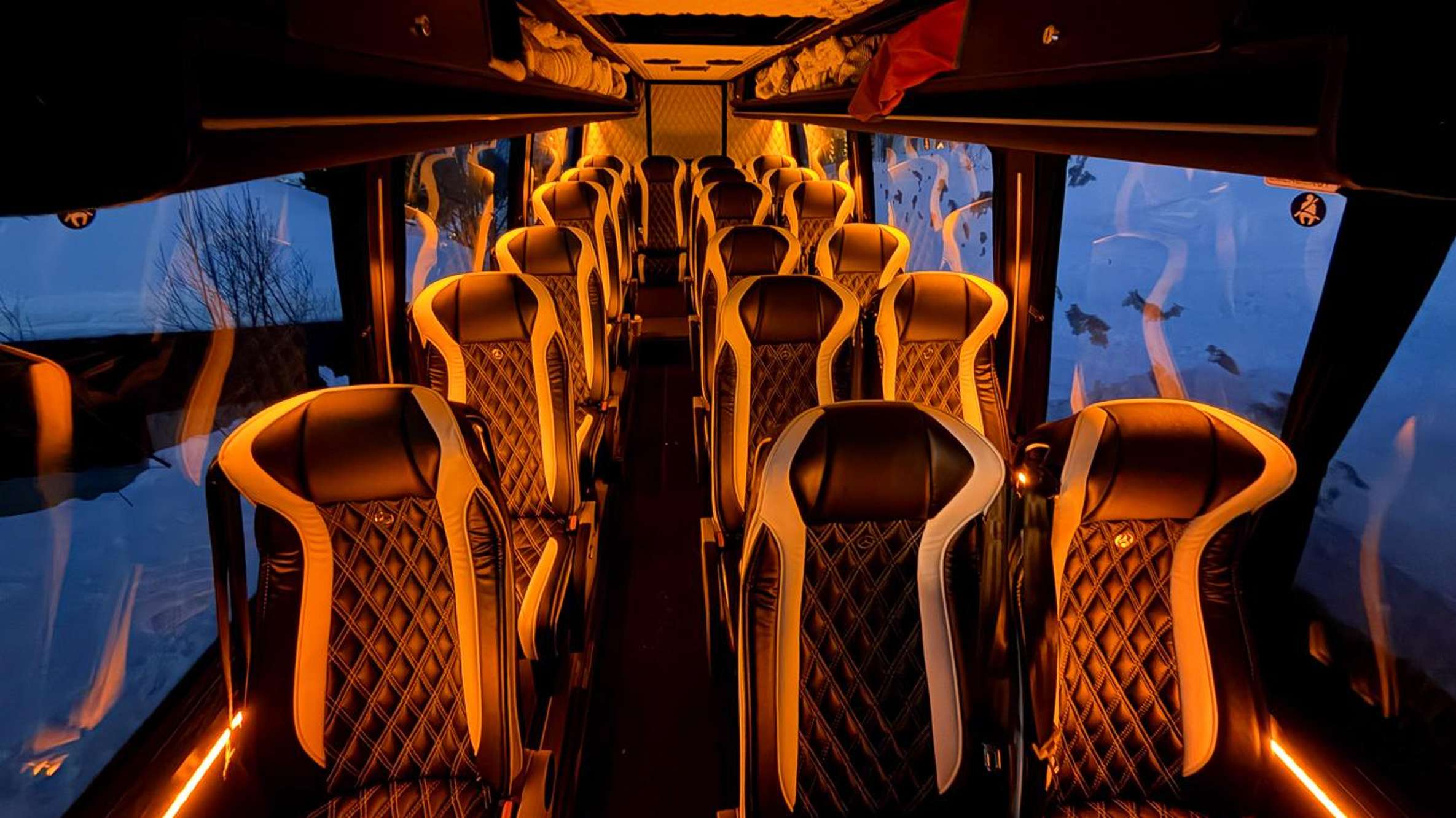
On the one genuinely clear night, watching from town works. Strong displays show above the city lights, and darker walkable spots like Telegrafbukta beach and Prestvannet lake improve on the center.
When the coast is cloudy, the odds collapse: standing in Tromsø without traveling to clear sky drops your sighting chance on that night to around 5 to 10 percent, while a guided chase lifts a single night to 90 to 95 percent.
Set those single-night figures against chapter one's numbers so they stop arguing with each other. The 86% and 85% count the chance of at least one clear dark sky across three evenings from cloud records.
The 5 to 10 and 90 to 95 figures count what one evening yields, in town or in a moving van. A cloudy first night in town is no contradiction to an 85% three-night chance; it is the reason the three nights include wheels.
Group size shapes the experience too. Buses of 20 to 40 passengers load slowly, move between stops less freely and generally skip camera instruction. Small groups of 6 to 15 let guides coach settings one-on-one, reposition to another fjord when cloud rolls in and shoot portraits without crowds in the frame.
The Tromsø: Northern Lights Chase - We Drive Until We Find Them takes the small-group format to its limit: a minibus of 15 or fewer with no cap on distance or time, thermal suits, a bonfire and photos delivered within 10 hours.
Its operators count a 98.1% sighting record of their own, and if the lights do not show, their promise is to keep driving until they do.
Abisko sits in the rain shadow east of the Scandinavian mountains, so Atlantic weather fronts drop their moisture on the Norwegian side. It is the driest weather station in Sweden, with under 350 mm of precipitation a year.
Statistically they are nearly even. Across a three-night stay between September and March, the chance of at least one night with dark, cloud-free skies is 86 percent in Abisko and 85 percent in Tromsø.
Yes. Guides watch satellite cloud maps and drive inland toward Skibotn, across the Lyngen Alps, or over the border into Finland near Kilpisjärvi, roughly 200 km from Tromsø. Clear skies are often reached one to three hours inland.
Mobile chases can drive up to 250 km one way, covering round trips of up to 400 km. Border-crossing nights usually last 6 to 10 hours, with returns between 2:30 am and 3:30 am when the route runs far inland.
Bring one. Some tours cross into Finland, and Finnish rules require a valid travel document even though internal Schengen borders are rarely checked. Travelers from outside the Schengen area must carry a passport; Nordic citizens can prove identity by other means.
Chases still run unless roads are unsafe. If a tour operator cancels because weather closes roads or no viewing chance exists anywhere within reach, you get a full refund or a free reschedule. On a booked date with a widespread low-pressure system, the cloud simply cannot be outrun in one evening.
Tromsø Airport Langnes has direct connections to several European cities and via Oslo, and sits 5 km from the center, about 10 to 15 minutes by airport bus. Most travelers to Abisko transit through Stockholm to Kiruna, then drive about an hour.
Tromsø. You get fjord cruises, the cable car up Mount Storsteinen, dog sledding, whale safaris, the Arctic Cathedral, Polaria and the Polar Museum, plus a full dining scene and winter festivals. Abisko's days center on the national park, the Aurora Sky Station chairlift and snowshoeing, with few restaurants.
Abisko accommodations often sell out a year or more ahead for peak winter. In Tromsø, book lodging 3 to 6 months out, and reserve popular chase tours 4 to 8 weeks ahead for December, earlier for Christmas week.
Kiruna averages 6 to 12 clear dark nights a month in town against Tromsø's 2 to 4, but Kiruna runs colder, with winter lows of -9°C to -15°C. Within 75 km of Tromsø, microclimates offer 13 to 16 clear nights, which mobile chases reach by road.
Alta gets about a third of Tromsø's precipitation and 4 to 8 clear dark nights a month in town, against 1.7 to 4.3 in Tromsø. Chasing within 75 km levels the odds to 11 to 16 clear nights for both, and Tromsø adds a far bigger city around your nights.
Tromsø sits directly under the auroral oval at nearly 70°N, where lights appear almost every clear night, even at low solar activity. Inland Finnish Lapland sees aurora on about three of four clear nights, and central ski resorts on roughly half, so Tromsø pairs the strongest aurora position with chase mobility.
abisko: 60% clear nights vs 32% in town
See how often the lights actually appear over Tromsø, and what a mobile chase does to those odds on cloudy nights.
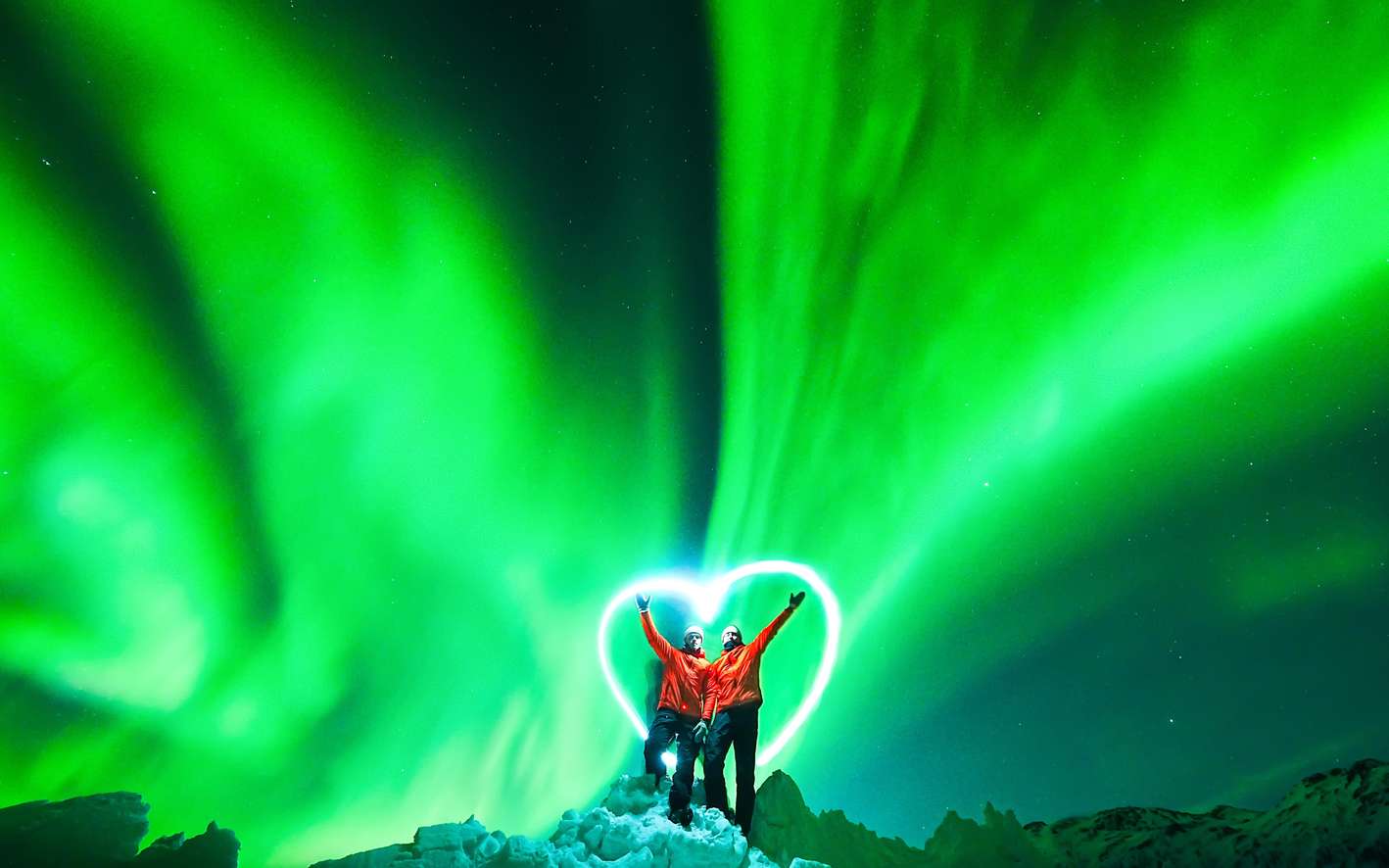
Compare the winter months and polar night dates so you can pick the season with the darkness your trip needs.
Small minibuses move fast and reach remote clear valleys. Find out which chase formats suit travelers who hate crowds.
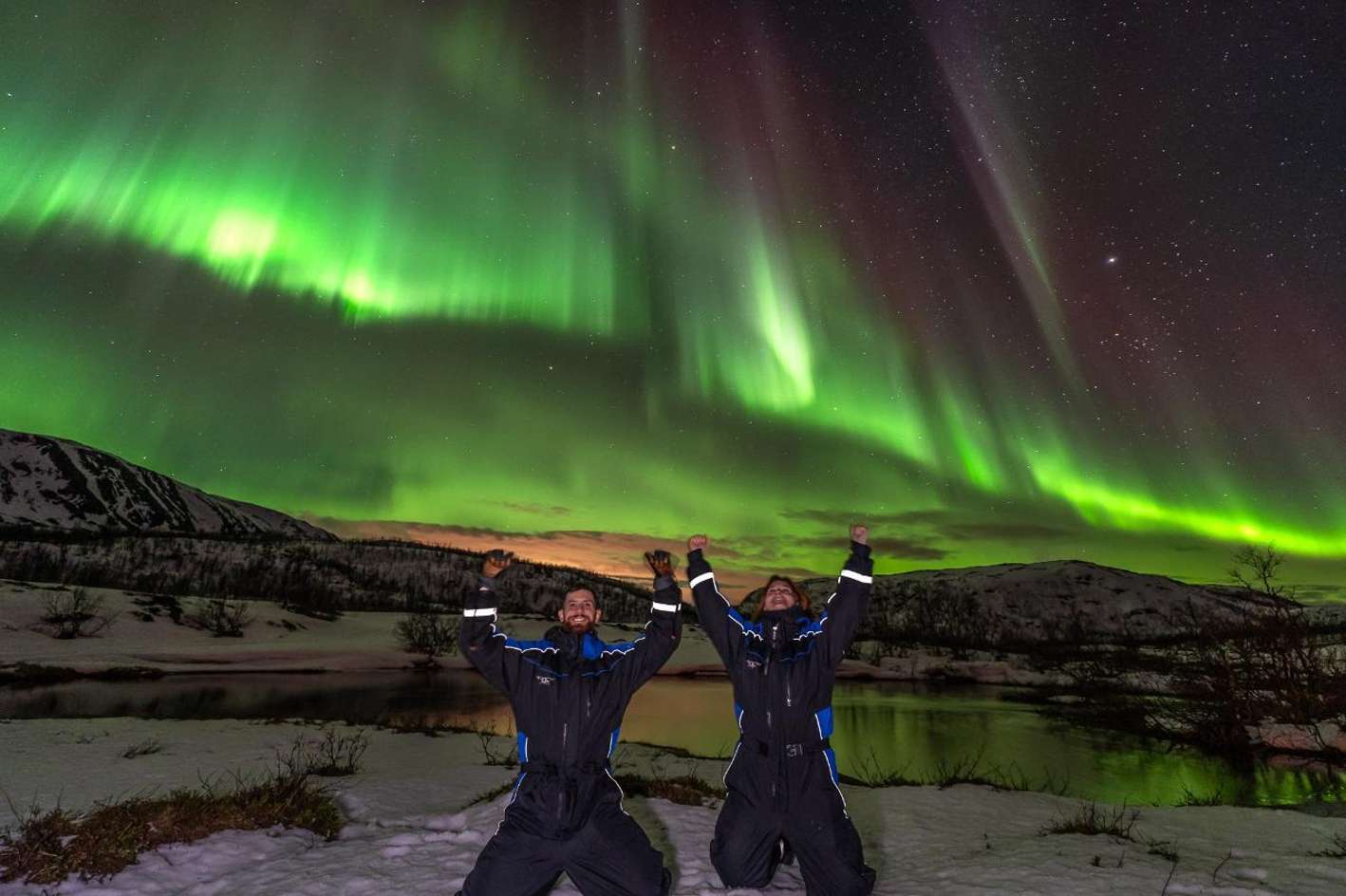
Big bus chases cost less and run from the city center. Here is what to expect from a 50-seat aurora hunt.
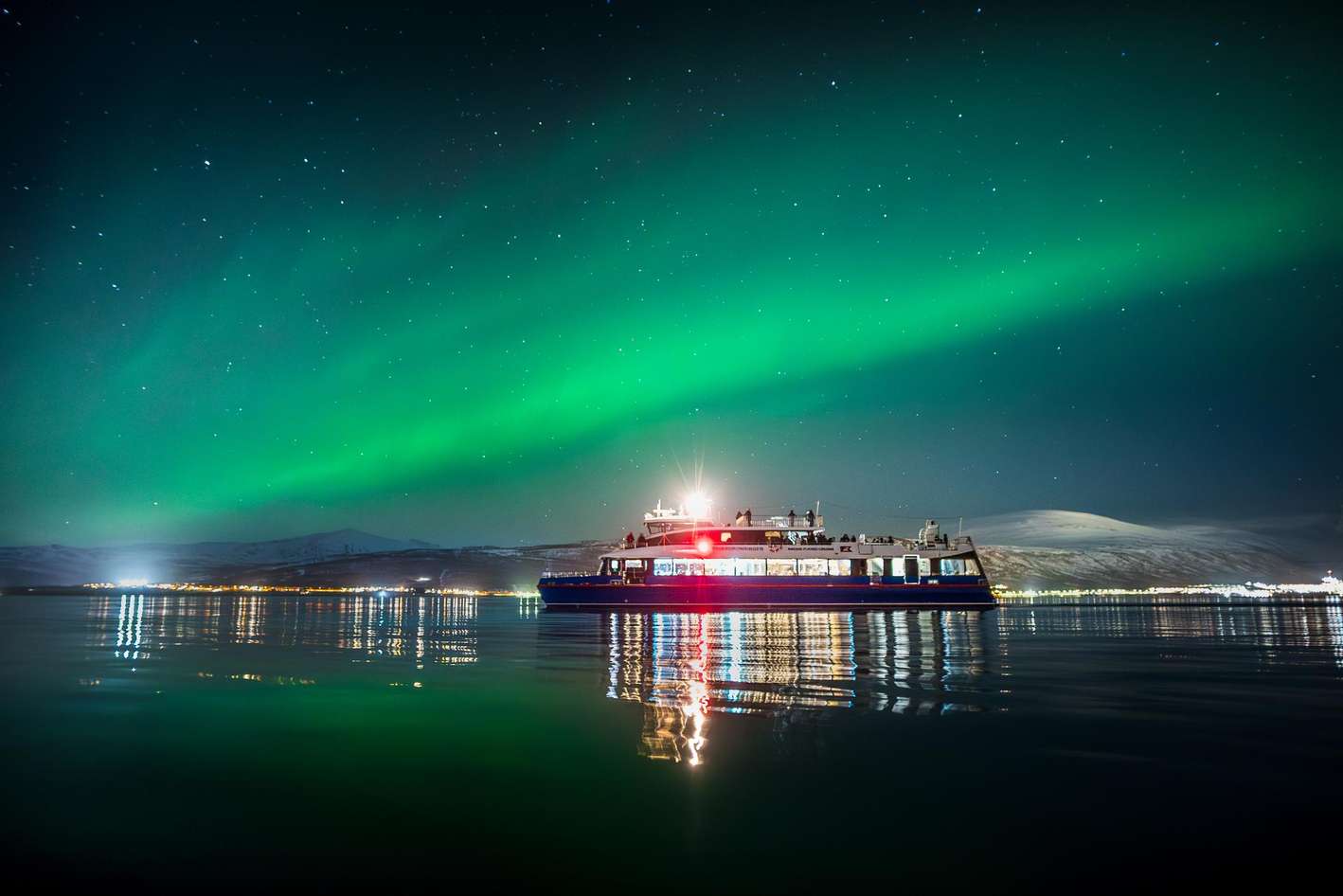
Watch the aurora reflect across fjord water from a heated catamaran or yacht deck, hot drink in hand.
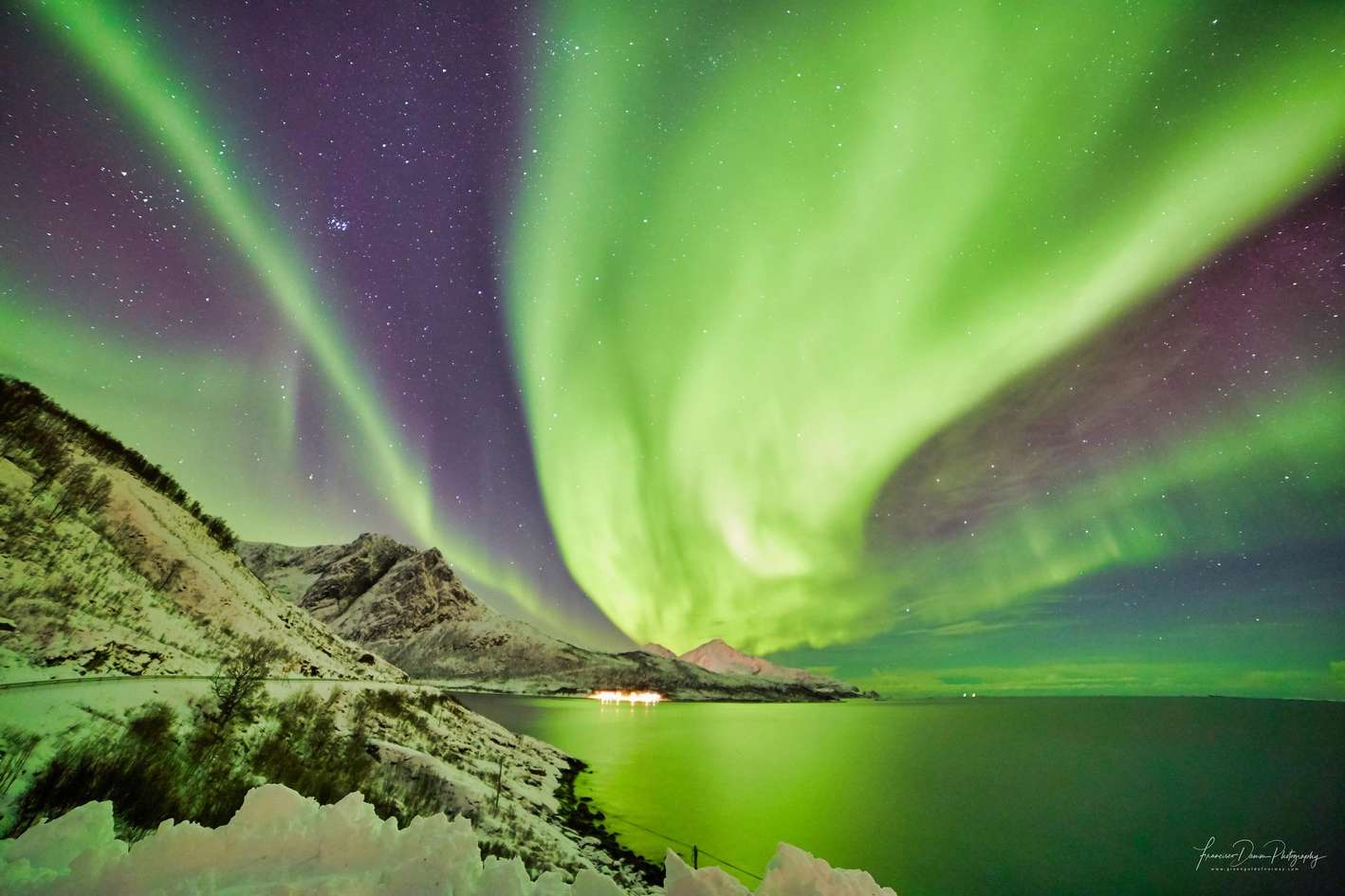
A private chase means your guide drives only for you, choosing the route and the skies without a group vote.
Worried about a wasted night? See which tours come with free retries or full refunds when the lights stay away.
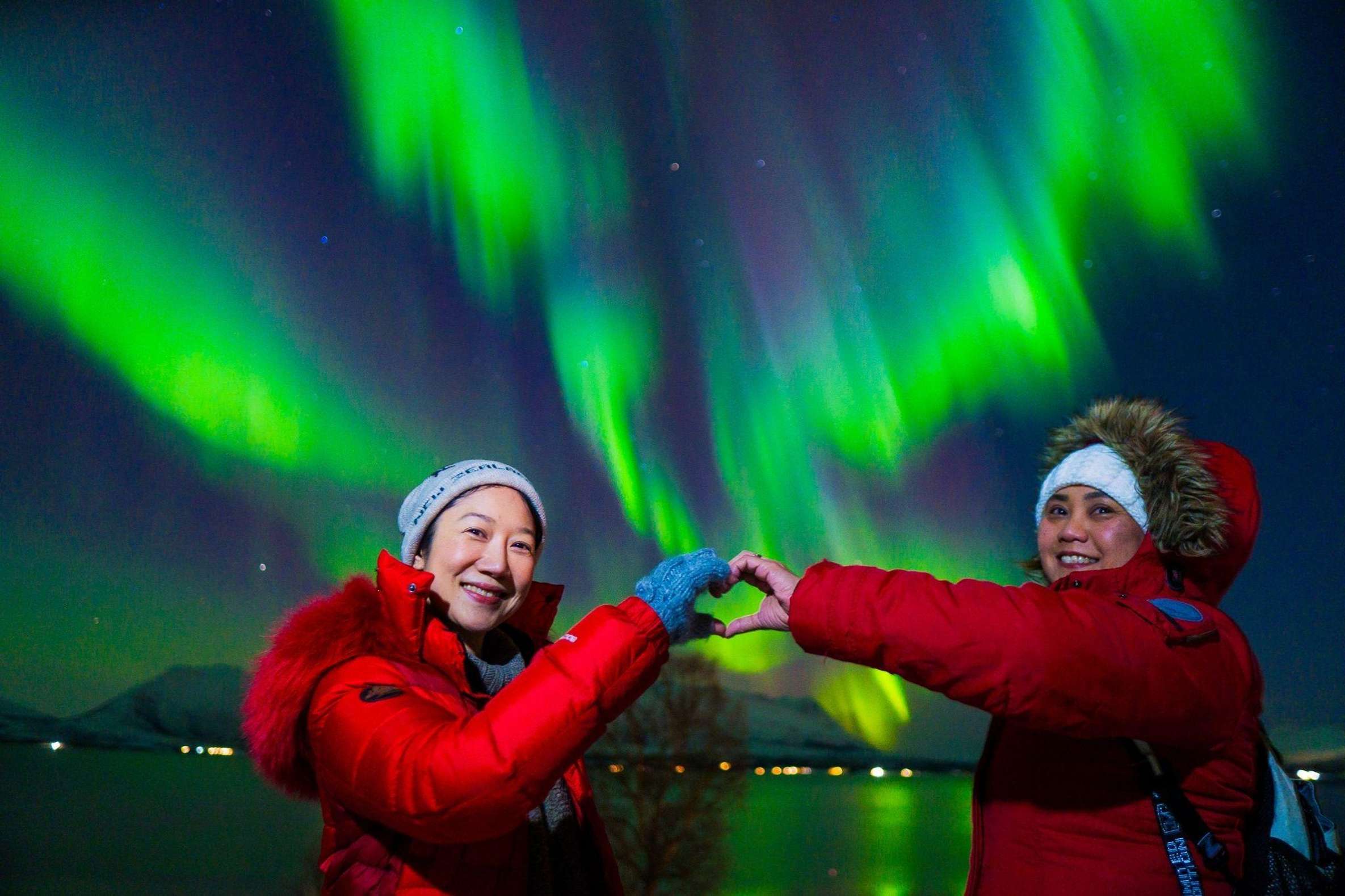
bring your passport for the border
This borderless chase drives wherever the clear sky is, into Finland or Sweden, and a full refund follows if no lights appear on camera. Free cancellation up to 24 hours before departure.