
- 1
Meet in central Tromsø at 5:40 pm for a 4.5-hour evening that runs from 6 pm to 10:30 pm.
- 2
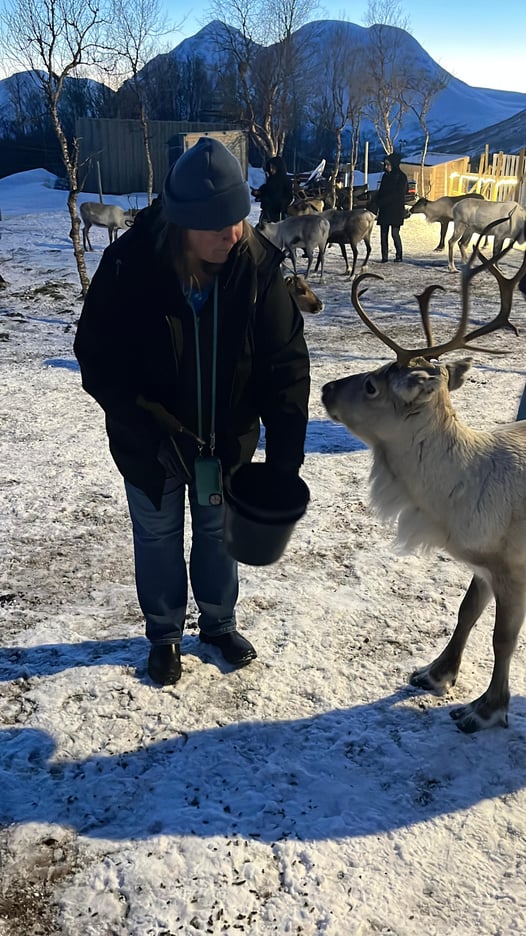
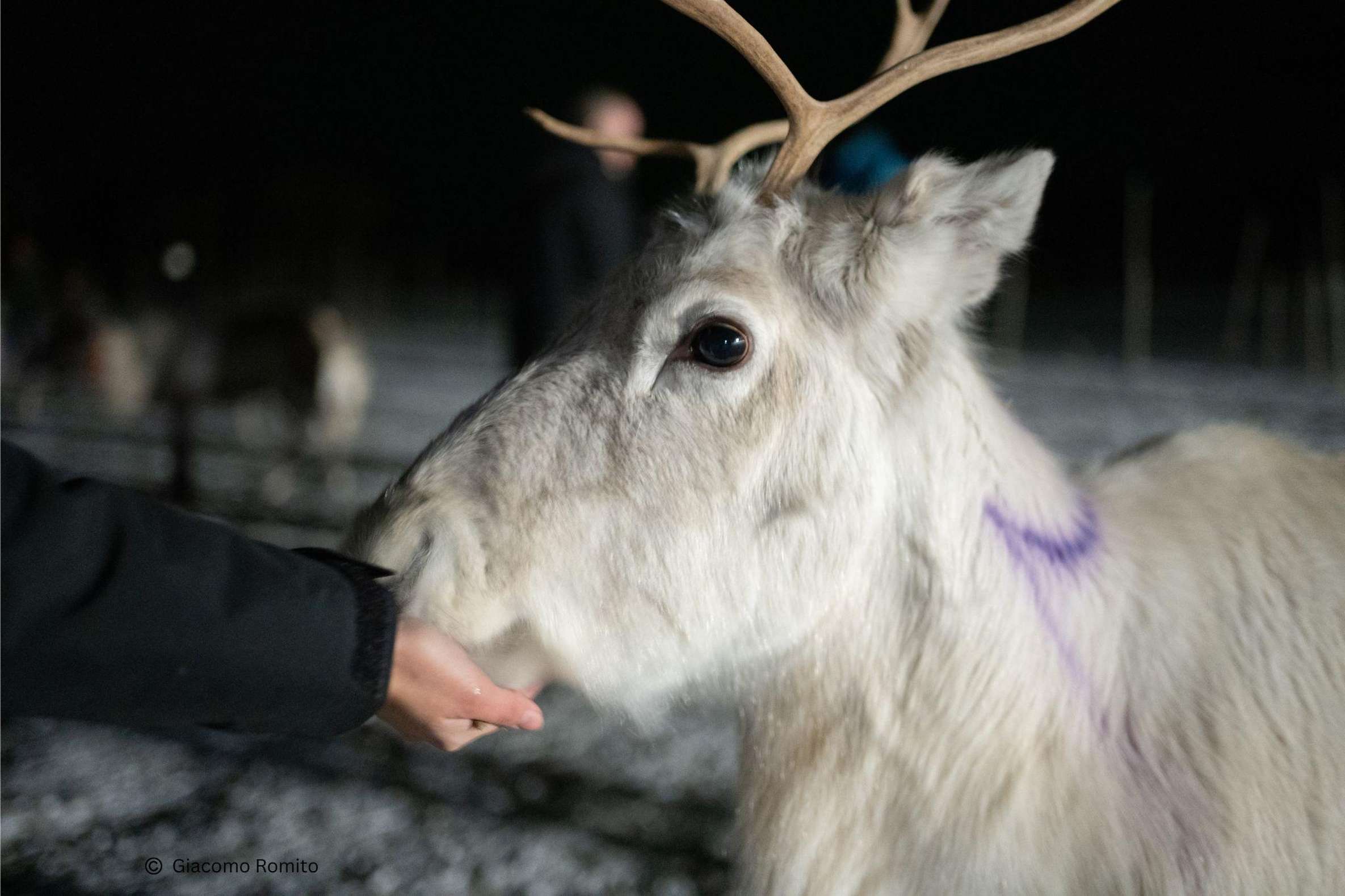
Feed around 300 reindeer by hand with an open palm and slow movements; no loud noises and no petting.
- 3
A fixed camp waits out the weather, so clear skies are the whole aurora game: 2 to 5 clear dark nights a month in town against 13 to 16 within chase range.
What travelers said about their reindeer evening and the northern lights
Most reviewers loved hand-feeding the reindeer and called their Sami guides warm, friendly storytellers.
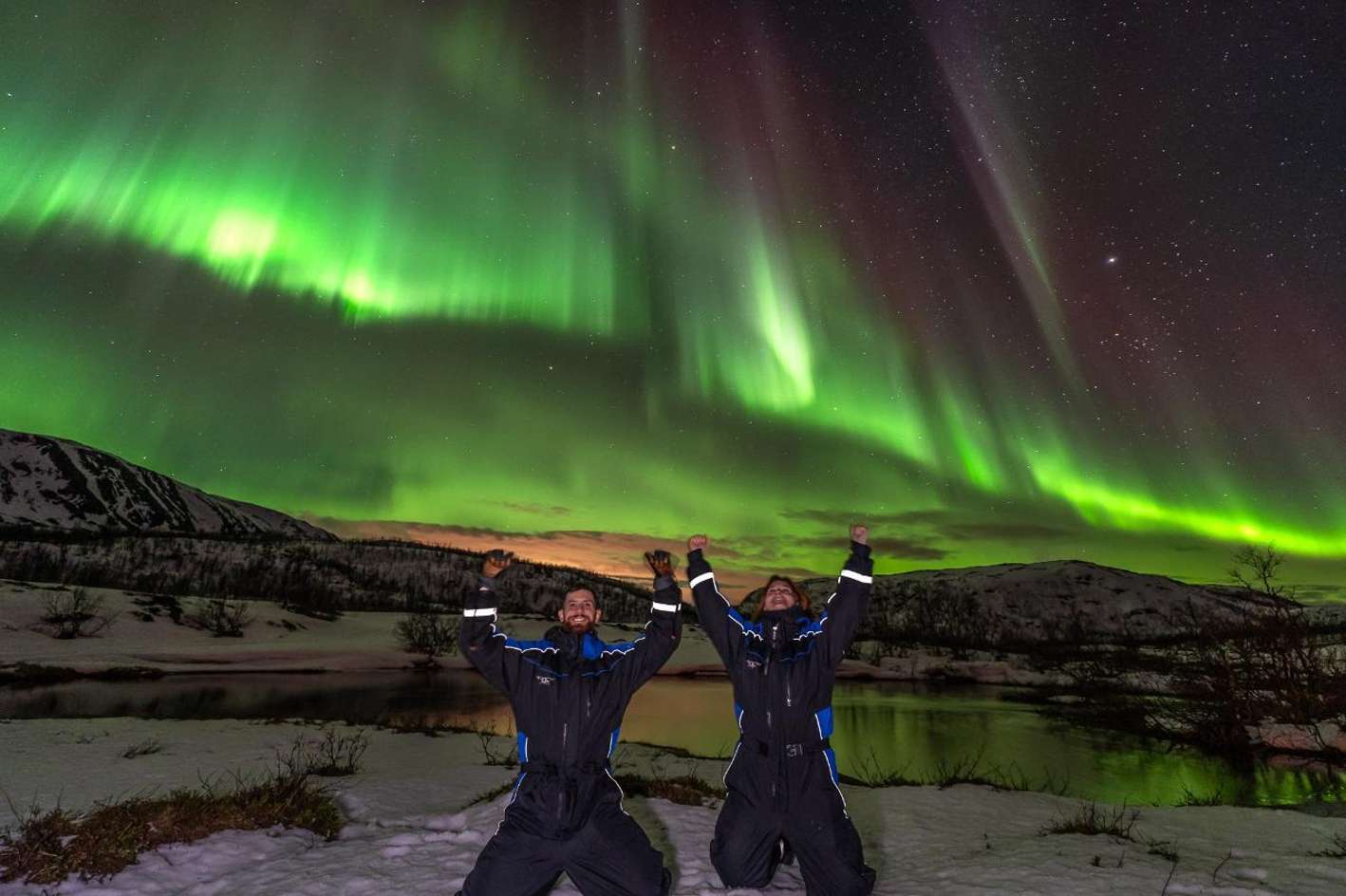
Several guests arrived for the reindeer and left amazed by a clear-sky aurora they had not counted on.
A few reviewers wished the vegetarian meal were as hearty as the reindeer stew.
 ★★★★★
Even after our own booking mix-up, the team fixed everything wonderfully.
David · United States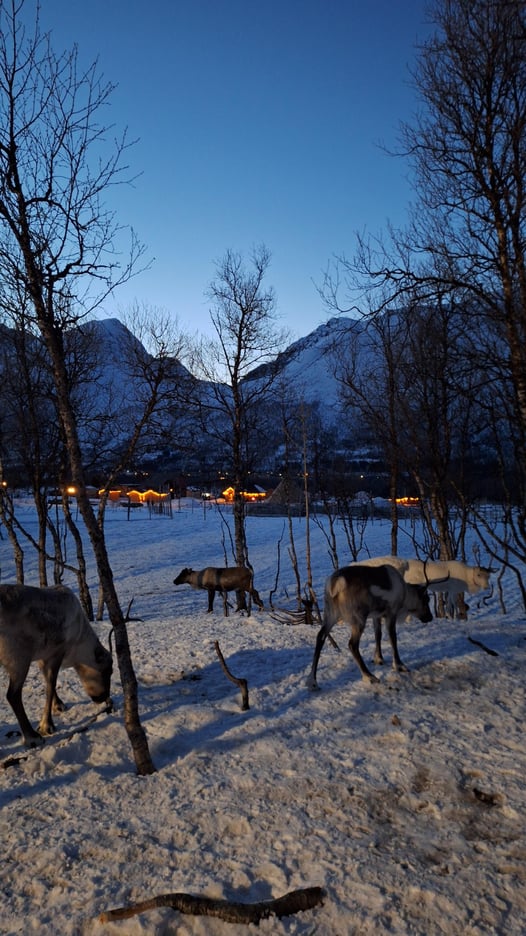 ★★★★★
Lovely time with the reindeer, magical location. No northern lights, but the moonlit sky was beautiful. Guide Johann's talk was informative. Best part: staying out with the calm reindeer till dinner.
A traveler · United Kingdom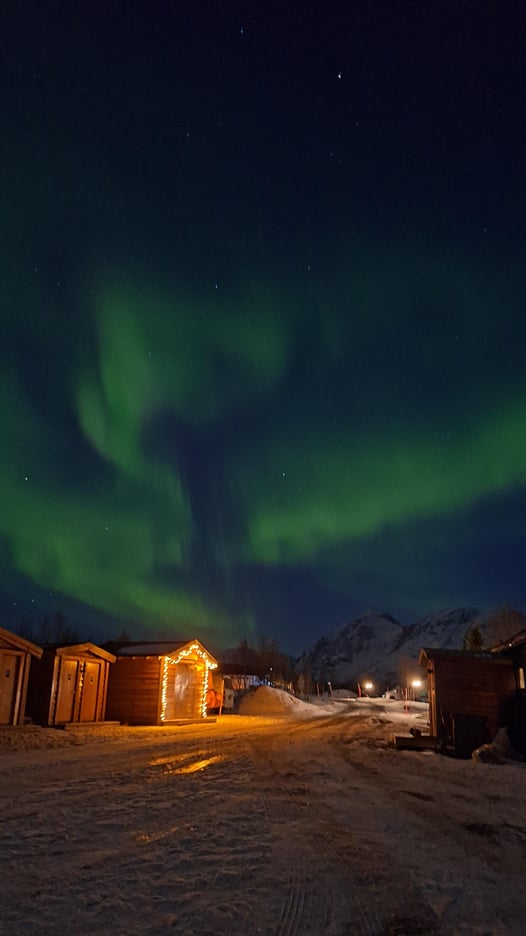 ★★★★★
Well-organized tour with a comfy bus. Fed cute reindeer, learned lots about Sami culture, enjoyed soup, hot drinks and cookies. Highly recommend, great value!
Ana · Switzerland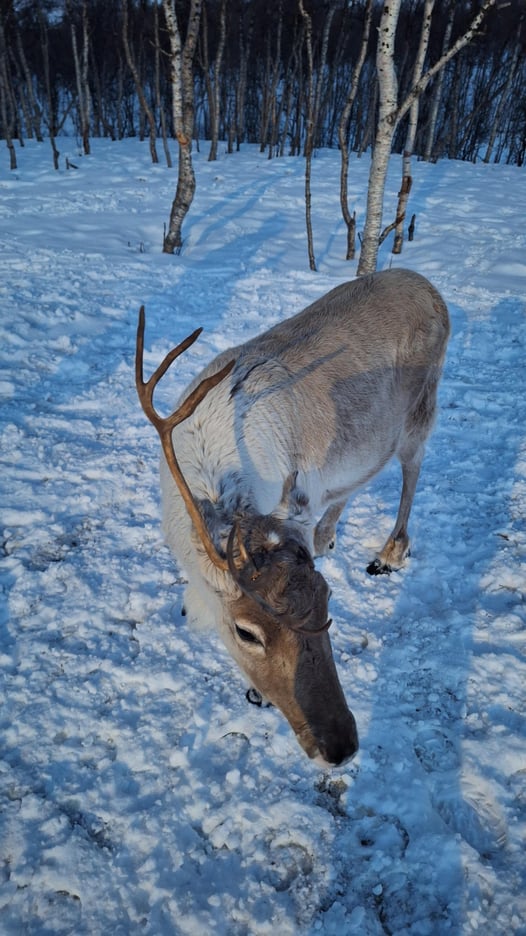 ★★★★★
One of my best excursions ever. Easy pickup, friendly guides. At camp, Lisa was brilliant, Sami culture talk, then feeding the well-cared-for reindeer. Soup, and we even saw the northern lights. Highly recommend.
A traveler · United Kingdom
Is a reindeer camp northern lights evening worth it in Tromsø?
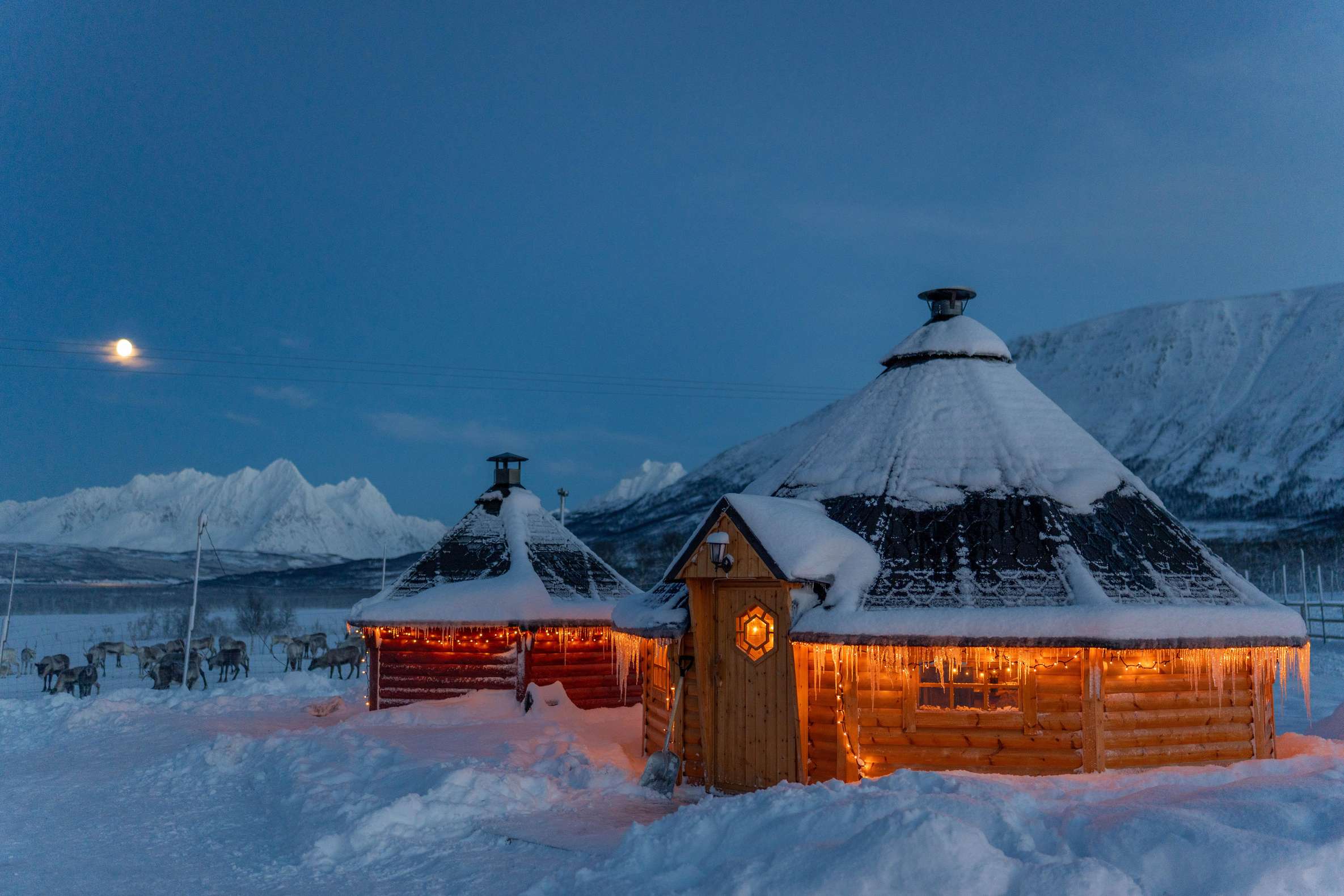
The reindeer come first, and that changes the shape of the night. You stand inside a corral with feed in your hand, the herd pressing close, the Lyngen Alps behind you. Then comes a candlelit hut, a stew, a story. The aurora arrives last in the running order.
That order is the point. A camp evening succeeds even under full cloud, because the feeding, the Sámi storytelling and the hot dinner carry it on their own. A mobile chase has no such fallback: it lives and dies by the sky.
Still, be clear-eyed about the odds. Two figures sit behind this. The wider count, 2 to 5 clear dark nights a month from October through March, covers any fixed spot around Tromsø; the tighter 2 to 4 tracks the camp season's core months, rising from about 1.7 nights in November to 4.3 in March.
Either way, a van that can move within 75 kilometres reaches 13 to 16 nights a month. If strong northern lights are your only reason for coming, book a mobile chase instead, and keep the camp for a second evening.
If you came for the herd as much as the sky, an evening at a camp rewards you either way.
It is a different evening: feeding, culture and dinner fill it completely, and lights are a bonus when the sky opens.
A chase that moves multiplies clear-sky odds three to eight times, but it spends the evening on the road and the aurora hours in transit.
Guests who go for the herd and the stories come back just as full; the aurora never had to appear.
The rows above settle the three doubts that come up at booking. Read them once and the choice gets simple: what kind of evening you want decides the tour, and the sky only decides the last hour of it.

Best months for reindeer sledding and northern lights in Tromsø
Snow decides what your evening includes. From December through March, the camps around Tromsø have reliable cover, and January and February are the most settled months for an actual sled ride behind the herd. That is when the full programme runs.
Book November or the tail of March with open eyes. Thin or thawing snow often pushes operators to swap the sledding for a feeding-only visit, so you keep the herd, the dinner and the culture but lose the ride.
From late spring into autumn it is feeding only, because there is no ridable snow at all.
The aurora side barely changes across the window. The season runs from September into early April, with the darkest nights through the polar winter and the busiest months for tours from December to March.
Whichever month you land in, you sit inside the auroral oval, so on a clear night the lights can show. Match your month to what you want: a sled run means deep winter, while a quieter feeding evening works across the whole season.
January: 5 out of 5 for how busy it gets. Peak winter crowds arrive for settled snow and dark polar skies, making trail conditions the most reliable for reindeer sledding.
Tap a month to read it.
January: snow on 13.6 days. Peak winter crowds arrive for settled snow and dark polar skies, making trail conditions the most reliable for reindeer sledding.
Tap a month to read it.
Read the two layers together and the picture is simple. The busy months line up with the snowy ones, so a February sled evening needs booking well ahead, while shoulder months trade the ride for easier seats and thinner snow.
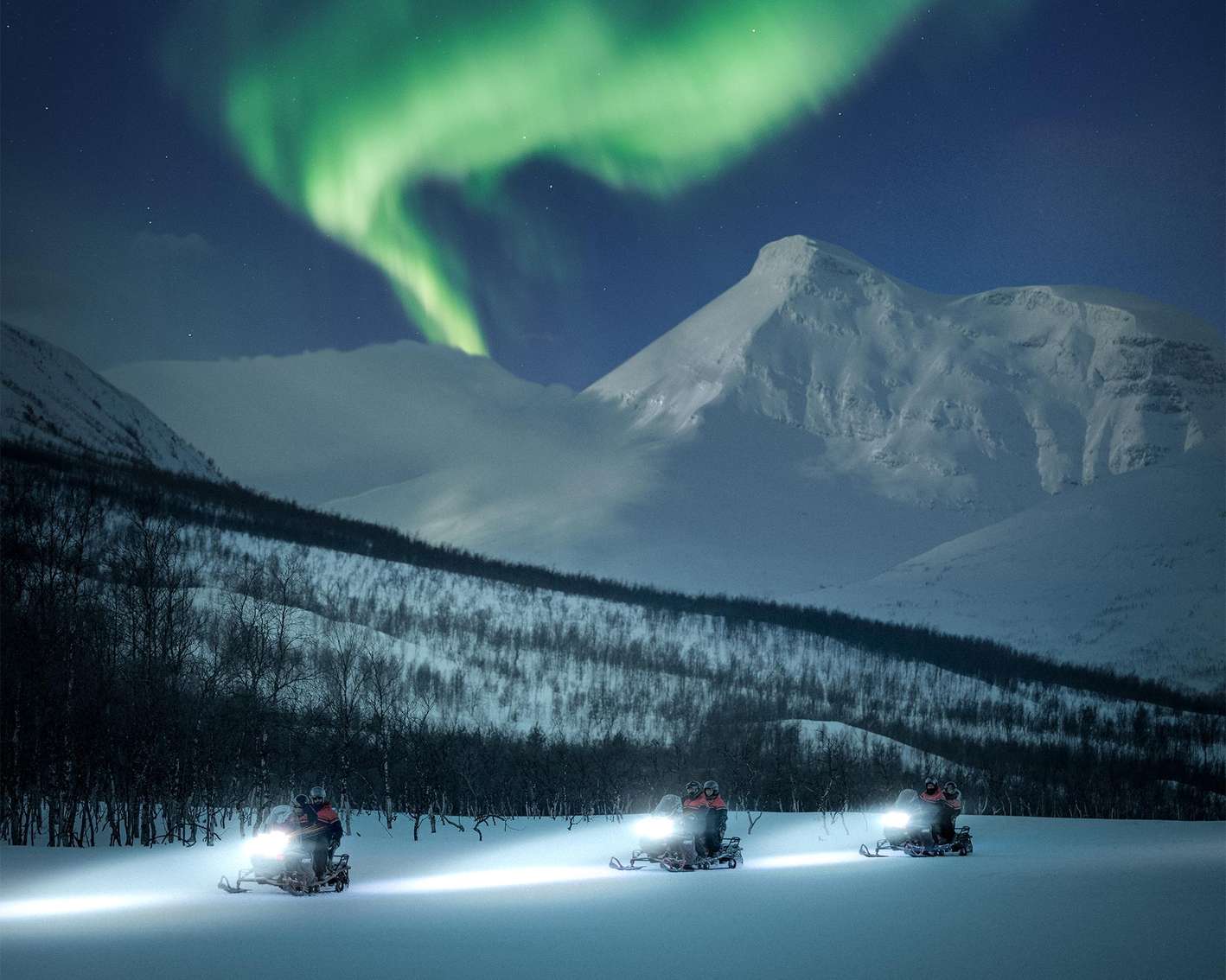
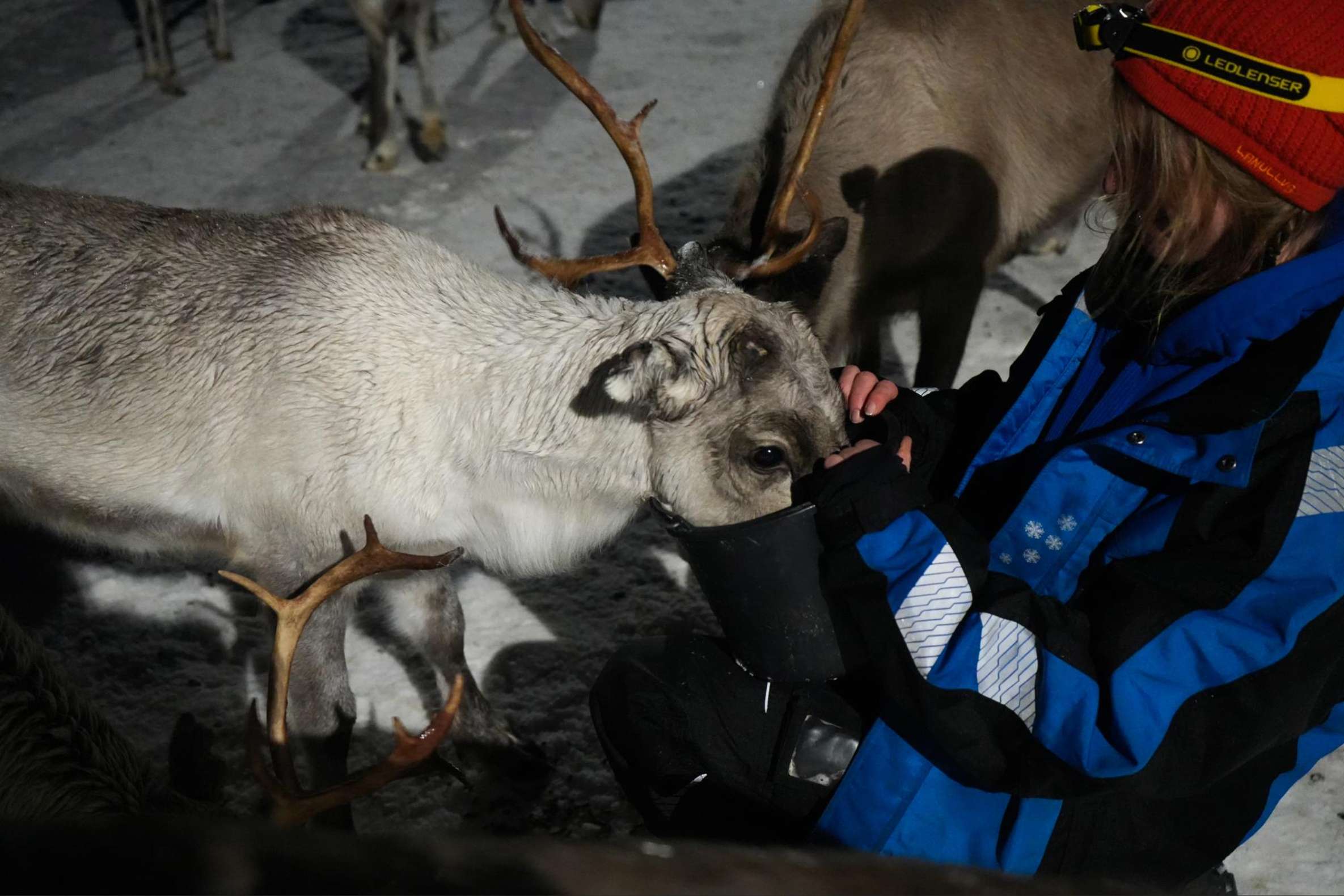
How to get to the reindeer camps from central Tromsø
Evening departures gather downtown, and most leave from the Prostneset terminal and harbour area. From the airport, the Airport Express bus gets you there in 15 to 20 minutes, a taxi in 10 to 16, and city bus 40 or 42 in about 20. If you land on tour day, build in slack.
Then the camp drive begins. The camp on Kvaløya sits 25 to 30 minutes from the centre, a short coastal ride that still feels like leaving town behind.
Camp Breivikeidet is the longer haul: 50 minutes to an hour each way, through fjord country with the mountains growing as you go. Pack accordingly for sitting still on a warm bus.
Driving yourself is possible at some camps, on winter coastal roads you should respect, and chapter 7 lays out how that works. For most visitors the guided transfer wins, because it delivers you at the right minute, keeps the schedule together and lets you look out the window instead of at the ice.
The numbers say it plainly: the bus is the shortest path to the same camp, and the drive itself doubles as part of the evening's scenery.

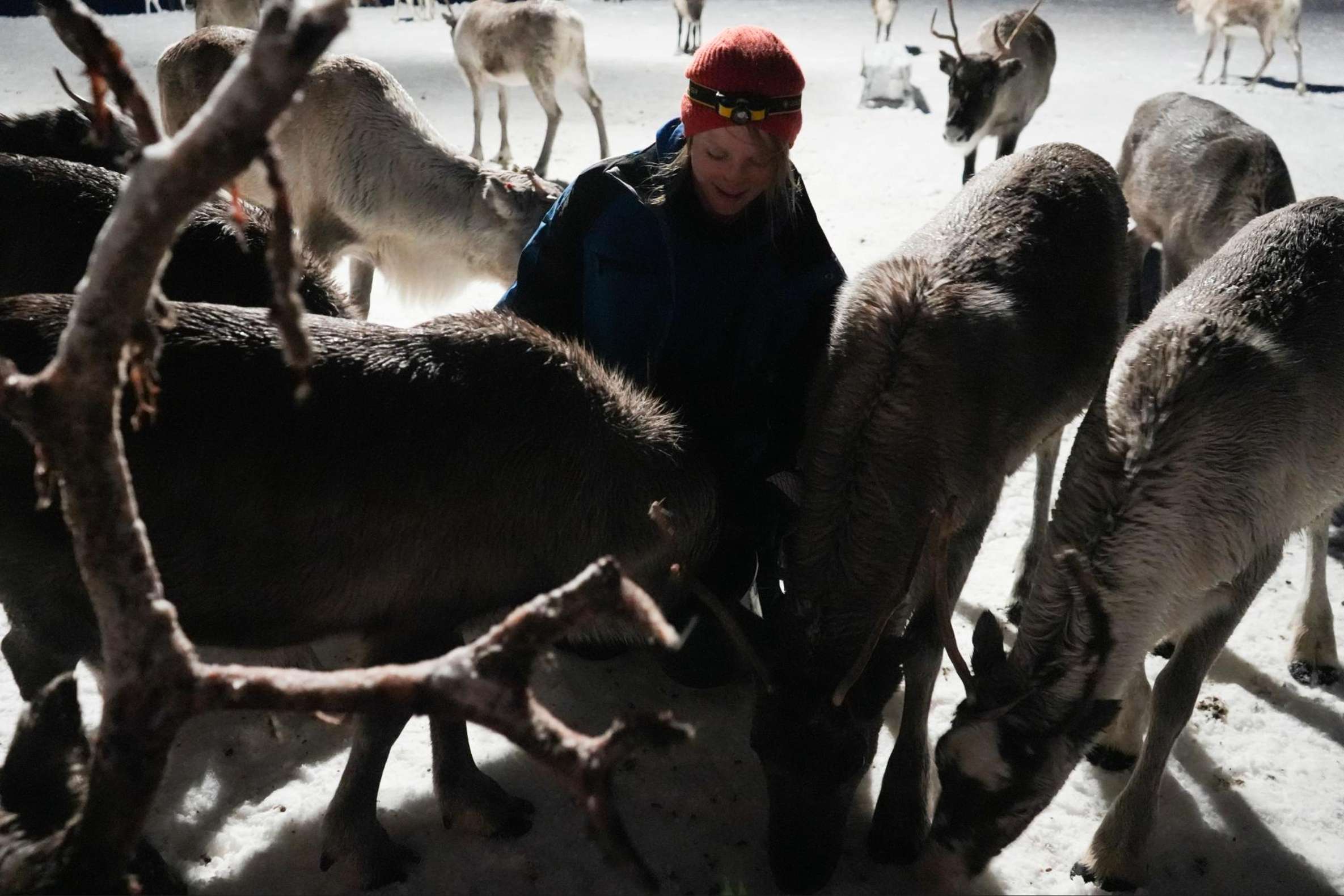
What to wear and what the camps provide on a winter evening
Warmth comes from what you wear underneath; the camp's suit only caps it. You need thermal base layers, preferably wool, an insulating mid layer, thick wool socks, a warm hat, mittens and a scarf. You spend real time standing still in a snowy corral, and standing still is what gets people cold.
What the camp hands you varies. Wilderness camps such as the one in the Tamok Valley supply thermal suits, insulated boots and mittens on arrival, so you bring only layers. At other Sami camps, boots and suits are not part of the standard dinner and sledding visit, and you arrive dressed for the whole evening.
Check what your tour includes before you pack, because the difference decides your suitcase. Boot covers and snow suits come with the reindeer feeding and dinner tour, along with coffee, tea and the meal.
Two small truths worth knowing early. Dinner alternatives exist: vegetarian, vegan and gluten-free options are offered at the camp near Tromsø when you ask in advance. And the toilets are rustic, small wooden outhouses at one Sami camp, so plan your last warm stop accordingly.
- Wool thermal base layerWear yourself underneath; breathable merino wool keeps moisture away during hours outside in subzero temperatures.
- Fleece or wool mid layerWear yourself; an insulating sweater and trousers trap body heat inside the thermal suit or outdoor coat.
- Thermal suit (outer layer)Provided at Camp Tamok and select wilderness chases; wear your own winter coat and snow pants at camps that do not provide suits.
- Insulated winter bootsProvided at Camp Tamok, but not at Tromsø Arctic Reindeer; bring your own waterproof winter boots with thick soles if not provided.
- Wool socks and spare pairWear yourself; thick wool socks prevent cold seeping up from the frozen ground and snow during outdoor camp activities.
- Warm hat and mittensWear yourself; windproof beanies and insulated mittens are essential, though camps like Tamok also provide outer mittens.
Work down the left column before you pack, then read what the right column says the camp covers. Anything both columns leave blank is yours to bring or to verify on the tour card before you book.
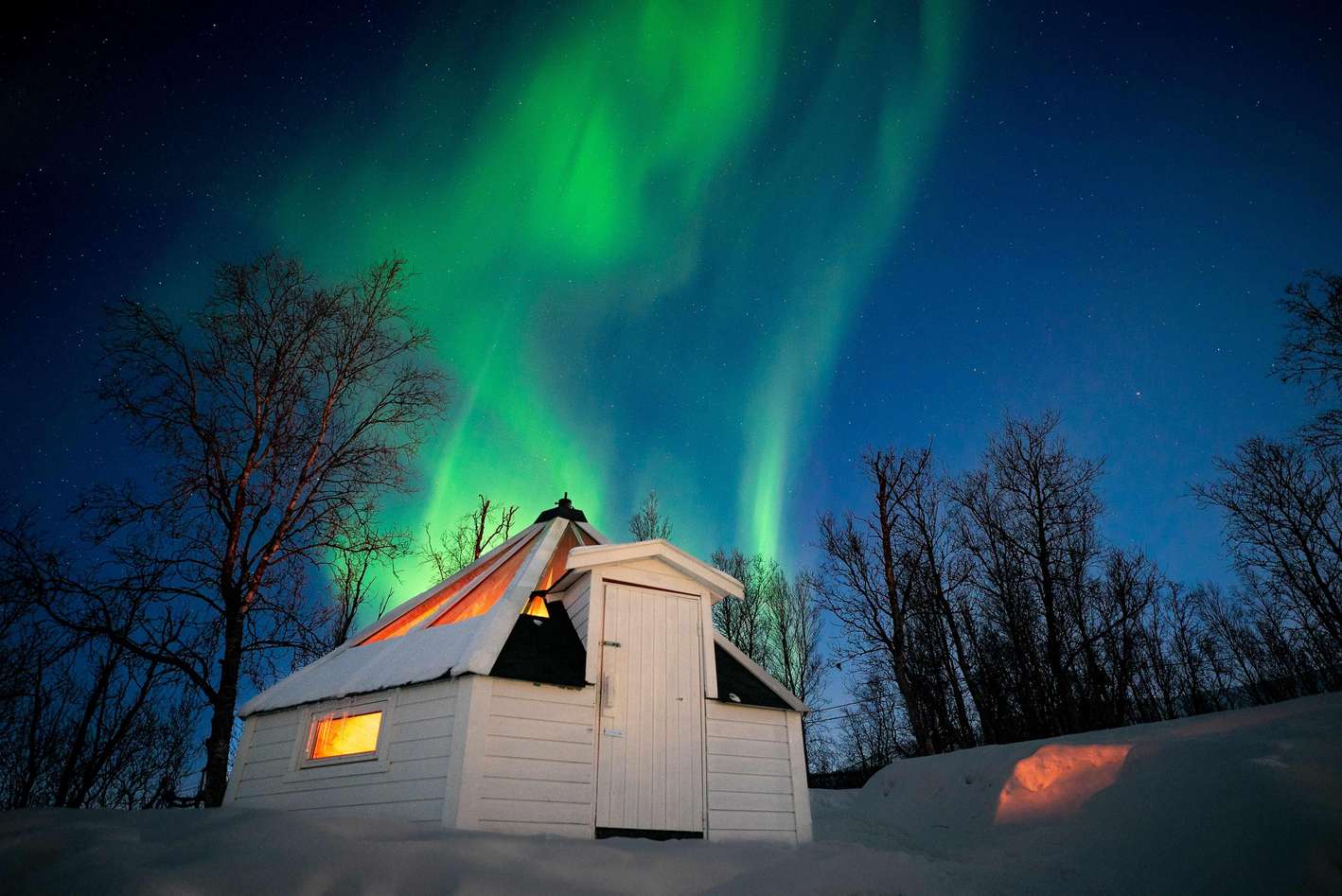
Your evening step by step - feeding, sledding, dinner and aurora
The evening starts at 5:40 pm with the meeting in central Tromsø, then a 25-minute bus ride out to the camp. Warm suits go on, and the herd is waiting.
From about 6:30 pm to 7:45 pm you are inside the fence with the reindeer, hand-feeding with dried pellets or lichen, and taking a 15- to 20-minute sled ride while the snow holds. The trick is in how you move: open palms, slow movements, a low voice.
Reindeer dislike sudden noise, and they are not pets to be grabbed. Give a bull with a polished antler crown extra room, because feeding them by hand is what they like, hands on their backs is not.
Between 7:45 pm and 8:45 pm the fire does the work. In a candlelit gamme hut you eat bidos, the reindeer stew saved for special occasions, with hot drinks, followed by dessert and cake as the hosts talk.
The last stretch, from 8:45 pm to 10 pm, belongs to the sky. Herding stories and a joik song inside, then you step out into the dark to watch. By 10:30 pm the bus sets you back in town.
Check in at the Tromsø terminal followed by a 25-minute drive.
Feed the reindeer herd and head out on a 15 to 20-minute sled ride.
Gather inside the candlelit hut for warm drinks and traditional bidos stew.
Hear herding tales and a joik song, with time outside for northern lights.
Board the bus for the 25-minute transfer back into central Tromsø.
Follow the rows and you see the evening's rhythm: animals first, food in the middle, aurora last. Around 10:30 pm you are back in town.
Photographing the aurora and keeping your batteries alive
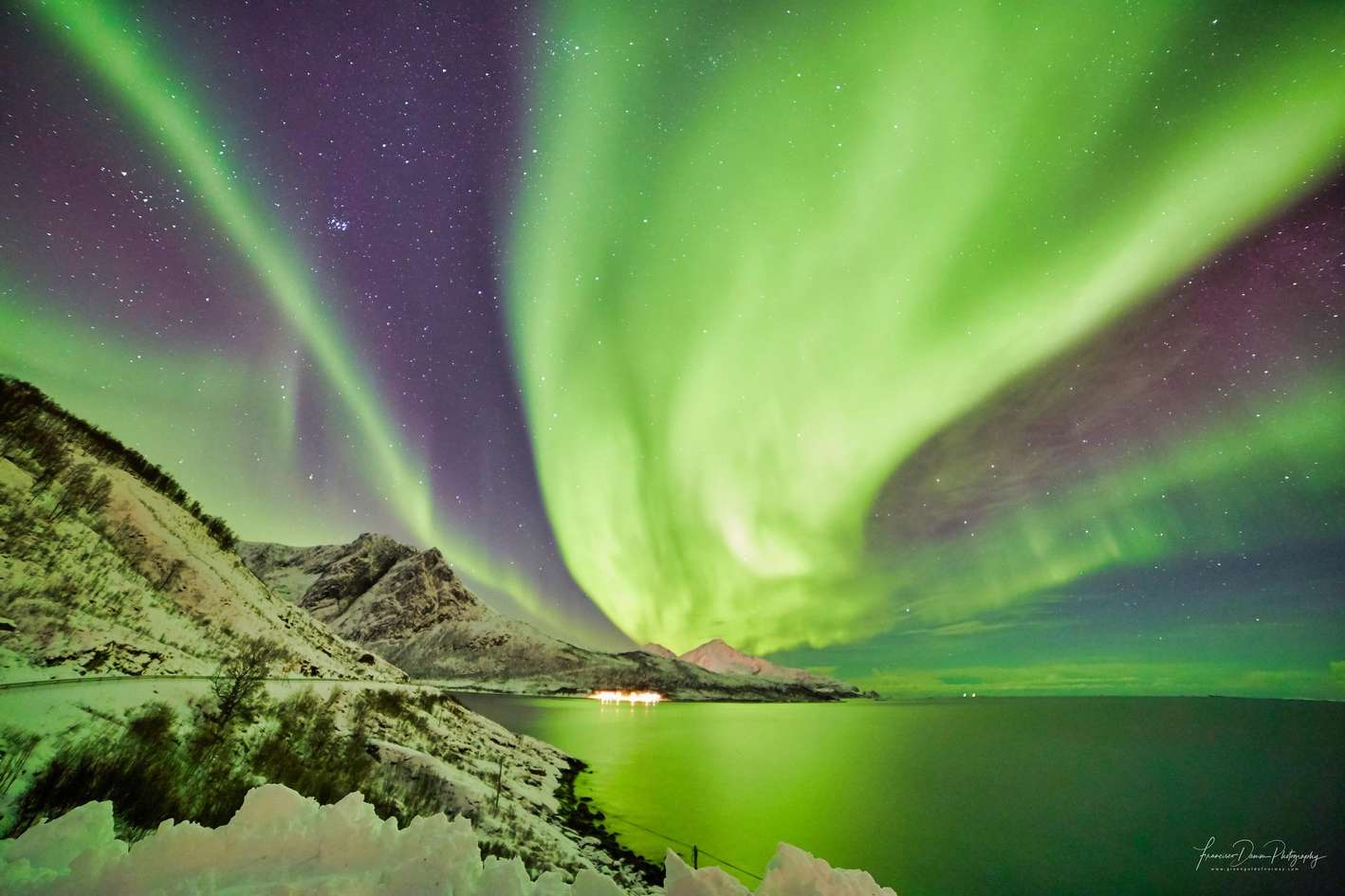
Expect a surprise the first time you look up. A modest aurora often reads as a pale grey ribbon to your eye, because the light is too faint for the colour cells you use in daylight.
Your camera does not have that problem. It stacks light over seconds of exposure and pulls out the green you were staring straight through.
The cold is less forgiving. A phone that lasts all day at home can die within 30 to 45 minutes at -15°C, and a camera battery can lose most of its capacity out here.
Keep spares and your phone in an inside pocket, close to body heat, and switch off Wi-Fi and Bluetooth while you wait.
Condensation is the quieter thief. Seal the camera in a plastic bag while still outside, so it warms up slowly indoors and the glass stays clear. And mind the people around you: dim your screen and keep the flash off, because someone's long exposure is always running.
These three habits decide whether you go home with the shot or with a dead phone and a fogged lens. None of them costs anything, and all of them are easier to remember before you leave the bus than out in the dark.
Visiting a reindeer camp on your own versus with a guided tour
You cannot simply turn up. The camps receive guests during tours only, because staff are there to greet booked arrivals, so a walk-in evening visit is off the table.
What you can do is drive yourself: some camps let you select that option when booking, then arrive half an hour after the bus departure to join the same activities as everyone else. Camp Tamok works the same way, self-driving allowed but activities only with a pre-booked operator tour.
The drive runs about 30 minutes from the city centre, on coastal roads that in winter carry snow, ice and darkness. A rental car with winter tyres handles it, but ask yourself what you gain: you save the bus seat and lose the ease of being delivered, fed and returned on schedule.
For most visitors the guided transfer is the evening itself, taken care of end to end. Driving alone suits travelers who want to linger or combine the camp with their own route, and accept the booking requirement and the road. Either way, pre-booking is the non-negotiable part.
The table leaves one honest conclusion. If the plan is the camp and nothing else, the bus wins on every row that matters in winter; the car earns its place only when you want the evening on your own clock.
How to choose an authentic Sami reindeer tour in Tromsø
Authenticity here has a test you can run before booking. Family-run Sámi camps around Sjursnes and Breivikeidet cap sessions at roughly 6 to 16 guests, and the cultural side goes deep: different Sámi groups, herding cycles, land rights, crafts and live joik rather than a recording.
Commercial setups lean on rented costumes, bought reindeer and a short show.
Look for a guide who explains why the traditional garments look the way they do, and who talks plainly about hard subjects such as assimilation. That is the mark of a host speaking from lived practice, not a script.
The tour this page leads with clears each check. Reindeer Feeding & a Chance of Northern Lights with Dinner runs the full evening, from the herd to the bidos dinner and the stories, with the transfer, feeding time and hot drinks included, and vegetarian options available.
It stays inside the 4.5-hour format and departs from the central meeting points, so the logistics ask little of you.
- A guide with youLive tour guide
- Free cancellationCancel up to 24 hours in advance for a full refund
- Book now, pay laterReserve your place and pay closer to the date
- Hotel pickupNo, you meet at the start
- Your languageEnglish, Norwegian
Run the criteria across the card before you commit. Where a row reads no, decide whether that gap matters for your evening, and only then book.
Accessibility, children and mobility at the reindeer camps
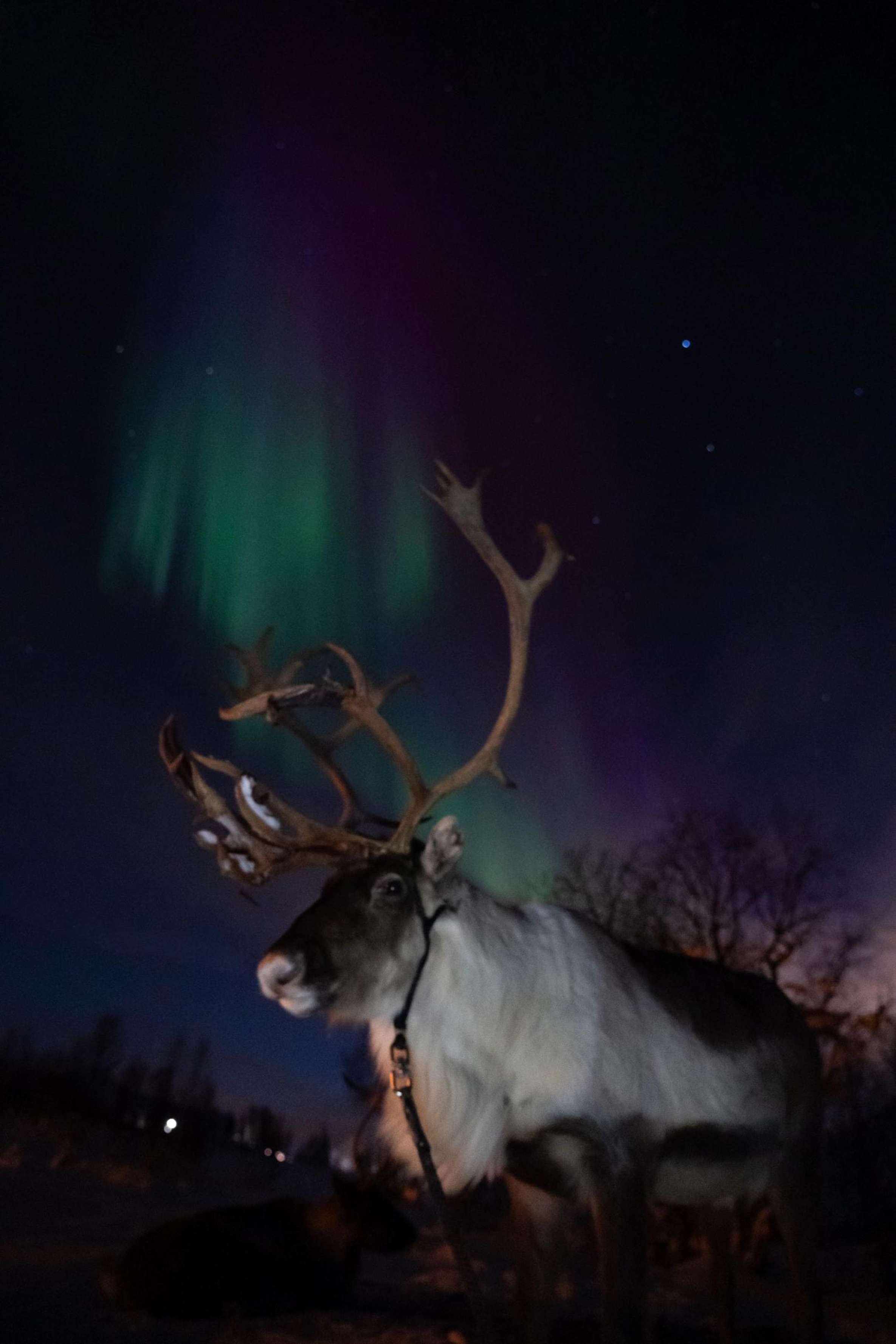
Families do well here. Some evening reindeer sledding, feeding and northern lights tours carry no minimum age at all, and one operator's sledding evening is rated easy and family-friendly. The pace helps: you feed standing still, ride seated, then eat by a fire, with no long treks and no waiting in the cold.
Mobility needs an honest answer. The camp terrain is uneven, snow underfoot and crowded by animals, and that challenges visitors with reduced mobility.
Wheelchair users and anyone needing an adapted vehicle must book an additional service with transfer and guide assistance, because the standard bus and the standard programme are not built for it. Say so at booking rather than on arrival, and the right arrangement can be put in place.
Seniors in decent shape generally manage the evening comfortably, since the walking is short and the warmth is close by. The one thing to weigh is the terrain itself: boots with grip and a steady step matter more than speed.
If any of this is uncertain, ask before you book, because the camp can prepare only for what it knows about.
What happens if the weather turns or your plans change
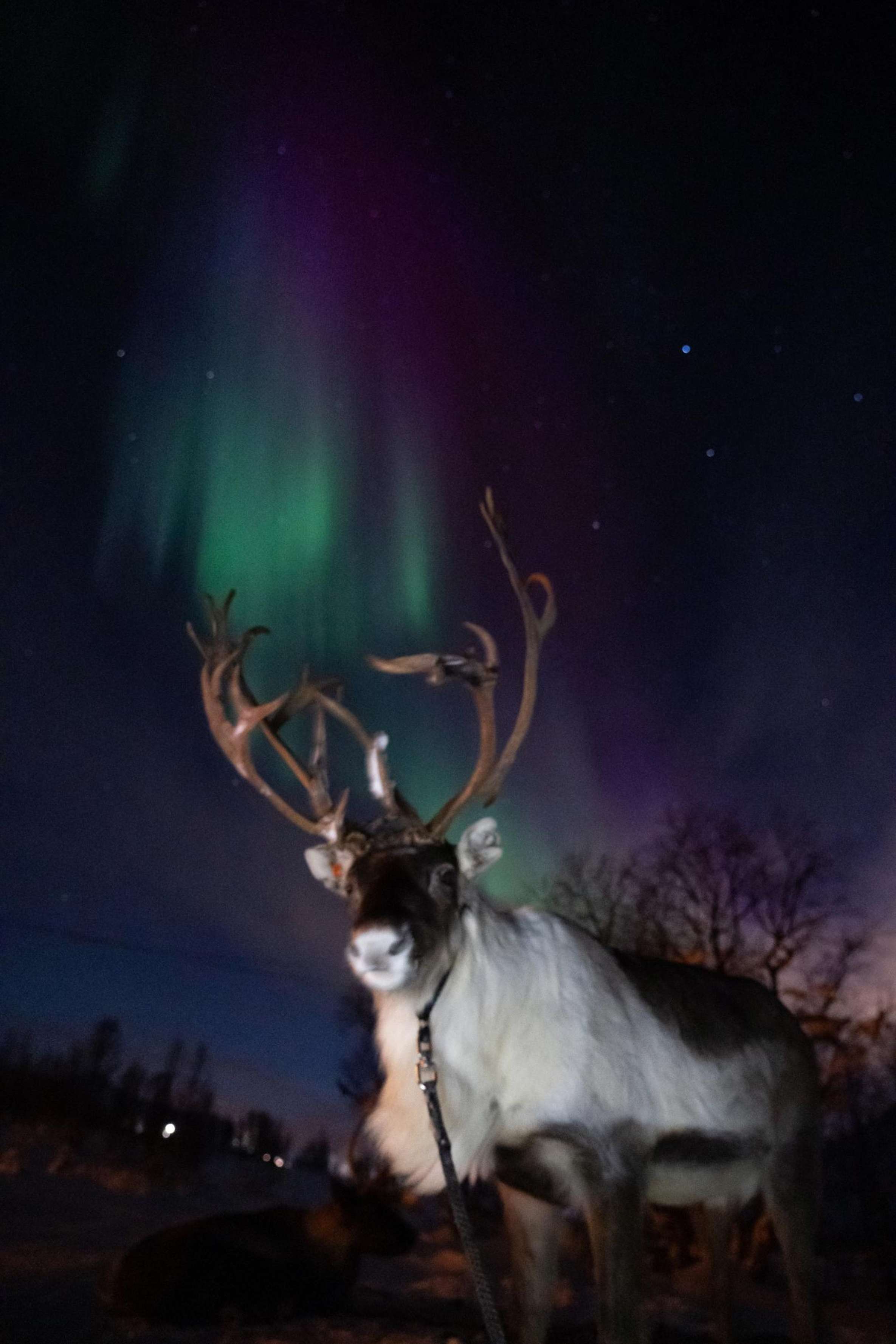
Weather is the one risk you cannot schedule away, and the terms cover it. When an operator cancels for unsafe conditions, road closures or a storm that shuts the roads, you get a full refund or a free move to another date or tour.
Snow and wind alone do not cancel an evening; the roads and safety do.
Your own plans carry a simpler rule: cancel up to 24 hours in advance for a full refund. That window gives you room to hold two evenings early in your trip and release one if the aurora cooperates sooner than expected.
The evening itself ends around 10:30 pm, so the late-night logistics rarely bite. Restaurants in the centre mostly close their kitchens between 9 pm and 10 pm, though a kitchen by the harbour serves its full menu until well past midnight at weekends.
If you end up out later, taxis run around the clock by phone, app or online, with ranks at Prostneset, Stortorget and the airport.
From the tours' own terms
| If this happens | What happens then |
|---|---|
| The operator cancels for unsafe weather or road closures | You get a full refund or a free reschedule to another date or tour. |
| You cancel your own booking | Free cancellation applies up to 24 hours before departure. |
| The evening runs long past dinner | Taxis operate around the clock; ranks sit at Prostneset, Stortorget and the airport. |
Laid out this way, the booking carries little risk on either side. Hold two dates early in the trip if you can, release the one you do not need inside the free window, and the weather decides the sky and little else.
What else to see and do near the Tromsø departure points
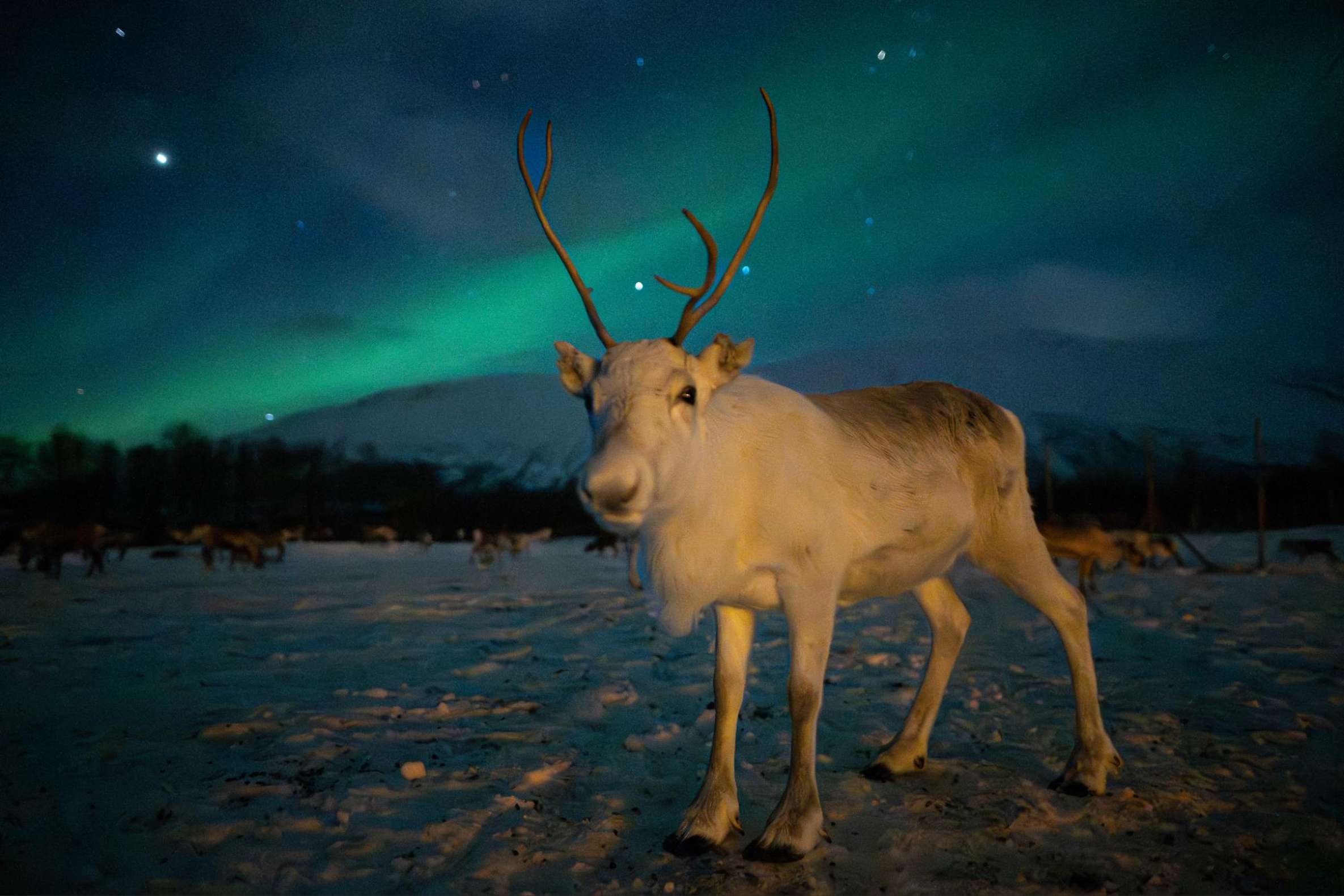
Departure day has hours to fill before the 5:40 pm meeting, and the centre fills them well. Within an 11-minute walk of Prostneset and the harbourfront, Polaria sits 9 minutes south with its Arctic seals and films, open daily until 5 pm.
The Polar Museum, 11 minutes north, covers trapping and polar expeditions, and the Nordnorsk Kunstmuseum and Troll Museum lie 2 minutes apart.
Eat early. Kitchen closings start around 9 pm across the centre, and your dinner is at the camp, so a late lunch or a 4 pm seafood seating beats arriving hungry. The warm terminal building itself keeps indoor seating and restrooms through the day.
Build the day backwards from the pickup time: one museum in the afternoon, a meal, then a short walk to the meeting point with boots and layers already on.
The monuments and small galleries around the harbour take minutes, not hours, and they leave you rested rather than footsore for a night spent standing in a corral.
- 1Latham-Monumentethistoric place1 min walkDirections
- 2Roald Amundsen Monumenthistoric place1 min walkDirections
- 3Tromsø Holocaust Memorialhistoric place1 min walkDirections
Show all 10 places
- 4Eidis Hansen Rockhistoric place1 min walkDirections
- 5Nordnorsk Kunstmuseummuseum1 min walkDirections
- 6Street artsight2 min walkDirections
- 7Lone Slydahlmuseum2 min walkDirections
- 8Troll Museummuseum2 min walkDirections
- 9Galleri NORDmuseum2 min walkDirections
- 10Sørøya Havcruise ASsight4 min walkDirections
- 1Tromsøyasight11 min driveDirections
- 2Arctic, Alpine Botanic Gardenpark or garden13 min driveDirections
- 3Grønnåsen Churchtemple, shrine or church14 min driveDirections
- 4Kroken Churchtemple, shrine or church20 min driveDirections
The close rows are your afternoon, the last ones stretch it. Anything marked as a short walk pairs naturally with a pre-tour hour; the drive-out sights need a block of time you will not have on tour day.
The verdict - who should book this reindeer evening
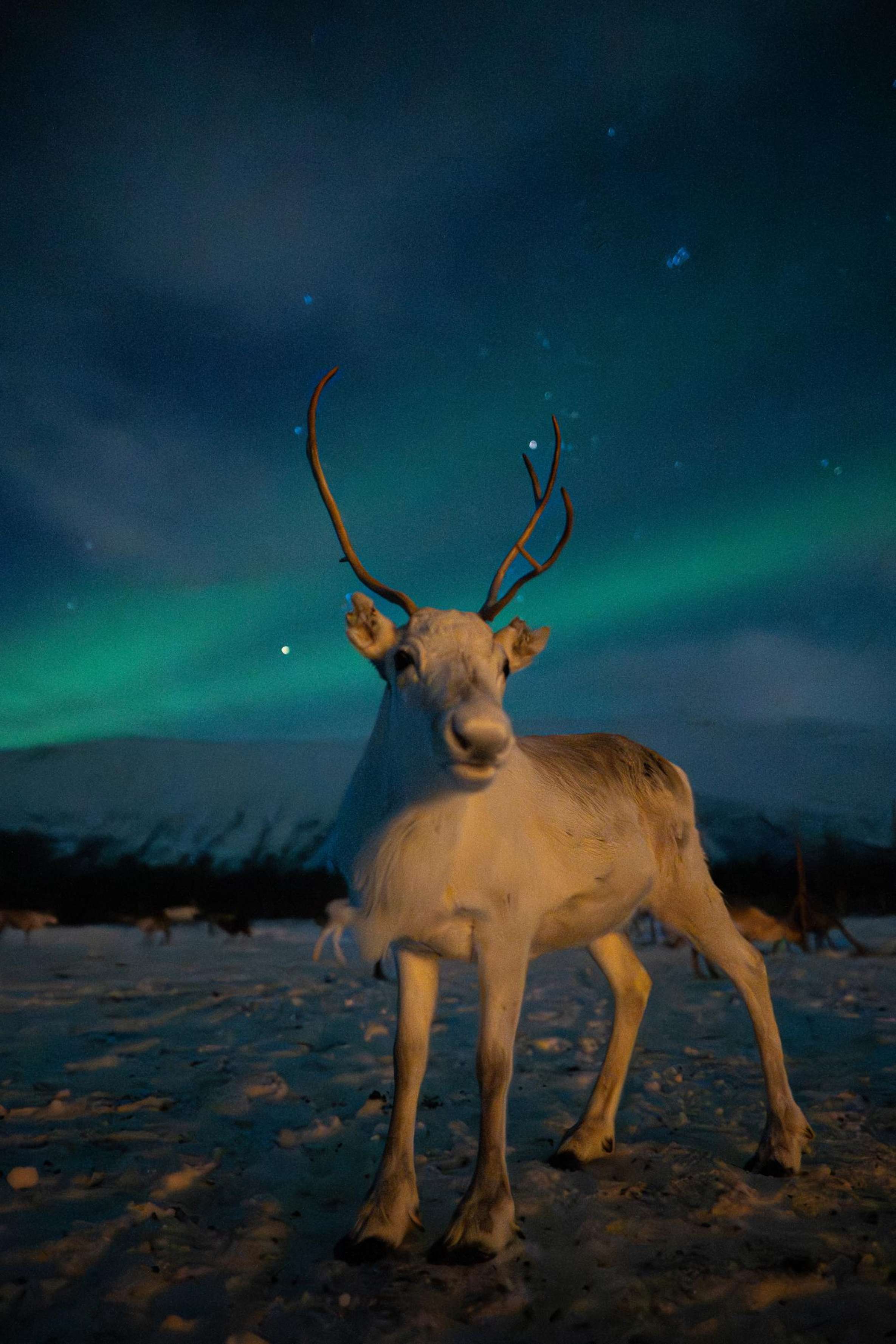
Book this if the herd, the fire and the stories are the reason you came. The reindeer feeding and dinner evening delivers a complete Arctic night regardless of the sky, and on a clear one the camp's dark rural setting means the aurora can arrive while the stew is still warm.
There is an old belief worth carrying with you: in Sámi tradition you never whistle at the lights.
Skip it only if strong northern lights are the whole point of your trip. A camp stands still, and the sky above it clears on its own schedule.
What first-timers don't know
Away from city light, a clear night can bring the aurora overhead mid-dinner, visible from the corral or the doorway.
Sámi tradition held that the aurora carried the souls of the departed and must be treated with respect, not teased.
Whichever way you lean, pick the date early in your trip and book ahead. The camp evenings fill first in the deep winter months, and a booking made early keeps the free cancellation window open if you change your mind.
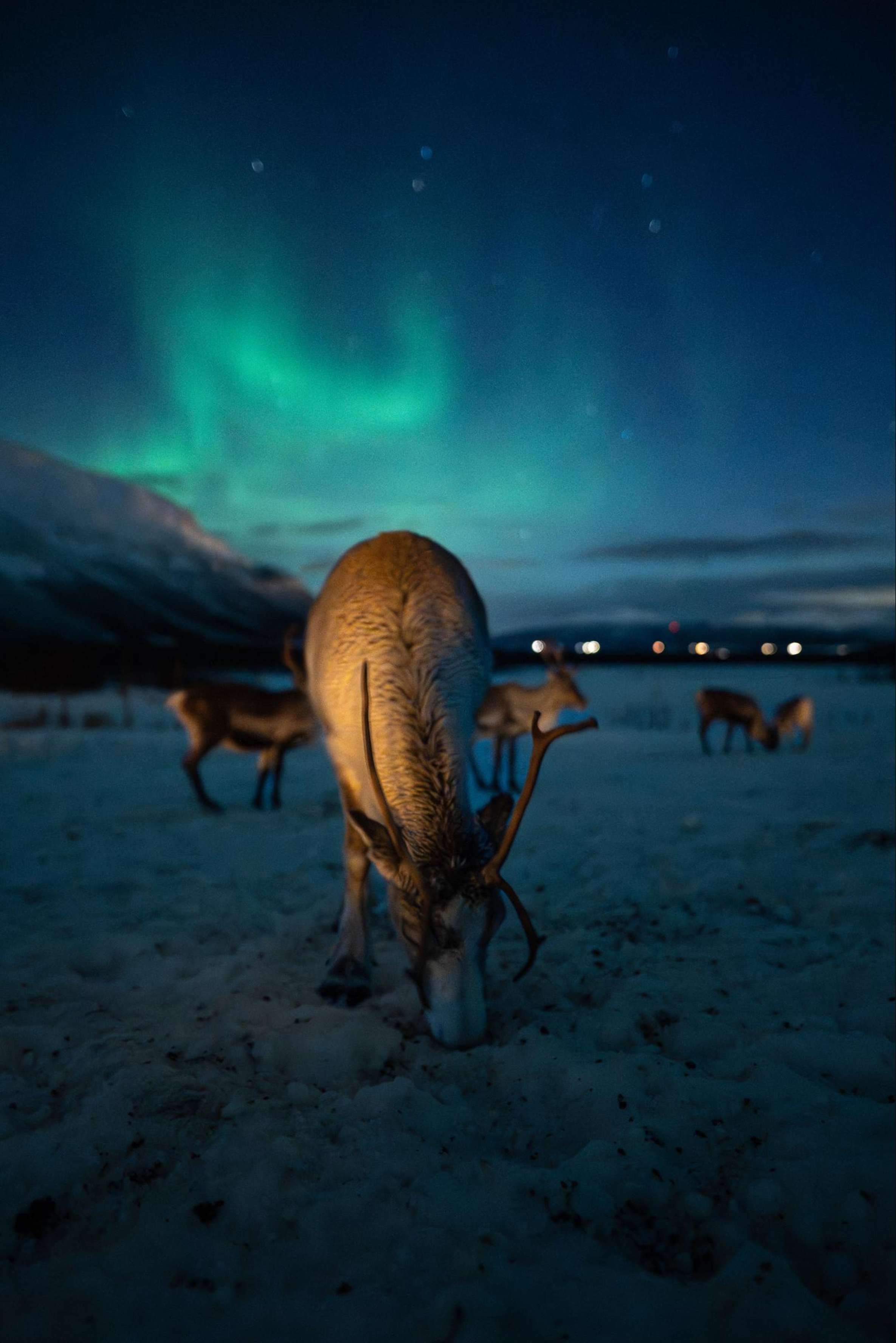
What to know before you book a reindeer northern lights evening
You meet your guide at a central city meeting point in the late afternoon; the tour runs about 4.5 hours, meeting around 5:40 pm for an 6 pm departure. Custom pickup and drop-off addresses are not available, and hotel pickup is not included, though central hotels sit within walking distance.
The bus ride to the camp at Breivikeidet takes roughly 45 minutes to an hour each way, with views of the Lyngen Alps along the way. You return to central Tromsø around 10:30 pm.
The herd at the camp numbers around 300 reindeer, and you walk among them with a herder handing out dried feed pellets or lichen. Feeding works with slow movements, open palms and a low voice, so the animals come to you on their own.
The reindeer dislike loud noises, sudden movements and petting. Getting too close can make an animal feel threatened, so keep the respectful distance your guide explains and let them approach you.
Dinner is served by the fire in a candlelit gamme hut between about 7:45 pm and 8:45 pm. The main dish is bidos, a Sámi reindeer stew served with Sámi bread and hot drinks, followed by chocolate cake and blueberry dessert while hosts tell stories and perform a joik.
Vegetarian, vegan and gluten-free alternatives are offered for the dinner at the reindeer camp. Mention your needs when you book so the kitchen can prepare for you.
The tour provides warm clothing, including boot covers and snow suits, and the wood stove keeps the gamme hut warm even in freezing temperatures. Bring your own warm layers, hat, gloves and scarf to wear underneath.
No operator can promise the lights, and a fixed camp stays in one place all evening instead of driving to clear skies.
The camp has little artificial light and is set up for sightings, so if the local sky stays clear your odds are good. Check the evening forecast and book a night early in your trip so you can rebook.
Expect simple conditions at the camp: the toilets are small wooden outhouses outdoors, so dress for the walk and keep your outer layers handy.
The tour is *not suitable for wheelchair users* or people with mobility impairments, because the camp terrain is uneven and snowy. You can bring a stroller and leave it on the bus or at camp, though the terrain makes it hard to use on site.
Book it for the herd and the fire
If the reindeer, the Sámi stories and a warm fire matter as much as the lights, choose a date early in your trip and book this evening ahead; the aurora becomes a bonus rather than the price of entry.
Anyone chasing strong aurora on limited nights should pick a mobile chase instead and save the camp for a second night.
Reindeer northern lights FAQ
Is a reindeer northern lights tour still worth it if the sky stays cloudy?+
Yes. The evening comes with hand-feeding the herd, Sámi stories by the fire, and a hot bidos dinner, so the night stands on its own when the aurora stays hidden.
What are my chances of seeing the northern lights from a fixed camp compared to a mobile chase?+
A fixed camp stays where it is, so sightings depend on local skies, which around Tromsø average only 2 to 5 clear dark nights a month from October to March.
A mobile chase that drives within a 75 km range reaches 12 to 16 clear nights a month, which is why chases report success rates of 90 to 98 percent. Pick the camp for the culture and the animals, and a chase if the lights come first.
What actually happens during the reindeer feeding?+
A herder walks you among a herd of roughly 300 reindeer and hands you dried feed pellets or lichen. You feed them with an open palm, slow movements, and a low voice, and the animals come to you when they choose. Camps keep visitor numbers low so the reindeer can always step away.
What is served at the Sámi dinner inside the lavvu?+
You sit around the fire in a candlelit lavvu for bidos, a reindeer stew, with Sámi bread and hot drinks.
Chocolate cake and blueberry dessert follow while your hosts share stories about herding life, and the evening closes with joik, a traditional form of Sámi singing. Vegetarian, vegan, and gluten-free alternatives are available when you tell the operator ahead of time.
How warm is the lavvu or gamme hut once the temperature drops below freezing?+
A wood stove heats the tent well, so much so that sitting close to the fire in full winter gear can feel too hot. Firewood goes in every one to three hours to keep it that way.
What is the difference between a reindeer sleigh or sledding evening and a feeding-only visit?+
Sledding tours add a ride behind the reindeer; feeding-only evenings skip the sled and give you more time with the herd and at the dinner table. Snow cover supports sledding reliably from December through March, while in November and late March operators often switch to feeding-only and cultural programmes when trails thin out.
How do I get to the camp and how long is the transfer?+
The bus from central Tromsø takes 50 minutes to an hour to reach the camp at Breivikeidet, and 25 to 30 minutes to the camp on Kvaløya. The tour includes the scenic transfer, and hotel pickup is not part of it, so plan to meet at the central departure point.
Can young children and seniors join, and is the terrain manageable?+
Several reindeer feeding and evening northern lights tours have no minimum age, and the sledding evenings are rated easy and family-friendly. The camp terrain is uneven and snowy, which can challenge visitors with reduced mobility.
Wheelchair users and guests who need an adapted vehicle should arrange a service with assisted transfer when booking, because the standard bus is not accessible.
What should I wear under the thermal suit the camp provides?+
Wear a merino wool or synthetic base layer, a fleece or wool mid-layer over it, warm socks, a hat, and gloves. The tour supplies boot covers and snow suits on top, but the layers underneath are yours to bring.
How should I behave around the reindeer?+
Reindeer dislike loud noises, sudden movements, and being petted. Feed them with a slow, open hand and let them close the distance themselves. Keep extra distance from any bull carrying a hard, polished antler crown, especially in autumn.
Are there toilets at the camp?+
At the Sámi camps outside Tromsø, the toilets are small wooden outhouses, so there are no heated indoor restrooms. Dress for the walk over.
How far ahead should I book a reindeer evening in December or February?+
Small-group evening tours around Tromsø sell out 2 to 4 weeks ahead in the December and January dark season, and holiday dates go 4 to 8 weeks ahead. Pick your date early and cancel free up to 24 hours before if plans change.